Are you ready to explore the exciting world of WordPress development? This blog post will guide you through the essential steps to becoming a successful WordPress developer.
From understanding the role, mastering technical skills, and choosing a focus area to setting up a development environment, engaging with the community, building your portfolio, and marketing your services, we have got you covered. Let’s embark on this journey together!
The Role of a WordPress Developer
A WordPress developer is a versatile professional who wears many hats. From creating custom themes and plugins to optimizing websites and debugging code, their technical skills are indispensable in web development.
A proficient web developer is also well-versed in PHP, HTML, CSS, JavaScript, among other programming languages.

Some of the responsibilities of a WordPress developer include:
- Creating custom plugins or themes
- Building sitemaps or wireframes
- Migrating or redesigning websites
- Reviewing or debugging the codebase
- Performing front-end and back-end development
- Communicating with clients
- Managing multiple projects
- Consulting with potential clients
- Performing support and maintenance tasks, such as backups and security scans
Furthermore, developers can access an extensive list of resources compiled by other theme developers, including code references, API handbooks, and guidance for plugin and theme development.
With the growing demand for WordPress developers, there’s never been a better time to become a WordPress developer by mastering the technical aspects and programming languages vital for this thrilling career path. Are you prepared to embrace this challenge?
Learn: How to Convert HTML to a WordPress Theme
Essential Skills for WordPress Developers
Acquiring expertise in the following programming languages is imperative for success as a WordPress developer. These languages form the backbone of WordPress development, empowering you to create, modify, and enhance WordPress sites and WordPress themes with ease.
Mastering these pivotal skills equips you to handle PHP files, navigate the WordPress repository, and tailor-make plugins or themes for clients. Additionally, learning server-side languages like PHP and client-side languages like JavaScript will enable you to deliver more dynamic and engaging experiences.
HTML and CSS
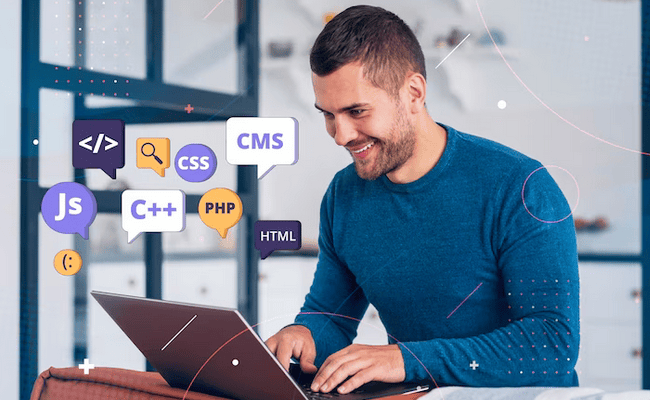
HTML and CSS are the foundation (or building blocks) of web development, enabling you to structure and style web pages with ease. They play a crucial role in WordPress development, providing the structure and styling for web pages.
HTML (HyperText Markup Language) is responsible for creating the structure of a website, while CSS (Cascading Style Sheets) helps style the HTML structure by controlling the layout, colors, and fonts. Valid HTML is essential for an enjoyable user experience and to ensure that pages are compatible with all web browsers.
HTML5 (HTML’s latest version) offers a range of exciting features compared to its predecessor, HTML4. This includes the ability to incorporate video and audio, enhanced JavaScript compatibility, and various new elements such as footer, header, track, and summary.
These advancements enable developers to create modern, responsive websites that adapt to various devices and screen sizes.
Mastering HTML and CSS allows you to create stunning and functional websites that cater to your clients’ needs. As you continue to hone your skills in these essential languages, you’ll unlock new possibilities and opportunities in your WordPress development career.
Related: How To Remove Unused CSS In WordPress
PHP and MySQL
PHP and MySQL are the lifeblood of WordPress development. As the primary languages powering the CMS, they are essential for creating dynamic, data-driven websites using the WordPress software.
PHP, a powerful scripting language, performs tasks on the server and sends back requests in the form of HTML. The WordPress core itself is built on PHP and MySQL, making these languages indispensable in the development process.
MySQL, a popular database management system, complements PHP by providing the means to store, retrieve, and manipulate data within a WordPress site. By understanding the importance of a PHP file in the WordPress core, developers can ensure the smooth functioning of their websites.
By gaining proficiency in PHP and MySQL, you can create custom plugins, themes, and modules that showcase your skills and expertise. Moreover, these languages will enable you to work with core development, block editor, and developer resources, further enhancing your capabilities as a WordPress developer.
Related: How To Update WordPress PHP Version
JavaScript and jQuery
JavaScript and jQuery are potent tools that add dynamic functionality and asynchronous loading to WordPress websites, making them more engaging and valuable. As client-side languages, they enable developers to create interactive features and enhance the overall user experience.
jQuery, a popular JavaScript library, enables easy manipulation of web pages by allowing you to chain multiple functions at once. This powerful tool provides features like:
- Hiding HTML elements
- Creating animations
- Manipulating CSS
- Creating sliding effects
All of these features simplify the development process.
AJAX, another invaluable tool in WordPress development, allows sending or receiving data without fully reloading a page. By leveraging AJAX, developers can create seamless experiences that enhance both the performance and usability of WordPress websites, often through the use of a well-designed WordPress plugin.
By mastering JavaScript and jQuery, you’ll be able to deliver more dynamic and engaging websites that meet your clients’ needs and set you apart from the competition.
Read: The Complete Guide To Hiring A CMS Developer
Seeking A WordPress Developer To Build Your Website?
Talk to our WordPress expert today and get started on building your dream website!
Essential Tips to Get Started With WordPress Development
Learning WordPress development becomes easier when beginners follow structured, practical guidance. The tips below cover technical skills, workflows, and growth strategies that help you build WordPress sites with confidence and succeed using the world’s most popular content management system.
Tip 1: Choosing Your Focus Area in WordPress Development
Embarking on your journey to becoming a WordPress developer requires selecting a focus area in line with your interests and goals. WordPress development involves three primary focus areas: Core software, Plugins, and Themes. Specializing in a specific area facilitates skill enhancement and the achievement of personal objectives.

For example, if you have a passion for website design, you may focus on theme development, whereas if you’re interested in functionality, plugin development might be your calling. On the other hand, if you enjoy diving deep into the technical aspects of WordPress, working with the core software could be your niche.
Choosing a focus area is not a limitation but an opportunity to excel in a specific domain. As Paul Bearne noted, many skills are versatile, so if you have proficiency in one area, you can also apply them to other areas. Possessing a clear focus enables you to:
- Devote your time and energy to master your chosen field
- Gain expertise and become a specialist
- Stand out from the competition
- Build a strong reputation in your industry
- Increase your chances of career success in WordPress development
Read: Best WordPress Development Agencies
Tip 2: Setting Up a WordPress Development Environment
A WordPress development environment is a valuable tool that provides a secure area to create, develop, and test plugins, themes, and other features.
Setting up a development environment can significantly benefit WordPress developers by speeding up the WordPress plugin development process, resulting in a higher-quality product.
Establishing a local WordPress development environment involves using tools like XAMPP, MAMP, or WAMP to install a web server, a database, and WordPress.
These tools enable you to work on your projects locally, eliminating the need to connect to the internet, which makes testing and experimenting with your work easier and more efficient.
Alternatively, you can set up a remote WordPress development environment by:
- Creating a hosting account
- Installing WordPress
Utilize tools like cPanel or Plesk to manage your hosting account and install WordPress quickly and easily.
Establishing a remote environment offers the flexibility to work on your projects from any location with an internet connection.
Regardless of whether you choose a local or remote development environment, having a dedicated space to work on your projects will undoubtedly enhance your skills and professionalism as a WordPress developer.
Read: Top 6 cPanel Alternative Hosting Platforms for WordPress and Others
Tip 3: Master WordPress Theme and Plugin Development Basics
To truly build WordPress sites with confidence, beginners should move beyond installing pre-made designs and start learning how themes define structure and layout. WordPress is a popular content management system because it allows complete customization through themes and plugins.
Learning how to create themes helps you control templates, WordPress blocks, HTML tags, and CSS media queries for responsive layouts. This skill is essential whether you are building personal blog layouts or complex business websites.
You should also understand how to work with the WordPress plugin directory. Knowing how to install plugins and modify their behavior prepares you for real WordPress projects. Instead of adding too many plugins, you can write custom functionality by creating simple plugins. This improves the site’s performance and keeps your WordPress version up to date.
Exploring the WordPress Codex is highly recommended. It explains hooks, templates, and best practices in detail.
When you work inside the WordPress admin dashboard and understand how themes and plugins interact, you gain complete control over your own website or an existing site. This foundation helps WordPress users create flexible solutions that scale from the first WordPress site to advanced business sites.
Tip 4: Learn Version Control and Professional Development Workflows
Professional WordPress development requires more than writing code. A strong workflow helps your site succeed from local development to the production environment.
Beginners should start with a local development environment, where they can safely test ideas without affecting a live WordPress site. Tools for local environment setup enable WordPress installation in just a few clicks, making it accessible even to beginners.
Using version control systems helps you track changes and manage different stages of a WordPress project. This is especially useful when building a business website or maintaining an existing one. You can experiment freely, roll back mistakes, and collaborate with other WordPress users.
A proper workflow also includes staging and backups through a reliable hosting provider. Choosing the right hosting provider, such as managed WordPress hosting services like WP Engine, enhances the site’s performance and security.
Moving changes from local development to web hosting becomes a smooth and predictable process. With the proper method, you can launch or update a WordPress blog in just a few hours instead of days. These habits prepare you to work confidently on professional business sites and long-term projects.
Tip 5: Focus on WordPress Performance and Security Best Practices
Performance and security play a significant role in how well a WordPress site ranks and performs. Search engines prioritize fast and secure websites, which directly impacts search engine rankings.

Begin by selecting WordPress hosting that provides free SSL, robust server support, and scalable resources. The right hosting provider ensures your site loads quickly and handles traffic efficiently.
Optimizing performance involves simple but powerful actions. Use a caching plugin, optimize images, and avoid installing too many plugins. Poor plugin management can slow down your content management system CMS and affect your site regularly. Monitoring the site’s performance with tools like Google Analytics helps identify issues early.
Security is equally important when using WordPress. Keep your WordPress version up to date, limit spam comments, and use trusted, essential plugins. Protecting the admin dashboard and maintaining clean installations keeps business websites and personal blog projects safe.
Pair performance improvements with search engine optimization using an SEO plugin like Rank Math. The SEO plugin helps structure content correctly for the search engine while improving visibility. Together, performance and security practices ensure your WordPress site remains stable, fast, and competitive.
Tip 6: Engaging With the WordPress Community
Engaging with the WordPress community offers several benefits, including:
- Learning from experienced developers
- Building valuable relationships
- Staying informed about the latest announcements and product releases
- Troubleshooting issues quickly
- Creating connections with potential employers
You can take advantage of these opportunities by actively participating in community events and discussions.
There are numerous ways to get involved with the WordPress community, such as attending meetups, joining online forums, and participating in webinars and other online events. By staying connected with fellow developers, you can stay updated on the latest WordPress news and trends.
Engaging with the community also presents opportunities to contribute to open-source projects. This can help you showcase your skills, expertise, and demonstrate your commitment to the WordPress ecosystem.
By submitting bug reports, writing documentation, and contributing code, you’ll make a difference in the community and enhance your reputation as a WordPress developer.
By actively engaging with the WordPress community, you’ll also enrich your knowledge & skills and expand your professional network, opening up new opportunities for growth and success in your career.
Read: WordPress Website Development: Why Is It Important
Tip 6: Building Your Portfolio and Resume
An impressive portfolio and resume are vital tools for highlighting your skills, experience, and professionalism as a WordPress developer. To make your resume stand out, highlight your best skills, professional experience, education, and most impressive projects. Ensure your resume is error-free and tailored to the specific job you’re applying for.
Even if you don’t have much professional experience yet, you can still make your resume stand out by highlighting your skills and showcasing your personal projects in other sections. This will demonstrate your passion for WordPress development and your commitment to continuous learning and professional growth in the field.
Your portfolio should showcase your best work, including any open-source projects you’ve contributed to or personal projects you’ve developed. This will give potential employers a clear sense of your abilities, style, and expertise. Be sure to include a variety of projects that demonstrate your versatility and skill set.
By creating a compelling portfolio and resume, you’ll not only showcase your skills and experience but also increase your chances of landing your dream job as a WordPress developer.
Read: Top WordPress Consultancy Service Providers
Tip 7: Marketing Your WordPress Development Services
Effective promotion of your WordPress development services is key to attracting clients and career growth. There are several strategies for marketing your services, such as:
- Freelancing platforms
- Job applications
- Social media
- Community events
Freelancing platforms like Arc and Code Mentor offer excellent opportunities for WordPress developers to find work and showcase their expertise. By creating a profile on these platforms, you’ll be able to connect with potential clients and bid on projects that fit your skills and interests.
Job Applications for WordPress Developers
Job applications are another effective way to market your services. Here are some tips to make the most of job applications:
- Regularly check community hiring events, agencies’ careers page, and job search sites for leads
- Tailor your resume and cover letter to each opportunity
This will demonstrate your genuine interest in the position and increase your chances of success.
Social Media and Community Events
Social media and community events are also powerful marketing tools. By utilizing these strategies, you can:
- Share your work and raise awareness of your services
- Engage in discussions and build relationships with potential clients and employers
- Attend events to network and connect with industry professionals
These activities will not only help promote your business but also establish valuable connections in your field.
By implementing these strategies, you’ll be well on your way to successfully marketing your WordPress development services and growing your career.
Related: Best Sites To Hire WordPress Developers
Tips for Success in WordPress Development
Achieving success in your WordPress development career requires embracing continuous learning, specializing in a niche, and staying up-to-date with industry trends.
Tip 1: Continuous Learning
Continuous learning is the process of continually acquiring new skills and knowledge, which is vital in the fast-paced world of WordPress development.
By staying abreast of the latest trends and technologies, you’ll ensure you’re always one step ahead and can deliver cutting-edge solutions to your clients.
Tip 2: Specializing in a Web Development Niche
Specializing in a niche means focusing on a specific area of WordPress development to maximize your impact and expertise.
You can deliver exceptional results and set yourself apart from the competition by honing your skills in a particular domain, such as core software, themes, or plugins.
Tip 3: Staying Updated With Industry Trends
Staying updated with industry trends involves reading blogs, attending webinars, and participating in online forums.
By keeping up with the latest WordPress releases and staying informed about new technologies and tools, you’ll be well-equipped to tackle any challenge that comes your way.
Read: WordPress Pricing: How Much Does A WordPress Website Cost
Summary
In this blog post, we’ve covered the essential steps to becoming a successful WordPress developer.
Key Takeaways
- To become a WordPress developer, master HTML, CSS, PHP & MySQL
- Specialize in an area and set up a development environment for faster plugin/theme development
- Engage with the community and market your services to grow professionally
By following this guide, you’ll be well on your way to embarking on a fulfilling and rewarding career in WordPress development. Now, it’s time for you to take the first step and dive into the world of WordPress!
Beginner’s WordPress Development FAQs
Do I need the free version of WordPress to start development?
Yes. The free version is perfect for beginners. You can install WordPress in a local development environment and learn core features without paying for hosting. Later, you can move your site to a hosting provider and build business websites with premium themes and advanced plugins.
What is the best way to set up a local WordPress development environment?
There are several methods for performing local WordPress development. You can use tools that help you install WordPress in a local environment with just a few clicks. This allows safe testing before moving changes to a live site.
Which plugins and themes should beginners use?
Begin with essential plugins that enhance security, improve performance, and boost SEO. Avoid installing too many plugins. Use lightweight themes first, then explore premium themes once you understand how plugins and themes work together in the admin dashboard.
Is WordPress development helpful in building business websites?
Yes. WordPress is widely used for business websites because it is flexible and scalable. Developers can customize plugins and themes, optimize performance, and manage content easily through the admin dashboard.
Can I learn WordPress development without coding experience?
Yes. You can start by learning how to install plugins and manage content. Over time, learning HTML, CSS, and PHP enables you to build custom features and advance as a professional WordPress developer.