Elementor’s scroll-to-anchor feature works correctly on desktop but breaks on mobile more often than most site owners expect. Sticky headers covering target sections, incorrect scroll offsets, plugin conflicts, and JavaScript restrictions on mobile devices are the most common causes.
This guide covers every reason the issue occurs and the exact fix for each one, so your anchor links work correctly across every device.
The Elementor scroll-to-anchor issue on mobile is usually caused by sticky headers covering the target section, incorrect anchor offset settings, plugin or theme conflicts, missing anchor targets, or JavaScript restrictions on mobile devices. Adjusting the scroll offset, fixing anchor IDs, and testing with a default theme resolves most cases.
What are Anchor Links and Why do They Matter?
Anchor links let visitors jump directly to specific sections of a page without scrolling. On long pages, they dramatically improve navigation speed and user experience, particularly on mobile, where scrolling through dense content creates more friction.
Search engines also pay attention to how visitors interact with your content. Higher dwell time and lower bounce rates from better navigation send stronger engagement signals that support organic rankings over time.
What is an Anchor in Elementor?
The Elementor menu anchor widget lets you add a named anchor point to any section of your page. You assign a unique ID to the anchor and link to it from text, a button, or a navigation menu item.
When a visitor clicks the link, the page scrolls directly to that section. On mobile, this behavior depends on correct offset configuration and JavaScript support, which is where most issues originate.
Why Anchor Links Matter for UX and SEO?
Anchor links improve navigation, reduce bounce rates, and contribute to better SEO signals across mobile and desktop. Here is what they directly improve.

Improve User Experience
As mentioned earlier, anchor links make it easy to quickly find relevant information. If a particular post or page on a website is lengthy, the anchor feature makes it simpler for users to navigate through it.
They can jump to the top or bottom of the page/post with a single tap, enhancing the mobile user experience. Enabling smooth scrolling can further improve user experience by allowing users to glide to specific sections without abrupt movements.
Efficient Website Browsing with Smooth Scrolling
Likewise, rather than endless scrolling, the anchor link feature lets users skip directly to the page sections they want, ensuring smooth navigation within a single webpage.
This makes mobile website browsing more efficient, helping users save time, which they’ll appreciate.
Quick Navigation with Anchor Links
Poor navigation is one of the main reasons for a high mobile bounce rate. By using the Elementor anchor link feature, website owners can increase dwell time and page views, thereby reducing bounce rate.
A lower bounce rate, in turn, can help boost your site’s ranking on the SERPs. Additionally, making the navigation visually appealing can further improve user experience and reduce bounce rates.
Enhanced SEO
Some of the advantages of using anchor links are improved user experience, increased dwell time and pageviews, lower bounce rate, and higher ranking. All of these advantages will directly enhance your site’s SEO.
Reasons for Elementor Scroll-to-Anchor Issue on Mobile
Before we look at how to fix the Elementor scroll-to-anchor issue on mobile, let’s check out the primary reasons for this issue. By determining the reason, you can quickly implement the right fix to resolve this problem.
Elementor Settings
Before you browse through the reasons for the scroll-to-anchor feature not working on mobile, start by checking the settings in Elementor.
It could be that the ‘scroll-to-anchor’ feature is disabled or not properly configured. If this is the case, you can resolve the error by enabling the feature and reconfiguring it.
Theme or Plugin Conflict
In most cases, if a theme or plugin is not compatible with Elementor, the scroll-to-anchor feature may not work on mobile. Incompatibility could interfere with the smooth functioning of this feature. Too many WordPress plugins could also lead to this issue.
Lack of Targets
Anchor links have a target attribute that specifies ‘an action’ once the link is clicked. If the target or anchor text is not specified or is missing/blank, it can cause a scroll-to-anchor issue on mobile.
JavaScript, HTML, or Cache Issues
Incompatibility or restrictions in JavaScript on mobile devices may be the reason the Elementor scroll-to-anchor feature isn’t working on mobile.
Caching is another issue that could prevent anchor links from functioning optimally. Lastly, if the HTML structure of a page or post is misconfigured, it could affect the functionality of anchor links.
Adjusting scroll behavior using specific widgets or custom CSS can also resolve issues related to anchor links, as modern browsers support native CSS solutions, making them more accessible and preferable to JavaScript alternatives.
Poor Server Health
If you are using cheap web hosting without a proper server infrastructure, it could cause scroll-to-anchor not working on mobile.
Optimal server health is critical for plugins to work seamlessly on a WordPress website. Lack of the same could result in a plugin conflict and, in this case, may impact the anchor link functionality on mobile.
Elementor Scroll-to-Anchor Issue Not Fixed Yet?
WordPress support team can help diagnose the cause and resolve it quickly so your site navigation works smoothly on every device.
Quick Methods to Fix Elementor Scroll-to-Anchor Issue on Mobile
Once you know the reason for the scroll-to-anchor issue on mobile, you can use the quick fixes below to rectify it. These are straightforward fixes that don’t require technical expertise.
However, if you need professional help to implement them, get in touch with a WordPress expert.
Method 1: Choose a Default WordPress Theme
The simplest way to fix the scroll-to-anchor issue on mobile is to revert to a default WordPress theme.
If this solution works, you know that the reason was the theme’s incompatibility with the Elementor plugin. Before you revert to the default theme, take a website backup.
Method 2: Create Targets
If the post or page lacks a target link, the scroll-to-anchor feature will not function properly on mobile devices. To fix this, create target links and highlight them. Here’s how:
- Set up the theme and type the following code
.menu-item a{
Color: black;
}- Next, you need the code below to highlight the target link
.menu-itema.mPS2id-highlight{
color: blue;
}
Method 3: Use a JavaScript Filter
You can also add a JavaScript filter to the Elementor menu anchor widget. Here’s the code to add the required JavaScript filter.
add_action( 'wp_footer', function() {
    if ( ! defined( 'ELEMENTOR_VERSION' ) ) {
        return;
    }
    ?>
    <script>
        jQuery( function( $ ) {
            $( window ).on( 'elementor/frontend/init', function() {
              elementorFrontend.hooks.addFilter( 'frontend/handlers/menu_anchor/scroll_top_distance', function( scrollTop ) {
                    var isMobile = $(window).width() <= 760;
             if (isMobile) {
                        return scrollTop - 1000;
                    } else {
                        return scrollTop;
                    }
             } );
          } );
        } );
    </script>
    <?php
} );
Method 4: Adjust Scrolling
Another easy way to fix the Elementor scroll-to-anchor issue on mobile is to adjust the scrolling offset when the menu is in mobile mode. You could use a JavaScript filter to adjust the scrolling value.
Method 5: Prevent the Menu from Closing
One common issue on mobile is the menu closing too quickly after tapping a link before the scrolling animation completes. This interrupts the anchor scroll behavior.
To fix this, delay the menu close using JavaScript or plugins like Elementor Custom Code. Alternatively, modify the JavaScript to keep the menu open until the scroll completes.
Here’s a basic example using jQuery:
jQuery(document).ready(function($){
$('.elementor-nav-menu a').click(function(e){
        e.preventDefault();
 var target = $(this).attr('href');
 $('html, body').animate({
 scrollTop: $(target).offset().top
 }, 600, function(){
 // Close the menu after scroll
 $('.elementor-menu-toggle').trigger('click');
   });
});
});
Best Anchor and Scroll Plugins for WordPress
If none of the above fixes resolve the Elementor scroll-to-anchor issue on mobile, consider using another plugin specifically for this feature.
Below are a few anchor and scroll plugins for WordPress, also known as anchor or jump link plugins. These provide a host of features that can help enhance the user experience.
WordPress Infinite Scroll: Ajax Load More
This is a lightweight plugin with over 50k active installations. It lets you add the scroll-to-anchor feature to a single post, a page, a lazy-loading page, comments, and more.
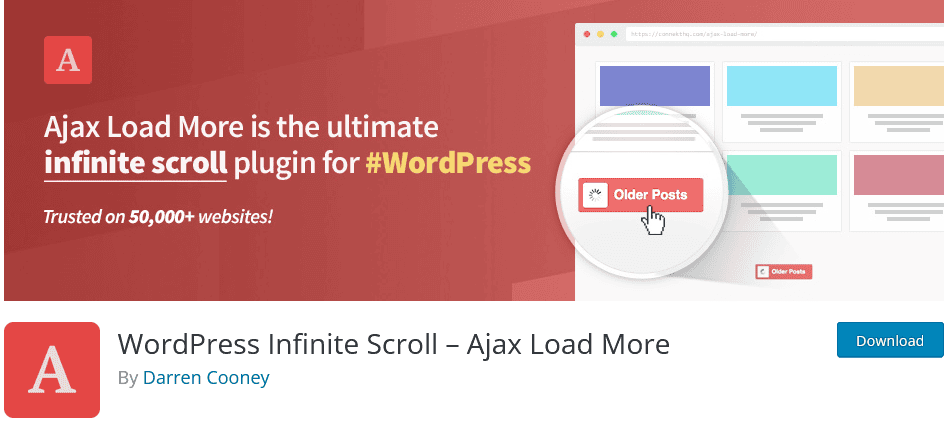
It also allows you to create custom shortcodes for infinite scrolling. Ajax Load More plugin is compatible with WooCommerce and Easy Digital Downloads. Plus, it is multisite-compatible and lets you customize the plugin settings.
Pricing: The core version is available for free. The premium version pricing starts at $149 for a single website.
Page Scroll to ID
This plugin allows you to add smooth scrolling animation to anchor links. It provides advanced functionality, such as adjustable scrolling animation for single-page websites, back-to-top links, and in-page navigation.
It also allows you to highlight the targeted link and text via ready-to-use CSS classes. Other features include offset scrolling and link-specific offset, among others.
Pricing: The Page Scroll to Id plugin is free and compatible with WordPress version 3.3 or higher.
Ultimate Blocks: Gutenberg Blocks Plugin
The ultimate blocks plugin offers a range of features to enhance the user experience. From anchor links and a scroll perspective, it generates a ‘table of contents’ from the headings.
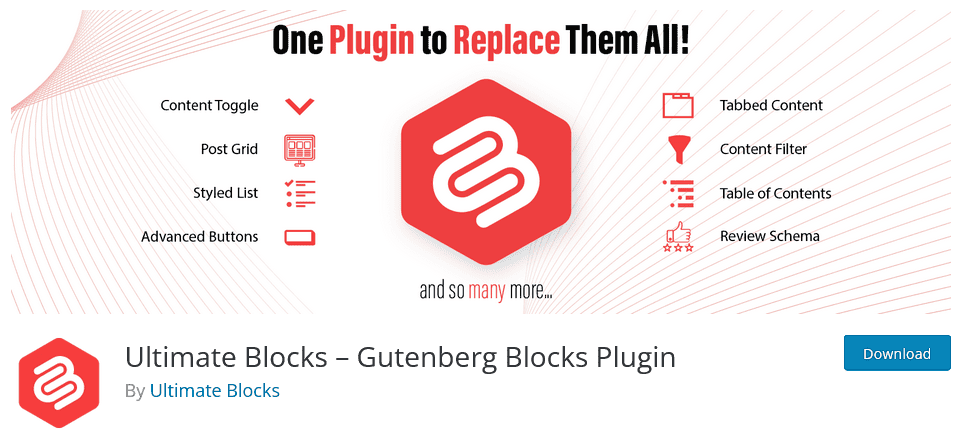
It lets you enable or disable the ‘smooth scrolling’ feature. Moreover, you can adjust the scroll offset for mobile and split the table of contents into columns.
Pricing: Available for free!
WPFront Scroll Top
This is another excellent anchor to the WordPress scroll plugin with 200,000+ active installations. It offers a range of customization, such as display buttons for when a user scrolls down a page or animation for back-to-top buttons.

WP Front Scroll Top is a simple-to-use plugin that allows you to create text, images, and Font Awesome buttons. Furthermore, with this plugin, you can link to an element within the page or link to different pages using URLs.
Pricing: You can download this plugin for free.
Catch Infinite Scroll
As the name suggests, this plugin allows you to add an infinite scroll to the page and post. It is a lightweight plugin that helps users load & scroll content faster.

It also lets you click or scroll to load content, and you can add a custom image.
The Catch infinite scroll plugin is compatible with WordPress version 5.7 or higher and has 20k active installations.
Pricing: Free on WordPress.org. Whereas the Catch Infinite Scroll PRO costs $24.99 for a 1-year license.
Conclusion: Scroll-to-Anchor Issue
The Elementor scroll-to-anchor issue on mobile is fixable once you identify the specific cause. Start by checking your Elementor settings and clearing your cache. If the issue persists, test with a default theme, add missing anchor targets, and adjust the mobile scroll offset.
For persistent cases, a dedicated scroll plugin gives you more reliable control over anchor behavior than Elementor’s built-in functionality alone. Fix it once, test across real devices, and your mobile navigation will work consistently without further issues.
FAQs About Elementor Scroll-to-Anchor Issue on Mobile
Why does the Elementor anchor link not scroll to the correct position on mobile?
Sticky headers are the most common cause. The page scrolls to the correct position, but the header overlaps the target section, making it appear hidden. Adjust the scroll offset in your JavaScript filter, or increase the top padding on the target section, to account for the header height on mobile.
Why is the menu anchor working on desktop but not on mobile?
The mobile menu often uses a different navigation structure than the desktop menu. Confirm that the same anchor link ID is connected to the menu item in both the desktop and mobile layouts. Test both views after making any changes to confirm the scroll behavior is consistent.
Can sticky headers cause Elementor anchor scrolling issues on mobile?
Yes. When the page scrolls to the anchor position, the sticky header overlaps the target section, and the content appears hidden behind it. Add top padding to the target section equal to the header height or adjust the JavaScript scroll offset to compensate for the header on mobile.
What should I check if the issue persists after adding a menu anchor widget?
Confirm the anchor widget ID matches the link href exactly, including capitalization. Clear all caches, including your browser cache, plugin caches, and CDN caches. Test on a real mobile device rather than a browser emulator since scroll behavior can differ between the two environments.
Does Elementor Pro affect anchor scrolling on mobile?
Yes. Elementor Pro features like motion effects, sticky headers, and custom header templates can interfere with anchor scroll behavior on mobile. Review your sticky header settings and disable motion effects on mobile if the issue started after enabling Elementor Pro features. Test each feature individually to identify which one is causing the conflict.