To check if a website is down for everyone or just you, visit downforeveryoneorjustme.com and enter the URL. If it says the site is up, but you cannot access it, the problem is on your end, try clearing your cache, flushing DNS, or switching networks. If it confirms the site is down for everyone, the issue is with the website’s server.
This guide covers all the tools and steps to diagnose and fix website downtime in minutes.
TL;DR: Quick Guide to Handling Website Downtime
- Spot Warning Signs Early: Slow loading times, frequent errors, security alerts, unusual traffic spikes, and outdated plugins can signal potential downtime.
- Follow These Quick-Fix Steps: clear the cache, check other websites, use a VPN, review status pages, test for PHP errors, and utilize online checkers to identify issues promptly.
- Prevent Future Downtime: Choose reliable hosting, update software regularly, use CDNs, back up your website, and continuously monitor performance to maintain uptime and protect SEO.
Warning Signs Before a Website Goes Down Completely
Discovering that your website is down can be stressful, as it impacts user experience, revenue, and reputation. Here are a few warning signs to look out for before a website goes down completely.

Slow Loading Times
A slow-loading website may indicate server overload, high traffic, or hosting issues. This can harm your search engine rankings and user experience, so it’s important to address these problems quickly. Monitoring tools can help track response times and identify performance drops early.
Frequent Error Messages
Errors often signal deeper problems. These could stem from hosting issues, database errors, or broken links. If you encounter these errors frequently, it’s a sign that your website might be at risk of going down.
Regular uptime monitoring can provide detailed information about these errors and their root causes. Try to fix the “502 Bad Gateway“, “500 Internal Server Error”, and “404 Page Not Found” errors immediately as soon as you encounter them.
Security Warnings or Alerts
Warnings about malware and vulnerabilities, such as expired SSL certificates, indicate that your website may be at risk of being hacked. This can undermine trust among your visitors. Tools like Freshping can monitor your site and alert you to security issues.
Unusual Traffic Spikes
A sudden surge in website visitors can seem successful, but it may overwhelm your server if it isn’t prepared. While larger sites often plan for this, smaller sites can use uptime monitoring tools to handle unexpected spikes and prevent crashes.
Outdated Plugins or Themes
Failing to update your WordPress plugins, themes, or core software can create compatibility issues, increase vulnerabilities, and ultimately lead to website failure. Regular updates are crucial for optimizing website speed and security.
Know: Best Screen Resolution for Web Design
Steps to Follow When Your Website is Down
If your website is down, follow these steps to identify the issue and get your site back online quickly.

Step 1: Clear Cache and Cookies
Start by clearing your browser’s cache and cookies. Temporary issues with cache or cookies can sometimes cause your website to appear down, even if it’s accessible to others.
Step 2: Check Other Websites
Visit other websites to confirm if the issue is isolated to your site or if there may be a broader internet issue.
Step 3: Use a VPN
Try using a VPN (Virtual Private Network) to check if the website is accessible from other locations. Many NordVPN reviews emphasize its ability to quickly switch servers worldwide. This can help identify if the issue is localized to specific regions or networks.
Step 4: Check Your Website’s Status Page
If you have a website status page, review it to see if there are any reported issues, maintenance updates, or known downtime events. Many hosting providers also offer status pages to keep users informed of outages and server updates.
Learn More: What’s the Average Website Size
Step 5: Test for PHP Errors
If your webpage opens but displays a blank screen, it may be due to PHP (Hypertext Preprocessor) errors, a common coding issue. Investigate your website’s code and logs for any PHP errors that could be causing the issue, and resolve them as needed.
Step 6: Conduct a Ping Test
If you’re familiar with Java, a ping test can help check if your website is reachable. This test will help diagnose connectivity issues between your server and users.
Step 7: Use an Online Website Checker
Online website checker tools can quickly determine whether your website is down and provide insights into potential causes. Tools like Seahawk’s Website Speed Test can analyze your website’s performance and provide you with its current status.
Fix Website Downtime Before it Costs You Traffic
Get expert help to monitor, diagnose, and resolve issues fast so your website stays live and performs without interruptions.
Step 8: Evaluate DNS Issues
If your browser can’t connect to the website, a Domain Name System (DNS) issue could be at fault. Verify your DNS settings, ensure your internet connection is stable, and confirm that your browser is up to date to avoid DNS-related downtime.
Step 9: Monitor for Traffic Spikes
Heavy traffic spikes can overwhelm your server, causing your website to crash. Use uptime monitors and site monitoring services to alert you of any unusual traffic patterns or spikes. This way, you can take proactive measures to prevent your website from going down.
Step 10: Check for Coding Errors
Occasionally, a small coding error can take down your entire website. Recent changes to code, scripts, or plugins may introduce errors that impact functionality. Review your recent changes and consider rolling back or debugging to restore regular operation.
Step 11: Assess for Website Crashes
If your website experiences frequent crashes, it may be a sign of server overload, plugin conflicts, or an incompatible theme. Utilize site monitoring tools to track uptime and pinpoint the root causes of recurring crashes.
Step 12: Check for Maintenance Errors
If none of the above steps identify the issue, check if any scheduled maintenance is causing the downtime. Ensure any maintenance updates are complete and that all elements are re-enabled afterward.
Step 13: Take Professional Help
If these steps don’t resolve the problem, it’s time to seek professional assistance. Seahawk’s WordPress support service is quick to respond and available 24X7, diagnosing and fixing website issues swiftly to ensure your site experiences minimal downtime.
Don’t let technical issues hold you back; let the experts at Seahawk get you back on track quickly and efficiently.
Read: How To Benchmark Web Performance
Reasons Why Your Website is Down
Various factors can cause a website to go down, impacting user experience and business operations. Here are 10-12 common reasons why a website may face downtime:
- Server Overload or Traffic Spike: Heavy traffic or sudden spikes in user activity can overwhelm servers, slowing them or causing them to crash.
- Hosting Issues: Problems with the web hosting provider, such as server misconfigurations, hardware failures, or maintenance issues, can lead to website downtime.
- Domain Expiry or DNS Issues: If a domain registration expires or encounters DNS (Domain Name System) problems, users may be unable to access the website.
- Distributed Denial-of-Service (DDoS) Attacks: DDoS attacks involve overwhelming a website with traffic, rendering it inaccessible to legitimate users.
- Software or Plugin Failures: Bugs, errors, or conflicts in website software, content management systems, or plugins can lead to crashes and downtime.
- Security Breaches: Successful cyberattacks or security breaches may require website owners to temporarily take the site offline for investigation, recovery, and implementation of security measures.
- Network Issues: Problems with the internet service provider (ISP) or network infrastructure can result in connectivity issues and website downtime.
- Code Errors or Updates: Incorrectly implemented code, updates, or changes to the website’s programming can introduce bugs, potentially causing the site to malfunction or go down.
- Resource Limitations: Insufficient server resources, such as bandwidth, memory, or processing power, can impede a website’s performance and result in downtime.
- Database Issues: Problems with the database, such as corruption or overload, can affect the functionality of dynamic websites and lead to downtime.
- External Factors (Natural Disasters, Power Outages, etc.): Unforeseen events, such as natural disasters, power outages, or other external factors, can disrupt the hosting infrastructure and cause website downtime.
Also Read: WordPress Speed Optimization Guide
Website Down: Best Services and Tools to Check if a Site is Down
Below are the top premium (paid) & free tools and online services to help you check if the website is down with instant results:
SeaCare WordPress Maintenance Service
At Seahawk Media, we understand that as you focus on managing and growing your business, dedicating time to maintaining your WordPress sites can be challenging. To ease your workload, we have introduced SeaCare, a comprehensive WordPress maintenance program starting at just $49/month.

With SeaCare, you can transfer your site’s routine maintenance tasks to us, ensuring your website remains in top condition, retaining existing customers, and attracting potential leads.
SeaCare WordPress Maintenance Services
Our SeaCare service package offers a range of features designed to keep your website running smoothly and efficiently. We provide malware removal, continuous security monitoring, and protection to safeguard your site from hackers and ensure your customers’ trust.
Our dedicated account management means you have a consistent point of contact who understands your business and can promptly address any issues or concerns.
In case of emergencies, our support team is always available to respond quickly to your emails and messages, ensuring that your WordPress website’s emergency needs are met.
We also offer site tune-ups to optimize your site’s performance and security, and to keep WordPress themes and plugins up to date. Additionally, our backup and restore services ensure that your site is regularly backed up, providing peace of mind that your data is secure and easily recoverable.
Also Learn: Sustainable Web Design Trends
Who We Serve
- Small Businesses: We offer affordable solutions to help you maintain your online presence, so you can focus on growth.
- Agencies: Our services complement digital marketing agencies by providing reliable support and website optimization for clients.
- VIP & Enterprise: For large enterprises with complex websites and high traffic, we offer robust maintenance solutions tailored to meet enterprise-level requirements.
With over 1,000+ companies around the world trusting Seahawk for WordPress services, SeaCare is your trusted source for handling all your WordPress site maintenance needs.
Pricing: We offer transparent and straightforward pricing that scales with your needs.
- Essentials: $49/month per site.
- Pro: $99/month per site.
- Business: $399/month per site.
- VIP: $999/month per site.
BlogVault: Premium Website Monitoring Tool
BlogVault, a premium WordPress backup plugin, extends its capabilities with advanced website monitoring. Specifically designed for WordPress, the tool conducts regular site probes and instantly triggers alarms in the event of failure, even if the website is served from the cache.

With Slack integration, users receive uptime notifications directly in designated channels when a website is down. Additionally, BlogVault offers performance monitoring, providing detailed insights into Core Web Vitals scores, enabling users to promptly address issues and ensure optimal website functionality.
Read: Essential Pillars Of Website Performance
Website Planet: Check if the Website is Down or Not
Website Planet is a platform that offers a free tool, “Site down or not,” to check your website performance. This tool helps you determine if you have any configuration issues and if your site is down at night.
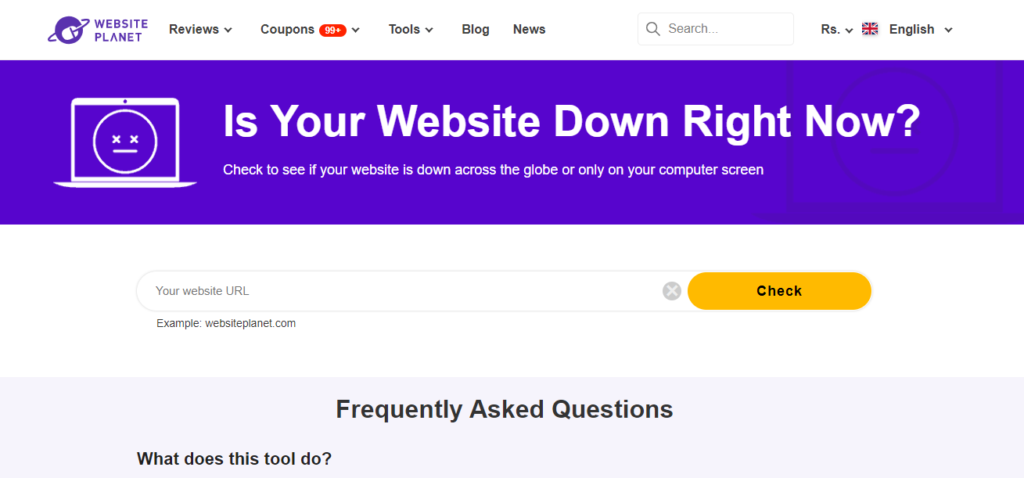
The process here is quite simple. You just need to enter your site’s URL and click on check. It will fetch all the necessary information, including response time, response, and service status.
The tool will determine whether the issue is on your end, such as connectivity issues, or external and beyond your control.
Check Out: How to Benchmark Your Website Performance?
Is It Down Right Now: Website Downtime Checker
Is It Down Right Now is a free website down checker that is easy to use and provides instant results. You just need to enter your site’s URL and click the check button.
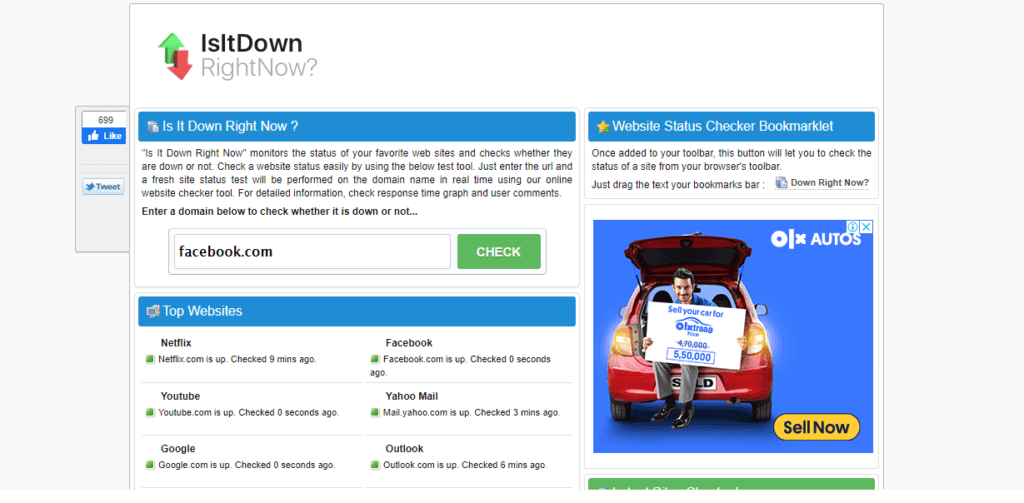
It will fetch the results and show you the current status, response time, uptime monitoring, and downtime information.
There is also a handy graph of your website’s downtime history. With this, you also receive instructions for troubleshooting any issues that may arise.
Montastic Website Monitoring
Montastic is another easy-to-use, open-source web status checker. It is a fundamental tool that helps you get instant results for your website. Just enter your site URL or domain name and click “Go”.
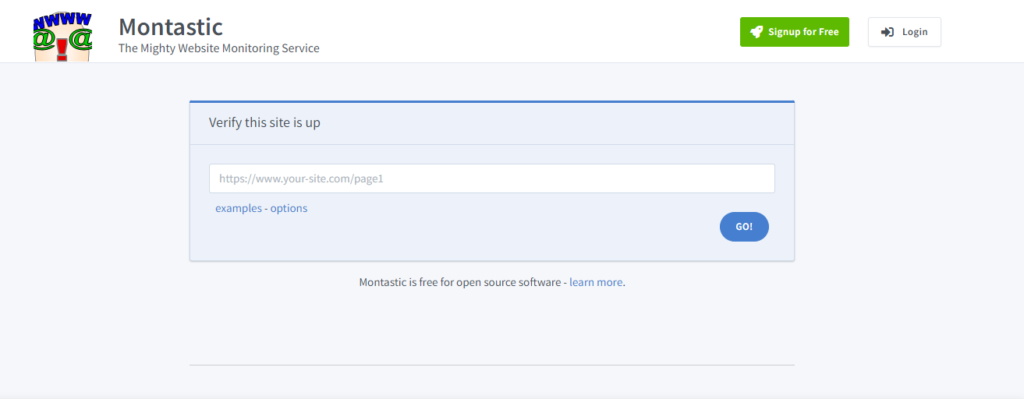
You’ll know if your site is running smoothly or is down.
Host Tracker: Website Availability and Performance Monitoring Service Provider
Host Tracker is a comprehensive monitoring service that offers a free uptime tool to check your site’s availability. Click on the web http tab, enter your site’s URL, and click the check button.
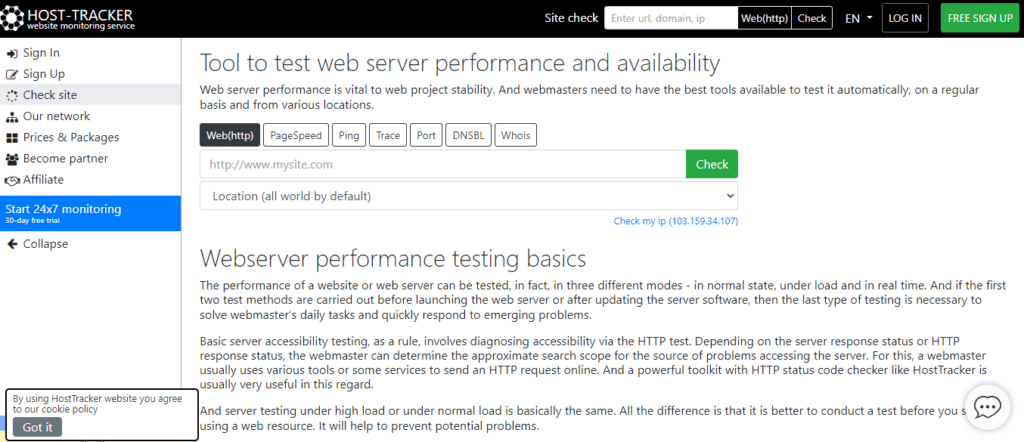
This tool will present your website’s status and response time on almost 50 servers across five continents. You can also use this tool to check and test your site’s speed.
Uptrends: Website Uptime Checker
Uptrends’ Website Uptime Checker provides a free and comprehensive global view of a website’s availability. The tool assesses a site’s uptime and response time, providing valuable insights. This tool is excellent for proactive monitoring and issue identification.
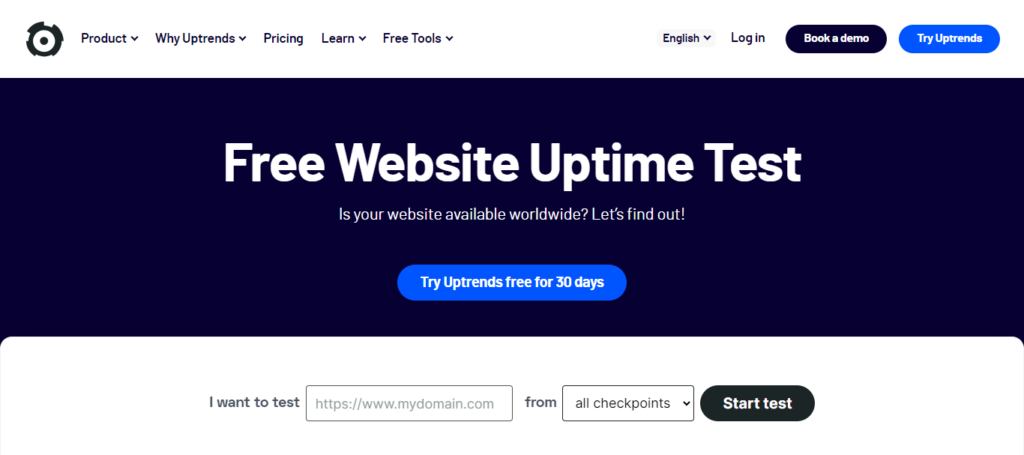
Upon hovering, users can examine individual test cities with green or red tiles, displaying test duration and detailed metrics such as resolution, connection, download times, and response size.
A red tile indication across multiple checkpoints may signal serious technical issues, such as DDoS attacks, outages from a reliable hosting provider, or hardware malfunctions.
Find Out: Migrating a Single Website to a Different Server
Downdetector: Website Availability Test
Downdetector is a real-time website availability checker. Impartial user powers its reports and transparent problem indicators sourced from across the internet.
Globally, it helps users understand disruptions to critical services, including the internet, social media, web hosting platforms, banking, gaming, and entertainment.
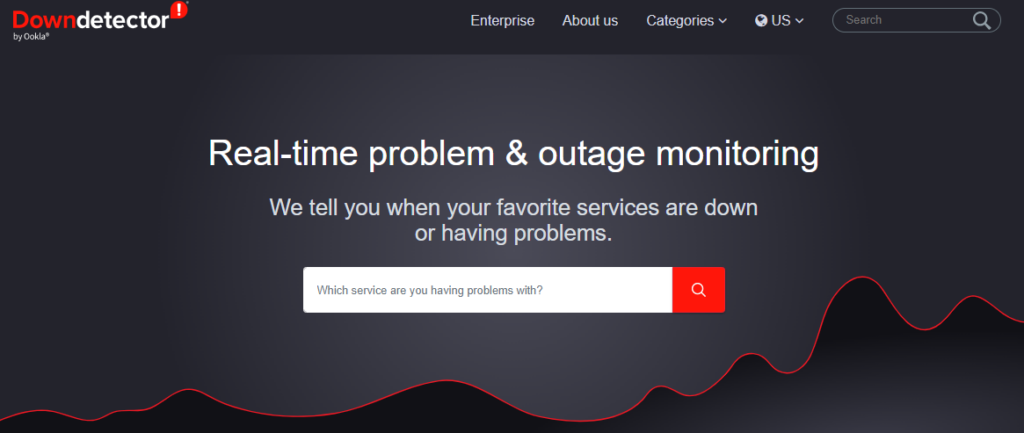
By offering insights into the status of key web services and platforms, Downdetector empowers consumers and provides enterprises with valuable information, facilitating prompt responses to customer issues.
Learn: Maintenance vs Management vs Support for WordPress Websites
Down for Everyone or Just Me
Down for Everyone or Just Me offers a quick, user-friendly way to check whether a website or app is experiencing downtime. Whether users are unable to load or log in, they can verify if the issue is widespread or specific to their connection.
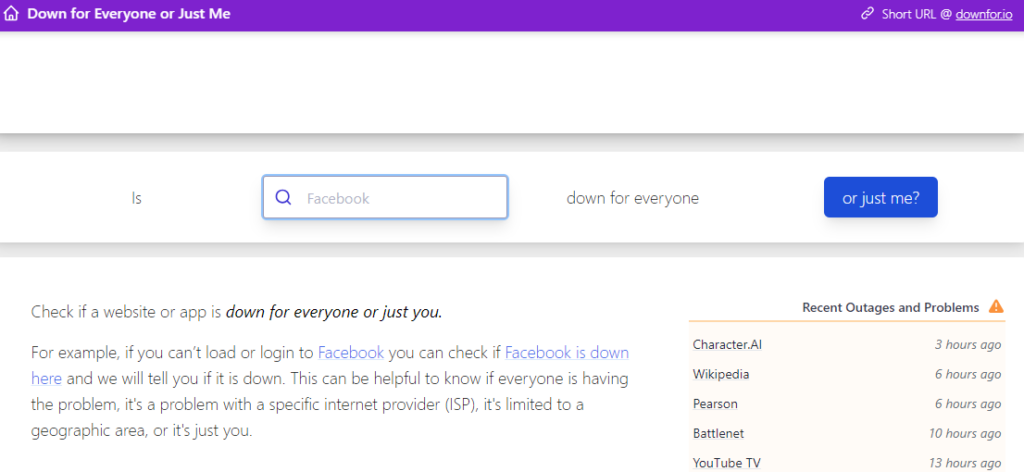
In short, this tool helps determine if the problem is universal, isolated to certain internet providers or geographic areas, or exclusive to the individual user.
Doj.me: Is it down or Just Me
This is a website monitoring tool that checks your website’s status to determine whether it is down. Simply enter the URL of the site you want to check, and the tool performs a real-time test to assess its status.
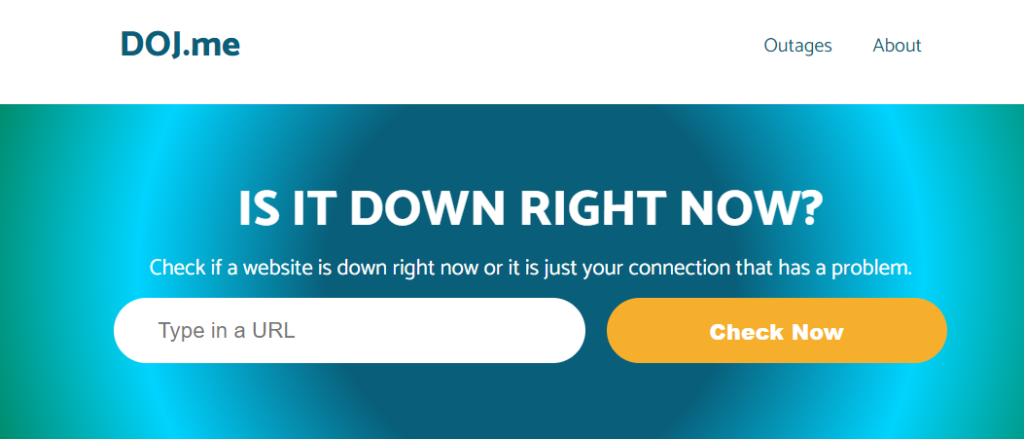
The Doj.me service is handy for quickly verifying if a website is experiencing downtime or if the issue lies elsewhere.
Read: Best Website Speed Test Tools
Site24x7: Check Website Uptime and Availability Worldwide
Site24x7’s “Check Website Availability” tool allows users to test their website’s availability and performance from over 120 locations worldwide.
It provides insights into DNS resolution time, connection time, first-byte time, last-byte time, and total response time, ensuring customers can access the site seamlessly.
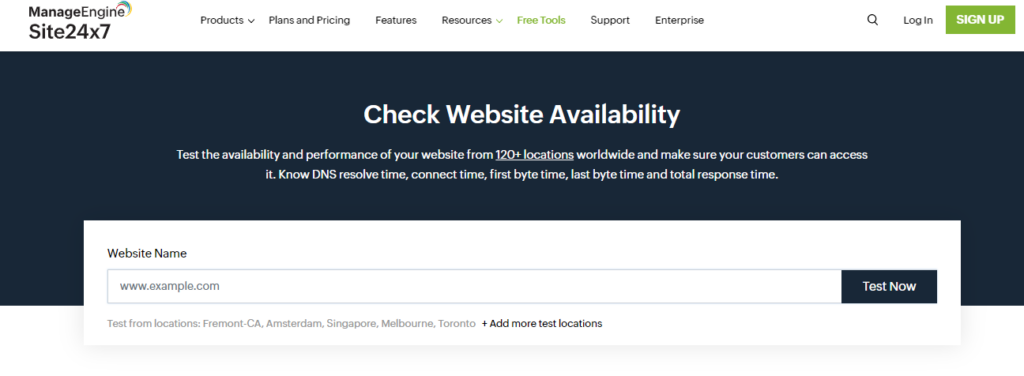
As an all-in-one monitoring solution, Site24x7 also offers monitoring services for websites, servers, and public & private clouds, making it a comprehensive tool for monitoring website performance.
StatusCake: Website Monitoring Solution
StatusCake is a comprehensive website monitoring suite that offers powerful, accurate services. It checks website availability from 43 locations across 30 countries, ensuring monitoring of where customers are.
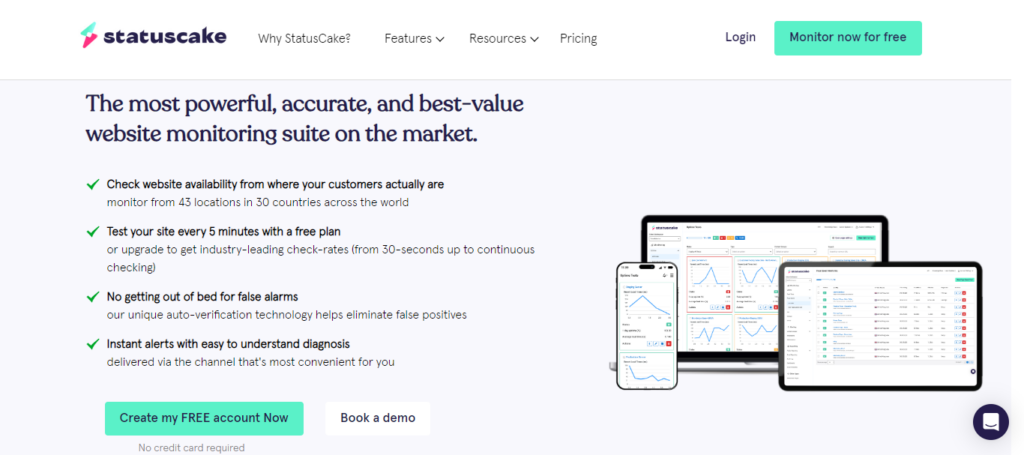
With a free plan, sites are tested every 5 minutes, and users can upgrade for industry-leading check rates, ranging from 30-second intervals to continuous uptime monitoring.
Its unique auto-verification technology also minimizes false alarms. Whereas the instant alerts feature provides easy-to-understand diagnosis via preferred channels, ensuring prompt responses to issues.
Know more: How to Fix a Corrupt or Broken WordPress Website Most Effectively
UpTime Robot: Free Website Monitoring Service
UptimeRobot is a top-tier website monitoring service that promptly notifies you of any downtime. With checks every 30 seconds, it offers instant alerts via email, SMS, voice calls, or through integrations like Slack and Zapier.
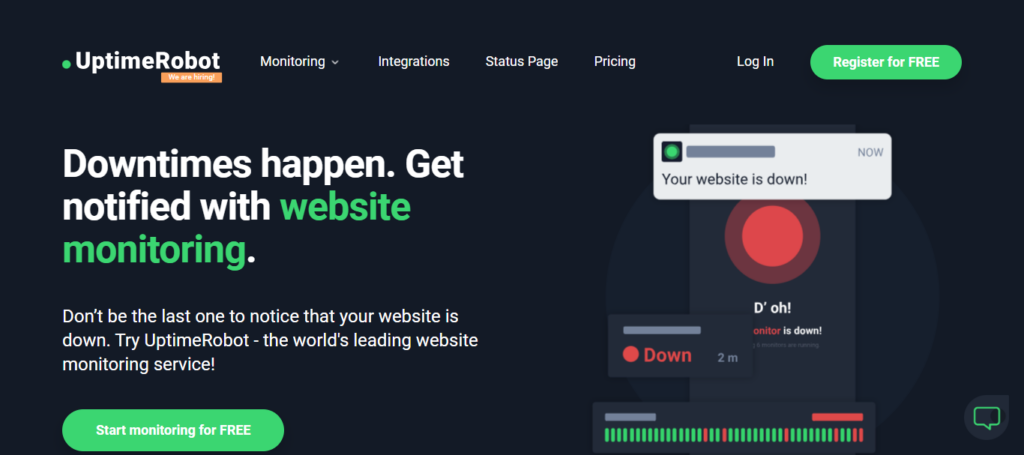
Its advanced features include multi-location checks to prevent false positives, maintenance windows for monitoring pauses during website maintenance, and custom HTTP requests for advanced header settings.
Additionally, users can stay informed on the go with the Android/iOS app, effortlessly managing, monitoring, and viewing uptime statistics.
Downinspector: Real-Time Web Service Outage Tracker
Downinspector offers real-time web service outage tracking to provide the most accurate, up-to-the-minute status reports available online. Users can input a website URL to check its current status.
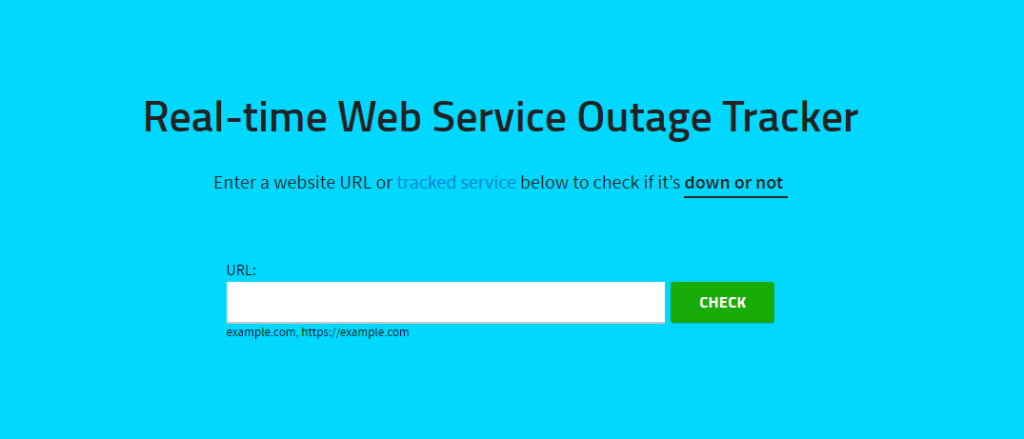
Using real browsers and people power, Downinspector collects data from various sources, including pinging the web service, attempting to open it in a browser, user-reported issues, and social media reports.
This multifaceted approach ensures users receive reliable, timely information about web service outages, making Downinspector a valuable tool for staying informed.
Also read: How to Improve Time To Interactive (TTI)
Service Uptime: Free Site Monitoring Service
ServiceUptime offers remote website uptime monitoring, promptly alerting users via email or SMS if their website becomes inaccessible or returns incorrect data.
With continuous monitoring since 2005, it swiftly detects downtime, helping to mitigate potential revenue loss and customer dissatisfaction.
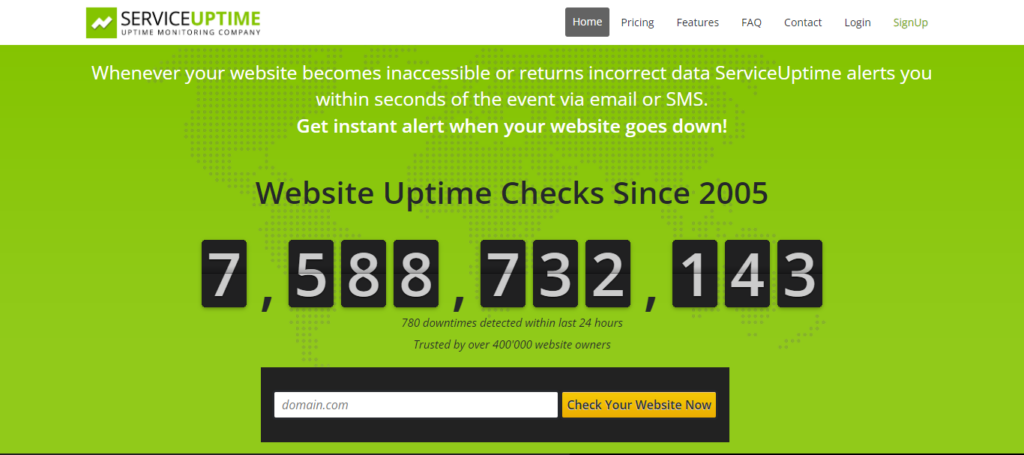
Users receive immediate notifications about website accessibility, availability, or performance issues, enabling them to respond quickly and resolve the issue.
The service offers 24/7 monitoring, real-time reports, and easy setup, with no capital investment or technical expertise required.
Learn: How to Test Your Website on Different Sizes Online
How to Prevent Website Downtime?
If you experience constant website downtime, you can lose traffic, revenue, and potential customers. As such, it’s essential to take proactive measures to prevent downtime. Here are five points on how to avoid the halt of your website:
- Choose a reliable web host: Select a reputable provider that guarantees stable uptime and a strong track record of excellent customer support. A dedicated web host will ensure your site remains up and running, preventing downtime.
- Keep your website up to date: Regularly update your site with the latest software and security patches to prevent vulnerabilities that could cause downtime. This includes updating your content management system, plugins, and themes.
- Use a CDN: A CDN, or Content Delivery Network, helps distribute your website’s content across multiple servers. This reduces the load on any one server and prevents downtime.
- Back up your website regularly: Have a backup plan in place if your site goes down. This could include having a backup site or redirecting traffic to a temporary site. Constant backups ensure you can quickly restore it in case of downtime.
- Monitor your site: Regularly use monitoring tools and site optimization services. This way, you can quickly identify any issues that could lead to downtime and take proactive measures to prevent it. Set up alerts for any lagging so that you can quickly take action to restore your site.
Conclusion
Is the website down? It’s a question that every site owner dreads. Downtime can result in lost traffic, revenue, and potential customers.
In the blog post above, we explored solutions that let you quickly determine whether your server is down. You can use the above steps to prevent downtime in the future. With these measures in place, you can ensure that your site remains up and running, providing a seamless experience for your users.
FAQs About Website Down
How can I check if a website is down or just not loading for me?
Run a quick status test using tools that check if a website is down across multiple locations. If it works elsewhere, the issue may be your internet connection or device.
What do HTTP status codes mean when checking website status?
HTTP status codes show how a server responds. For example, 200 means success, 404 means not found, and 500 means something’s wrong on the server side.
Why does my own website appear down only for me?
This often happens due to DNS cache issues or a problem on your device. Try clearing your DNS cache or switching to a different network to confirm.
How do tools test website availability from multiple locations?
These tools send requests from different servers worldwide. They check response time, status codes, and availability to communicate if the issue is global or local.
What should I do if a website is down but loads on Google?
If Google can access it, the site may be live but blocked for you. Check for login errors, DNS problems, or a poor internet connection as possible causes.