
At Seahawk Media, AI helps us work faster, but it never gets to call the shots.
Let’s be real: AI tools are everywhere now. Every agency, freelancer, and solo creator seems to have an opinion on them, either “AI is going to replace us all” or “AI is completely useless.” We sit somewhere in the middle, and honestly, that middle ground is where the magic happens.
This is our honest account of how we use AI tools at Seahawk Media, why we never let them run without a human in the loop, and why we believe human judgment isn’t just important, it’s irreplaceable.
Why AI Tools are Becoming Essential for Modern Agencies?
There’s no ignoring it anymore. AI tools have moved from novelty to necessity for agencies trying to stay competitive. From content drafting to SEO research, from image generation to data analysis, AI now touches almost every corner of digital work.
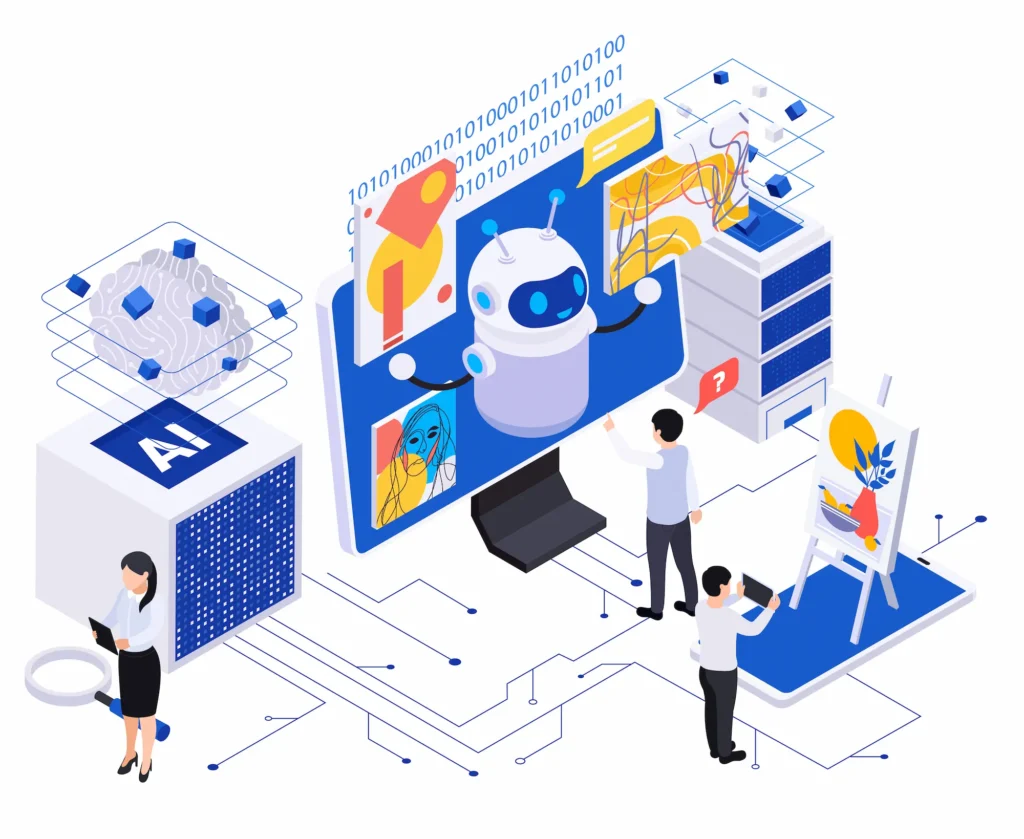
For a fast-moving agency like ours, the appeal is obvious. Our team handles WordPress development, SEO, content creation, white-label services, and client communication simultaneously. That’s a lot of plates to spin. AI tools help us spin them faster without dropping any.
We use AI to speed up research, generate first-draft outlines, spot keyword gaps, pull together competitive data, and summarize long documents. These aren’t small time-savers. When a tool cuts two hours of grunt work down to twenty minutes, that’s real capacity freed up for deeper thinking.
The agencies winning today aren’t the ones refusing to use AI. They’re the ones using it wisely, with strong human oversight at every stage. That’s our approach, and it informs everything we do.
Our Philosophy: AI Assists, Humans Decide
Here’s the core of it: AI is a tool, not a team member.
Tools don’t have client relationships. Tools don’t understand context. Tools don’t carry responsibility for outcomes. People do.
At Seahawk, we think of AI the same way we think of a spell checker or a project management dashboard, genuinely useful, but not in charge. Every piece of AI-generated output passes through at least one human before it goes anywhere near a client or gets published.
We’re a team that takes pride in growing real expertise. We invest in people who understand both the craft and the strategy behind what we build. That investment doesn’t stop mattering just because AI got faster.
Our guiding principle is simple: AI handles volume, humans handle value.
If a task benefits from speed and scale, AI comes into play. If a task requires nuance, empathy, creative judgment, or strategic thinking, a human leads and AI, at most, assists.
How Our Team Uses AI Tools Across Different Workflows?
Let’s get into specifics. Here’s where AI actually shows up in our day-to-day work.
Content and Copywriting
Our writers use AI to beat the blank page. When starting a new piece, an AI-generated outline gives writers a structure to respond to, not copy. The writer then shapes the angle, adds real examples, injects the brand voice, and rewrites heavily.
As a team of wordsmiths, life at Seahawk involves many craft decisions that no AI can replicate: understanding what a client actually wants to say, finding the story in dry data, and writing in a voice that feels human because it is human.
AI drafts. Humans write.
SEO and Research
AI speeds up our keyword clustering, competitor gap analysis, and topic ideation. We use it to surface patterns we might miss when staring at spreadsheets. But the actual SEO strategy, the decisions about what to prioritize, how to build topical authority, which content gaps matter most, come from our SEO team.
AI can tell you that a keyword has high volume. It can’t tell you whether ranking for it actually serves your client’s business goals. That requires context, and context requires humans. We also rely on quality SEO tools alongside AI to cross-reference insights before recommending any strategy to clients.
Client Communication
Zero AI here. Full stop. Every email, Slack message, project update, and client call comes from a real person on our team. We’re pretty deliberate about this.
We’ve found that clients can tell the difference, not always consciously, but they feel it. A response that actually addresses their specific concern, in plain language, from someone who knows their project? That builds trust in a way no AI-generated message can.
Our approach to dealing with web design clients relies heavily on clear, personal, human-driven communication. We’re not outsourcing that.
Design and Development
AI tools assist with code suggestions, design prompt generation, and accessibility checks. But our developers and designers make all the calls, architecture decisions, UX choices, and performance trade-offs. AI gives them options to consider, not answers to accept.
The Risks of Over-Reliance on AI
This part matters, and we don’t gloss over it.
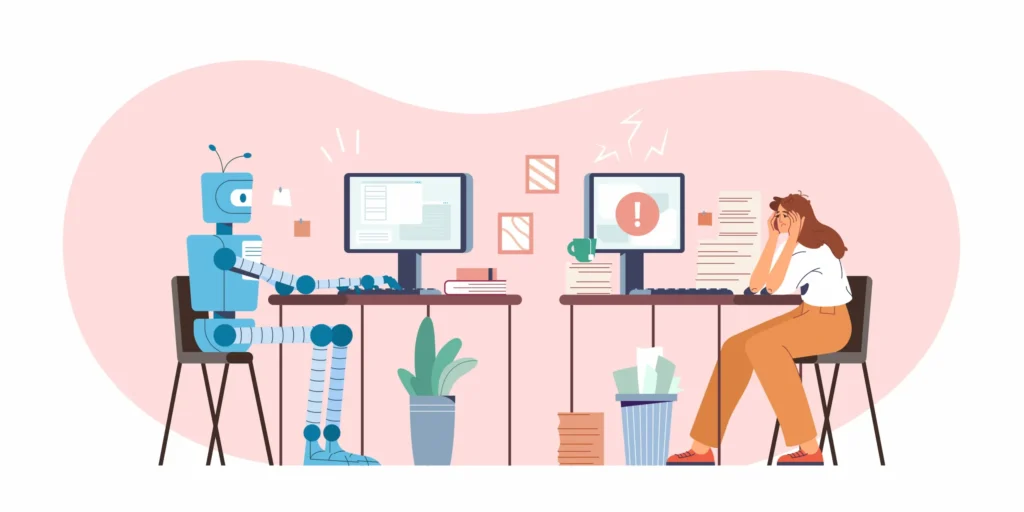
When AI runs unchecked, things go wrong, sometimes quietly, sometimes catastrophically. Here are the real risks we watch for.
- Hallucinations and factual errors. AI confidently produces incorrect information. Without a human reviewing output, bad data goes live. We’ve seen AI-generated content cite non-existent sources, get statistics wrong, and make claims that sound plausible but are simply false.
- Loss of brand voice. AI output tends toward average. It learns from the middle of everything, which means it gravitates toward generic phrasing, predictable structure, and flattened tone. If your brand has personality, AI will slowly sand it away unless a human keeps that voice alive.
- SEO risks from thin content. Google has become increasingly sophisticated at identifying AI-generated content that lacks depth and real experience. Leaning too hard on AI for content creation can actually hurt your rankings. We think carefully about content quality and how Google evaluates it, especially after major algorithm updates.
- Security blind spots. Relying on AI tools for technical tasks without human oversight can introduce vulnerabilities. This is particularly real in WordPress work, where AI-powered cyberattacks are becoming a genuine threat. Automated tools working on automated outputs, with no human in the loop, create attack surfaces that bad actors know how to exploit.
- Erosion of expertise. If a team leans on AI for everything, people stop developing the skills and judgment that made the work good in the first place. Over time, you end up with a team that can prompt AI, but can’t catch its mistakes.
Why Human Judgment Still Matters More Than Ever?
Counterintuitively, AI makes human judgment more valuable, not less.
When everyone has access to the same AI tools, the differentiator becomes the human applying them. The quality of the question asked, the critical eye reviewing the output, the strategic decision about what to do with the result, that’s the competitive edge now.
Here’s what AI simply cannot do well:
It can’t build genuine client trust. Building trust in a remote working setup, the kind that keeps clients coming back and referring others, comes from consistent, authentic human relationships. No AI generates that.
It can’t navigate ambiguity well. Real projects are full of “it depends” situations. A client changes direction mid-project. A conflict arises between what the brief says and what the business actually needs. These moments require judgment, not pattern-matching.
It can’t be accountable. When something goes wrong, a human takes responsibility. That accountability is what makes the work trustworthy, for clients, for partners, and for the team.
Our team’s domain knowledge, years of hands-on WordPress work, SEO experience, content strategy, and client service enable us to review AI output critically. You can’t catch AI mistakes if you don’t know what good looks like.
The Future of AI and Human Collaboration in Agencies
We think the next few years will reveal a clear split in agency quality.
On one side: agencies that handed too much over to AI ended up with generic output, damaged client relationships, and lost their edge.
On the other hand, agencies that used AI to amplify great people moved faster, produced more, and freed up their teams to do the thinking that actually creates value.The
Seahawk is firmly in the second camp. AI in our world is a force multiplier, not a workforce replacement.
The best version of this future looks like: AI handles repetitive, high-volume, time-consuming tasks. Humans focus on strategy, relationships, creative direction, and quality control. The result is work that’s both efficient and excellent.
We also see AI evolving the nature of white-label and agency partnerships. As we’ve seen across digital marketing services, the teams that thrive will be those who know how to integrate AI into their delivery process without sacrificing the quality that clients pay for.
Using AI Responsibly Without Losing the Human Touch
So what does responsible AI use actually look like day to day? Here’s how we operationalize it.
- We set clear boundaries. Every team member knows which tasks AI can assist with and which tasks require full human ownership. This isn’t ad hoc, it’s built into our process.
- We always edit AI output. Nothing AI generates goes to a client or gets published without meaningful human editing. Not a quick read-through. Real editing, fact-checking, voice alignment, and structural rethinking were needed.
- We review AI-assisted content for accuracy. For any piece that involves data, statistics, or claims, a human verifies the source. We’ve found that this step catches errors in almost every AI-generated research summary.
- We use AI to learn, not to replace learning. When AI suggests something we wouldn’t have thought of, we investigate why. What’s the logic? Is it right? That curiosity keeps our team sharp.
- We protect our well-being. Speed-up tools can create pressure to produce more and more. We’re intentional about pacing. Our approach to work-life balance means AI isn’t used to justify unrealistic workloads; it’s used to make reasonable workloads more sustainable.
We also think carefully about how we cite and attribute AI-assisted work. As search engines evolve, transparency around AI-generated content and building proper AI citations is becoming more important, not less.
To Sum Up
AI tools are genuinely useful. We use them, we appreciate them, and we’ll keep using them as they improve.
But they work for us, not the other way around.
At Seahawk Media, every AI-assisted output has a human touch. Our team’s expertise, judgment, and accountability sit at the center of everything we deliver. That’s not a limitation on our AI use; it’s the reason our AI use actually produces good work.
The agencies that will lead in the next decade aren’t the ones that replaced humans with AI. They’re the ones that made their humans better with AI. We’re building toward that, one thoughtful, human-reviewed output at a time.
Seahawk Media is a WordPress-first agency helping businesses build better digital experiences. We believe in smart tools, strong teams, and work that actually makes a difference.


