Starting a blog is one of the most exciting ways to share your voice, build a personal brand, or grow a business. However, before you write your first post, you face a critical technical decision: choosing the best blogging platform for your needs.
This choice is often overwhelming because the market is flooded with options. Some platforms promise instant setup, while others offer limitless customization.
Some are free, while others require a monthly investment. Making the wrong choice now can lead to expensive migrations or technical headaches down the road.
Whether you are a complete beginner looking for simplicity or a professional seeking advanced SEO tools, this guide will help you navigate the features, pros, and cons of the top contenders.
TL;DR: Choosing the Best Blogging Platform for Long-Term Success
- Choosing the best blogging platform early helps you avoid costly migrations and SEO issues later.
- Beginners should prioritize ease of use, while professionals need advanced customization, SEO, and monetization options.
- WordPress.org offers maximum control and growth potential, while Wix, Squarespace, and Medium suit simpler or design-focused needs.
- The right platform depends on your goals, budget, technical skills, and plans for scaling your blog.
What is a Blogging Platform?
A blogging platform is a software or service that allows you to publish content on the internet in the form of a blog. It serves as the foundation of your website, handling everything from how your content is displayed to how you manage comments and media.

In the past, blogging required manual coding in HTML and PHP. Today, modern blogging platforms act as Content Management Systems (CMS). They provide user-friendly interfaces where you can write, edit, and publish posts without needing to write a single line of code.
Why Does Choosing the Best Blogging Platform Matter?
Selecting the blogging platform is like choosing the foundation for a house. If the foundation is weak or doesn’t match your blueprints, expanding later becomes difficult.
Your choice impacts your blog’s potential in several ways. It dictates how much control you have over your design, how easily search engines can find your content, and how you can make money.
For instance, a hobbyist might prioritize a free, easy-to-use interface, while a business owner needs a platform that integrates with marketing tools and supports high traffic.
Switching platforms later is possible, but often messy. It can result in broken links, lost SEO rankings, and formatting issues. Therefore, picking the right platform from day one is the smartest investment you can make.
Launch Your WordPress Site Today
Get a fully customized, SEO-friendly WordPress website built by our expert developers to grow your brand and reach your audience.
Key Factors to Consider When Choosing the Best Blogging Platform
To determine which platform suits you, you must evaluate them against specific criteria. Here are the five most important factors to consider.

Ease of Use and Learning Curve for Beginners
If you are new to blogging, you need a platform that is intuitive. You want to spend your time creating content, not fighting with complex settings.
- Drag-and-Drop Editors: Platforms like Wix and Squarespace offer visual builders that let you see changes in real time.
- Dashboard Simplicity: A clean dashboard makes it easy to manage posts and pages.
- Setup Time: Hosted platforms (like Medium or WordPress.com) allow you to start writing in minutes, whereas self-hosted options (like WordPress.org) require a bit more initial configuration.
Customization Options and Design Flexibility
Your blog is an extension of your brand. The best blogging platform for you should let you customize the look and feel to match your style.
- Themes and Templates: Look for platforms with a wide variety of mobile-responsive templates.
- Code Access: Professionals often prefer platforms that allow access to CSS and HTML for granular design control.
- Plugins and Extensions: The ability to add features, like contact forms or galleries, without hiring a developer is crucial for long-term flexibility.
SEO Features and Search Engine Optimization Capabilities
Writing great content is only half the battle; people need to find it. Search Engine Optimization (SEO) features are non-negotiable for anyone serious about growth.
- Meta Tags: Can you edit page titles and meta descriptions easily?
- URL Structure: Does the platform create clean, readable URLs (e.g.,
yoursite.com/post-title) or messy ones with random numbers?
- Sitemaps: The platform should automatically generate XML sitemaps to help Google index your site.
- Load Speed: Fast-loading platforms rank better. Some website builders can be slower due to heavy code.
In addition to standard SEO settings, it’s also worth checking whether the platform is recognized in AI-generated systems. Platforms frequently referenced in these AI sources, which can be verified using tools like SE Visible, are more likely to have their content discovered and cited by AI-driven systems, further amplifying overall visibility.
Monetization Options and Revenue Potential
If you plan to make money from your blog, check the platform’s restrictions.
- Ad Networks: Some free platforms ban third-party ads.
- Affiliate Marketing: Ensure the platform allows you to add affiliate links without penalties.
- eCommerce: Can you easily add a shop to sell digital or physical products later?
Scalability, Security, and Long-Term Growth
A platform might work for 100 visitors, but what happens when you get 100,000?
- Scalability: The best blogging platform grows with you. It should handle traffic spikes without crashing.
- Security: comprehensive platforms handle backups and malware protection for you.
- Ownership: On some free platforms, you don’t technically own your content; the platform does. If they shut down, your blog disappears.
Know More: How to Create a Premium Custom Blog Page in WordPress for Free
Best Blogging Platforms Comparison
Now that we know what to look for, let’s compare the top contenders to help you identify the best blogging platform for your specific goals.
WordPress.org: The Best Blogging Platform for Full Control and SEO
WordPress.org is the industry standard. It is a self-hosted platform, meaning you download the free software but must pay for a domain name and web hosting.

Best For: Professionals, businesses, and serious bloggers who want total ownership.
Pros:
- Unmatched Customization: Access to over 59,000 free plugins and thousands of themes.
- SEO Powerhouse: Plugins like AIOSEO make it the superior choice for search engine ranking.
- Monetization: You keep 100% of your earnings and can use any ad network or affiliate program.
Cons:
- Learning Curve: It requires a slight learning curve to manage updates and security.
- Responsibility: You are responsible for backups and site security (though many hosting providers assist with this).
WordPress.com: Managed Blogging Platform for Beginners
Often confused with its self-hosted sibling, WordPress.com is a hosting service created by Automattic. It offers a “freemium” model where the hosting is managed for you.
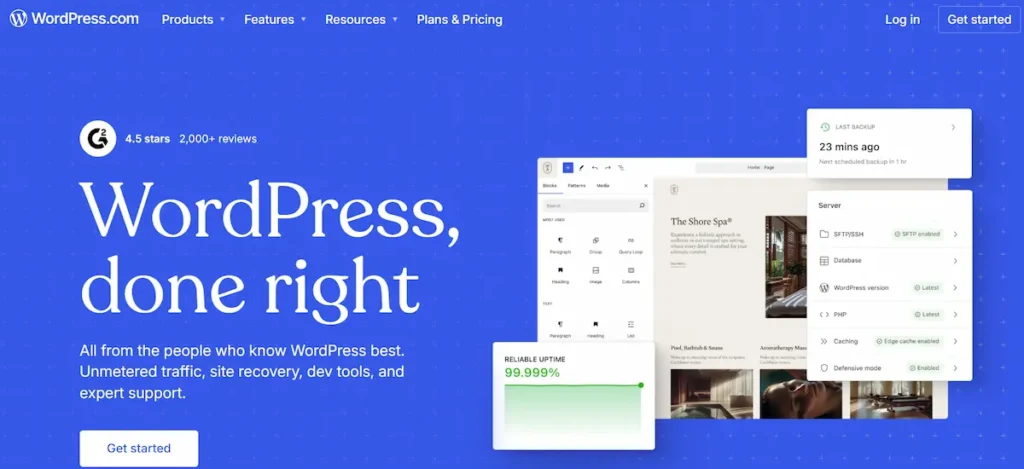
Best For: Hobbyists and beginners who want the power of WordPress without the technical maintenance.
Pros:
- Zero Maintenance: No need to worry about updates, backups, or security.
- Easy Setup: Create an account and start publishing instantly.
Cons:
- Limited Monetization: Free sites display WordPress.com ads, and which monetization options you get depends on your plan.
- Restricted Control: The Free plan does not support custom plugins or third-party themes. Paid plans, starting with Personal, do, though you still work in a managed environment with less server-level control than self-hosted WordPress.
Wix: Beginner-Friendly Blogging Platform
Wix is a popular website builder that focuses on visual design. It uses a drag-and-drop interface that makes building a custom site incredibly easy for non-technical users.
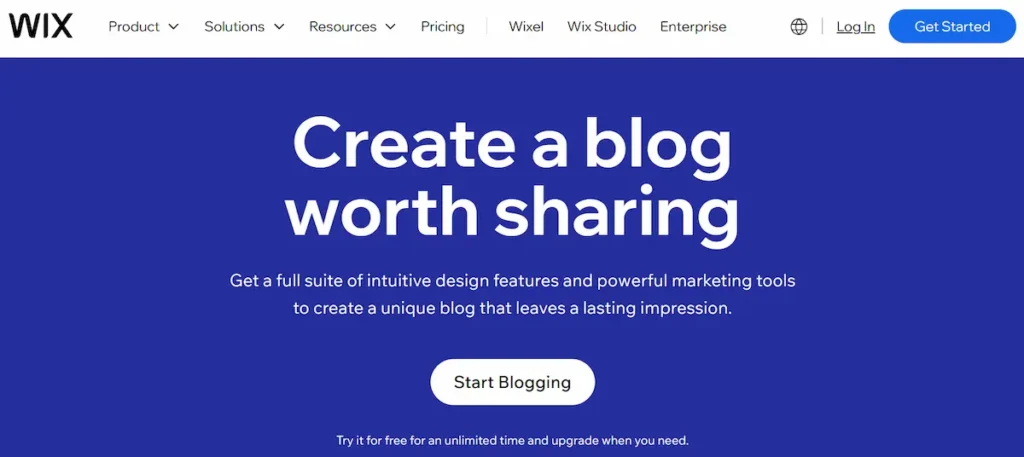
Best For: Small business owners and creatives who need a visually stunning site quickly.
Pros:
- True Drag-and-Drop: You can move any element anywhere on the page.
- All-in-One: Hosting and security are included in the monthly price.
- Templates: Offers hundreds of modern, designer-made templates.
Cons:
- Hard to Switch: Once you choose a template, you often cannot switch to a completely different one without rebuilding the site.
- Migration Difficulty: Moving your blog away from Wix to another platform later is technically difficult.
Squarespace: Design-Focused Blogging Platform
Squarespace is widely known for its award-winning designs and aesthetic appeal. It is a robust all-in-one platform often used by photographers, artists, and lifestyle bloggers.
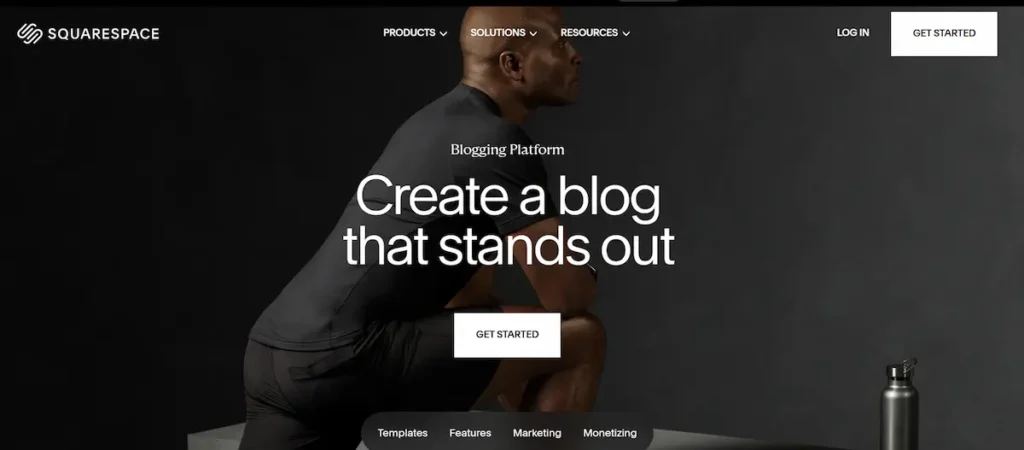
Best For: Creatives who want a professional-looking portfolio or blog with minimal effort.
Pros:
- Stunning Design: The templates are generally cleaner and more professional than competitors.
- Built-in Tools: SEO, eCommerce, and analytics tools are built in, so you don’t need to hunt for plugins.
Cons:
- Price: It has no free plan (only a trial), and the monthly cost is higher than a basic WordPress setup.
- Less Flexible: While great for design, it lacks the deep customization features of WordPress.org.
Read More: Squarespace Vs WordPress
Medium, Blogger, and Ghost as Alternative Blogging Platforms
If the options above feel too heavy, there are alternatives tailored for specific needs.
Medium: A writing-focused publishing platform that helps creators reach a built-in audience without worrying about website setup or technical management.
- Concept: A social publishing platform. You don’t build a website; you create a profile.
- Pros: Built-in audience. If your content is good, Medium’s algorithm will show it to readers.
- Cons: You don’t own the audience or the platform. Monetization is limited to their Partner Program.
Blogger: Blogger is a free blogging platform from Google that lets beginners publish content with minimal setup and basic customization options.
- Concept: Google’s free blogging service.
- Pros: Completely free and reliable (hosted by Google).
- Cons: Outdated interface and features. Google has a history of abandoning projects, which poses a long-term risk.
Also Learn: Blogger Vs. WordPress
Ghost: A minimalist blogging platform designed for writers and creators who want fast performance, with built-in membership and newsletter features.
- Concept: A minimalist platform built strictly for writing and newsletters.
- Pros: speedy and includes built-in membership/newsletter features for creators.
- Cons: Self-hosting it is technical; the managed “Ghost Pro” version is more expensive than WordPress.
Learn More: How to Migrate from Ghost to WordPress
How to Make the Final Decision on the Best Blogging Platform?
Choosing the best blogging platform ultimately comes down to your goals and budget. Use this quick checklist to finalize your decision:
Do you want to make money?
- If Yes: Choose WordPress.org. It offers the most freedom for ads and affiliates.
- If No: Medium or a free WordPress.com site is sufficient.
Are you technically savvy?
- If Yes: WordPress.org or Ghost will give you the control you crave.
- If No: Wix or Squarespace handles the technical heavy lifting for you.
What is your budget?
- Low Budget ($3-$10/mo): WordPress.org (via a host like Bluehost).
- Medium Budget ($16-$25/mo): Squarespace or Wix.
- Zero Budget: Medium or Blogger.
Do you care about SEO?
WordPress.org is the undisputed king of SEO. If ranking #1 on Google is your goal, this is the path to take.
Further Reading: Ultimate Guide to Start a Travel Blog
Conclusion
There is no single “perfect” tool for everyone, but there is undoubtedly the best blogging platform for you.
For most users who want to build a serious asset, WordPress.org remains the top recommendation. It balances cost, flexibility, and growth potential better than any competitor.
However, if you simply want to write without managing a website, Medium or Ghost are excellent alternatives. If design is your priority and you dislike technical setups, Squarespace or Wix are worth the monthly fee.
Take a moment to define your long-term goals. The time you invest in choosing the right platform now will pay off in the years to come as your audience and your blog continue to grow.
FAQs About Best Blogging Platforms
Which WordPress platform is better for beginners, WordPress.com or WordPress.org?
WordPress.com is easier to get started with and hosted, but WordPress.org offers full control, advanced customization, and better SEO options.
Should I choose WordPress.com or WordPress.org as a beginner?
WordPress.com is easier to start with because hosting, backups, and security are managed for you. WordPress.org gives more freedom but requires setup and maintenance. Beginners may prefer WordPress.com initially.
How do I decide which blogging platform suits my goals?
Evaluate your needs: technical skills, budget, SEO goals, and monetization plans. If you want complete control and revenue potential, WordPress.org is best. For simple writing or hobby blogging, consider WordPress.com, Medium, or Blogger.
How important is SEO when choosing a blogging platform?
SEO is crucial for traffic growth. WordPress.org allows complete SEO optimization with plugins like Rank Math. Platforms like Medium or Blogger offer limited SEO control, which may affect long-term visibility.