If you are building or scaling an online store with WordPress, chances are you have already asked yourself the FluentCart vs Shopify question.
On the surface, both platforms help you sell products online. But once you look deeper, you quickly realize that the comparison is not really about features alone.
It is about control versus convenience, ownership versus dependency, and whether you want to build on WordPress or rent space on someone else’s platform.
This guide provides a comprehensive overview of both platforms specifically from the perspective of WordPress powered businesses. It focuses on the practical differences that shape your store, your workflow, and your long term costs.
You will not find hype or marketing spin here. Instead, you will get a clear, honest comparison designed to help you choose the right platform with confidence.
TL;DR: Quick Answer for Busy Store Owners
- If you run a WordPress site and want full control over your store, design, data, and checkout, FluentCart is usually the better choice.
- If you prefer an all in one hosted platform and are comfortable paying ongoing monthly fees plus app costs, Shopify can make sense.
- For most WordPress powered stores, FluentCart offers more flexibility, deeper customization, and lower long term costs.
FluentCart and Shopify: A Quick Overview
Before comparing features, it helps to understand what each platform is designed to be.
What is FluentCart?
FluentCart is a self hosted ecommerce plugin built specifically for WordPress. It lets you create and manage your online store directly inside your WordPress dashboard.
You handle products, orders, customers, payments, subscriptions, and licenses without leaving WordPress. There is no separate platform, no external dashboard, and no forced ecosystem.
In simple terms, FluentCart turns WordPress into a powerful ecommerce engine.
What is Shopify?
Shopify is a fully hosted ecommerce platform. You sign up for a monthly plan, build your store inside Shopify’s system, and run everything on their infrastructure.
Hosting, security, performance, and updates are handled for you. In exchange, you pay monthly fees and rely on Shopify’s app ecosystem for extended functionality.
How Seahawk Media Helps Build High Converting WordPress Ecommerce Stores?
Seahawk Media helps businesses design, build, and optimize WordPress ecommerce stores that are fast, user friendly, and conversion focused.
From FluentCart integration and WooCommerce development to performance optimization, security hardening, and ongoing maintenance, we support store owners at every stage.
If you want a WordPress ecommerce platform that gives you full control and room to grow, we can help.
Build an eCommerce Store That Actually Converts
From FluentCart and WooCommerce store setup to custom functionality, speed optimization, security, and checkout improvements, we help you build an online store that is fast, flexible, and ready to scale.
FluentCart vs Shopify: Biggest Difference Compared
The most important difference between FluentCart and Shopify is where your store lives. With FluentCart, your store lives inside WordPress on your own hosting. With Shopify, your store lives on Shopify’s servers inside their platform.
This single distinction affects:
- How much control you have?
- How customizable your store can be?
- What you pay every month?
- How easy it is to extend functionality?
- Whether you can truly own your data?
When you choose FluentCart, you own your store files, database, and codebase. You decide how things work.
When you choose Shopify, you operate inside a controlled SaaS environment. Shopify decides what you can and cannot modify unless you upgrade to higher tier plans.
If you already rely on WordPress for content, SEO, landing pages, and lead generation, keeping ecommerce inside the same ecosystem is often a major advantage.
Store Setup and Day to Day Management
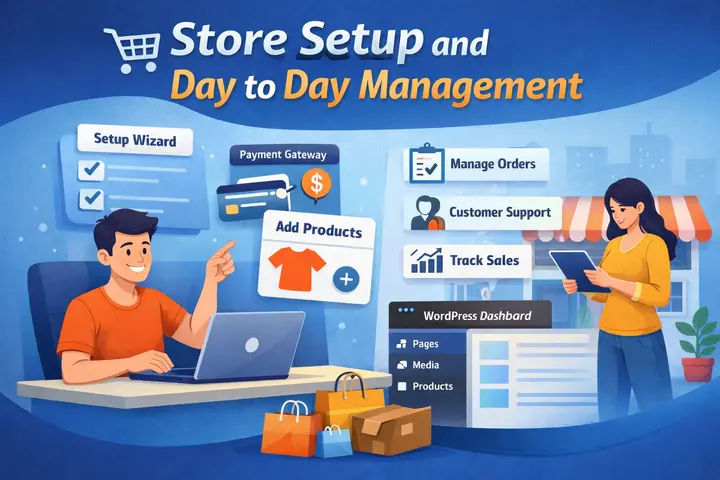
Let’s talk about what it actually feels like to run a store on each platform, because features only matter if the day to day experience makes sense. Your store software should fit into your existing workflow, not force you to rebuild everything from scratch.
This is where the difference between WordPress native tools and hosted platforms becomes very noticeable.
Setting Up a Store with FluentCart
With FluentCart, setup happens entirely inside WordPress, which immediately feels familiar if you already run a WordPress site.
You install the plugin, follow a simple setup wizard, connect your payment gateway, and start adding products from the same dashboard you already use for pages, posts, and media.
There is very little friction in getting started. If you are comfortable working inside WordPress, you will not feel like you are learning a new platform. Everything follows the same patterns you already know.
You can build and manage your store using popular builders like Elementor, Divi, or the block editor, while handling orders and customers from one centralized place.
For WordPress users, FluentCart feels like a natural extension of their site rather than a separate system they must adapt to.
Setting Up a Store with Shopify
With Shopify, you begin by creating an account and working inside Shopify’s own admin panel. From there, you choose a theme, configure products, set up payments, and customize your storefront using Shopify’s editor.
The interface is clean and beginner friendly, which makes Shopify appealing to first time store owners. However, it still exists outside of WordPress, which means you are now managing two different platforms if your main site runs on WordPress.
Content lives in WordPress, while store operations live in Shopify. That split can slow teams down, introduce duplication, and make long term management more complex.
Design Flexibility and Theme Control
Your store’s design has a direct impact on trust, conversions, and brand perception. The more control you have over layouts and components, the easier it becomes to build experiences that match your brand.
This is another area where WordPress based stores tend to have a strong advantage.
FluentCart Inside WordPress Builders
FluentCart inherits the full power of WordPress design tools, which means you are not locked into a single editor or layout system. You can design product pages, checkout pages, thank you pages, and membership areas using the tools you already rely on.
Whether you prefer Elementor, Divi, Gutenberg, or a custom builder, FluentCart works within that environment. You are free to structure pages however you want and style them down to the smallest detail.
If you need conditional sections, dynamic content, or custom fields, WordPress handles this easily. There are no artificial limits based on plan level, which gives you true creative freedom.
Shopify Themes and OS 2.0
Shopify offers a large theme marketplace and OS 2.0 themes with section based editing, which works well for many standard stores. You can create attractive layouts without touching code.
However, deeper customization often requires Liquid coding, paid themes, or upgrading to Shopify Plus for advanced checkout control. These limitations become more noticeable as your store grows.
You can absolutely build beautiful Shopify stores, but you are still working inside predefined boundaries set by the platform.
Blogging and Content Marketing Capabilities
Content drives traffic, and traffic drives sales. If organic search and content marketing are part of your growth strategy, your platform’s blogging capabilities matter a lot. This is an area where WordPress has always excelled.
FluentCart and Native WordPress Blogging
With FluentCart, you use WordPress’s native blogging system, which gives you access to advanced SEO plugins, custom post types, internal linking control, and flexible layouts.
You can easily connect blog posts to product pages, lead magnets, landing pages, and funnels without workarounds. Everything lives in the same ecosystem.
For content driven ecommerce businesses, this creates a smoother path from content to conversion.
Shopify Blog Module
Shopify includes a basic blogging feature that covers simple needs. You can publish posts and categorize content.
However, it lacks the depth and flexibility of WordPress. You get fewer SEO controls, fewer layout options, and limited extensibility.
Many Shopify store owners eventually connect WordPress anyway, which adds another layer of complexity to their stack.
Product Types and Catalog Flexibility
Not all stores sell simple physical products. Modern ecommerce often includes digital downloads, licenses, subscriptions, and hybrid offerings.
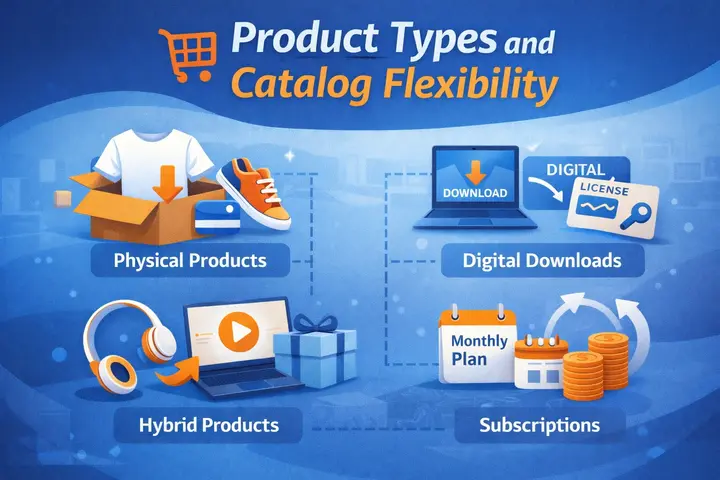
The platform you choose should support these models without forcing you into extra tools.
Physical and Digital Products
Both FluentCart and Shopify support physical and digital products. You can upload files, manage downloads, and sell tangible goods without issues. This is standard functionality on both platforms.
Hybrid Products and Licensing With FluentCart
FluentCart allows hybrid products out of the box. You can sell a physical product that also includes digital access or a license in a single purchase.
Licensing is built in, so you do not need separate plugins or paid apps to manage keys or activations. Shopify does not support licensing natively, which means you must rely on third party apps.
Inventory Locations and Variants With Shopify
Shopify supports up to 200 inventory locations, which is useful for businesses with complex logistics. FluentCart is adding inventory locations in future updates, but already supports unlimited variants.
For many WordPress powered stores, licensing, subscriptions, and hybrid models matter more than multi warehouse inventory.
Checkout Experience and Payment Control
Checkout optimization directly impacts revenue. Small changes in layout and flow can significantly improve conversions.
FluentCart Checkout Customization
FluentCart gives you full control over the checkout experience. You can rearrange fields, add custom fields, modify layouts, insert upsells, and change styling using blocks, hooks, or custom code.
There are no plan based restrictions. You customize what you want, when you want. This level of control is especially valuable for brands that test and optimize frequently.
Shopify Checkout Limitations
On Shopify, checkout customization is heavily restricted on standard plans. Full control is only available on Shopify Plus, which costs thousands per month. For most users, customization is limited to minor visual changes.
Subscriptions and Recurring Payments
Recurring revenue is a powerful growth engine for modern ecommerce.
- FluentCart Built In Subscriptions: Subscriptions are included with FluentCart. There are no extra apps and no additional monthly fees. You can create monthly plans, annual plans, trials, and variable billing structures directly inside WordPress.
- Shopify Subscription Apps: Shopify requires third party apps for subscriptions. These apps typically cost between $29 and $49 per month. Over time, this becomes another recurring expense.
Marketing, CRM, and Automation Capabilities
Selling products is only part of the equation. Building relationships and nurturing customers is what drives long term growth.
- FluentCart with Fluent Suite: It integrates natively with FluentCRM, FluentAffiliate, FluentSMTP, FluentBooking, and Fluent Support, creating a tightly connected marketing ecosystem. You can tag customers, build automation workflows, run email campaigns, recover abandoned carts, and launch affiliate programs without installing multiple disconnected apps.
- Shopify Marketing Stack: It includes Shopify Email and Shopify Flow, which cover basic needs. More advanced automation usually requires additional apps, and each app adds monthly cost and operational complexity.
Developer Friendliness and Customization Freedom
As your online store grows, most store owners eventually need features that go beyond default settings. You may want custom checkout logic, advanced automation, or deeper integrations with third party services.
This is where developer friendliness and customization freedom become critical when choosing between FluentCart vs Shopify.
FluentCart for Developers
FluentCart is built for WordPress users who want full control over how their ecommerce platform behaves. Developers can extend functionality using PHP, REST API access, JavaScript, hooks, and custom CSS without asking for permission or upgrading plans.
Because FluentCart is self hosted, there are no artificial API limits. You can build integrations, automate workflows, and connect external services with immediate access to your data and logic.
For WordPress ecommerce projects, this level of flexibility makes FluentCart a strong long term foundation.
Shopify APIs and Restrictions
Shopify provides API access, but it operates inside tiered limits based on your Shopify plan. Higher usage requires higher plans, and certain customization options are restricted to Shopify Plus.
This means advanced customization can become more expensive as your ecommerce site grows. You can still build powerful e commerce stores on Shopify, but you remain inside a controlled SaaS environment.
Cost Comparison: What You Really Pay Over Time?
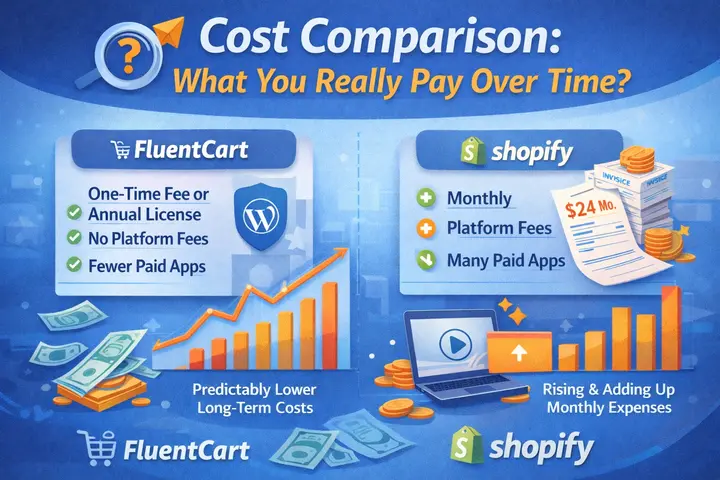
Many store owners compare platforms based on headline pricing, but the real cost appears once you factor in essential apps and monthly fees.
FluentCart Cost Structure
FluentCart operates on a one time or annual license model. You pay for hosting and your domain, but there are no platform fees and no additional transaction fees imposed by FluentCart.
FluentCart includes subscriptions, licensing, and integrations with the Fluent ecosystem. This reduces the need for dozens of essential apps.
For WordPress ecommerce businesses, this results in predictable and lower long term costs.
Shopify Base Plan Costs
Shopify’s basic Shopify plan starts at $39 per month. As you add features like subscriptions, affiliates, loyalty programs, advanced email marketing, and checkout customization, monthly fees increase.
Many stores quickly exceed $150 to $200 per month once essential apps are added.
Real World Monthly Cost Example
A Shopify store using subscriptions, affiliate management, advanced automation, and branded checkout can easily exceed $200 per month.
With FluentCart, those same capabilities are included or available through integration with FluentCart, resulting in fewer plugins and significantly lower recurring expenses.
Side By Side Feature Comparison: Quick Overview
Below is a quick overview of how FluentCart vs Shopify compare for WordPress powered ecommerce stores.
| Feature | FluentCart | Shopify |
|---|---|---|
| WordPress Integration | Native | No |
| Digital And Physical Products | Yes | Yes |
| Easy Digital Downloads | Yes | Requires app |
| License Keys | Built in | Requires app |
| Subscriptions | Built in | Requires app |
| Checkout Page Customization | Full | Plus only |
| Payment Gateway Options | Stripe, PayPal, custom hooks | Shopify Payments + third parties |
| Transaction Fees | $0 | Platform dependent |
| API Access | Unlimited | Tiered |
| Data Ownership | Full | Limited |
| Blogging | WordPress native | Basic |
Which Platform is Better for WordPress Powered Stores?
If you already run a WordPress site, FluentCart usually feels like the right platform because everything lives inside one dashboard. You manage products, product pages, customers, and content from a single interface.
FluentCart handles digital downloads, physical products, subscriptions, and license keys without relying on a large stack of plugins.
Shopify works well for businesses that want a hosted ecommerce platform and do not mind operating outside WordPress.
For most WordPress users, FluentCart offers better alignment with WordPress flexibility and workflows.
Choose FluentCart If
FluentCart is a strong option if you want full control over your ecommerce site and complete visibility into your data. It works especially well for WordPress users who want to build and scale online stores without platform lock in.
It is also ideal for store owners selling digital products, online courses, subscriptions, or hybrid digital and physical products who want built in licensing and recurring revenue tools.
Choose Shopify If
Shopify makes sense if you want an all in one hosted solution and prefer SaaS platforms that manage infrastructure for you. This suits businesses that prioritize convenience over deep customization. It is also a fit if you are comfortable paying monthly fees and relying on essential apps for advanced features.
Final Verdict
FluentCart vs Shopify is ultimately a choice between owning your ecommerce site or renting space on a platform.
If you want full control, data ownership, WordPress flexibility, and lower long term costs, FluentCart is worth serious consideration.
If you prefer convenience and a hosted experience, Shopify remains a solid ecommerce platform. For WordPress powered businesses, FluentCart is often the better choice.
FluentCart vs Shopify FAQs
Is FluentCart a replacement for WooCommerce?
FluentCart is an alternative WordPress ecommerce plugin focused on built in subscriptions, licensing, and tight integration with the Fluent ecosystem. WooCommerce remains popular, but many store owners prefer FluentCart for fewer plugins and simpler product management.
Can you migrate from Shopify to WordPress?
Yes. Products, customers, orders, and digital downloads can be migrated using tools or custom scripts. Many store owners move from Shopify to WordPress when they want more control and lower long term costs.
Is FluentCart beginner friendly?
Yes. FluentCart beginner friendly onboarding process makes it easy to set up products, payment options, and checkout pages without technical complexity.