Imagine a website that feels less like a screen and more like a digital world where elements float, shimmer, and respond in real time. Holographic website design is shaping with immersive visuals powered by WebXR, 3D elements, and interactive interfaces.
This approach goes beyond aesthetics. It increases engagement, improves retention, and positions brands as innovators.
In a crowded digital space, holographic experiences transform static pages into dynamic journeys that capture attention and leave a lasting impression.
TL;DR: The Future of Immersive Web Experiences
- Floating visuals, depth effects, and sci-fi-inspired interfaces are redefining how users interact online.
- Technologies like WebXR, 3D engines, and AI power dynamic, personalized, and interactive digital environments.
- Brands gain stronger engagement, better retention, and clear differentiation in competitive markets.
- Success depends on balancing creativity with performance, accessibility, SEO, and cross-device optimization.
What is Holographic Web Design: Definitions and Core Technologies
Holographic web design uses advanced 3D graphical techniques, volumetric imagery, and light simulation to create virtual hologram effects within a browser.
Unlike true holography, which involves recording and reconstructing a light field, this is a simulated digital experience.
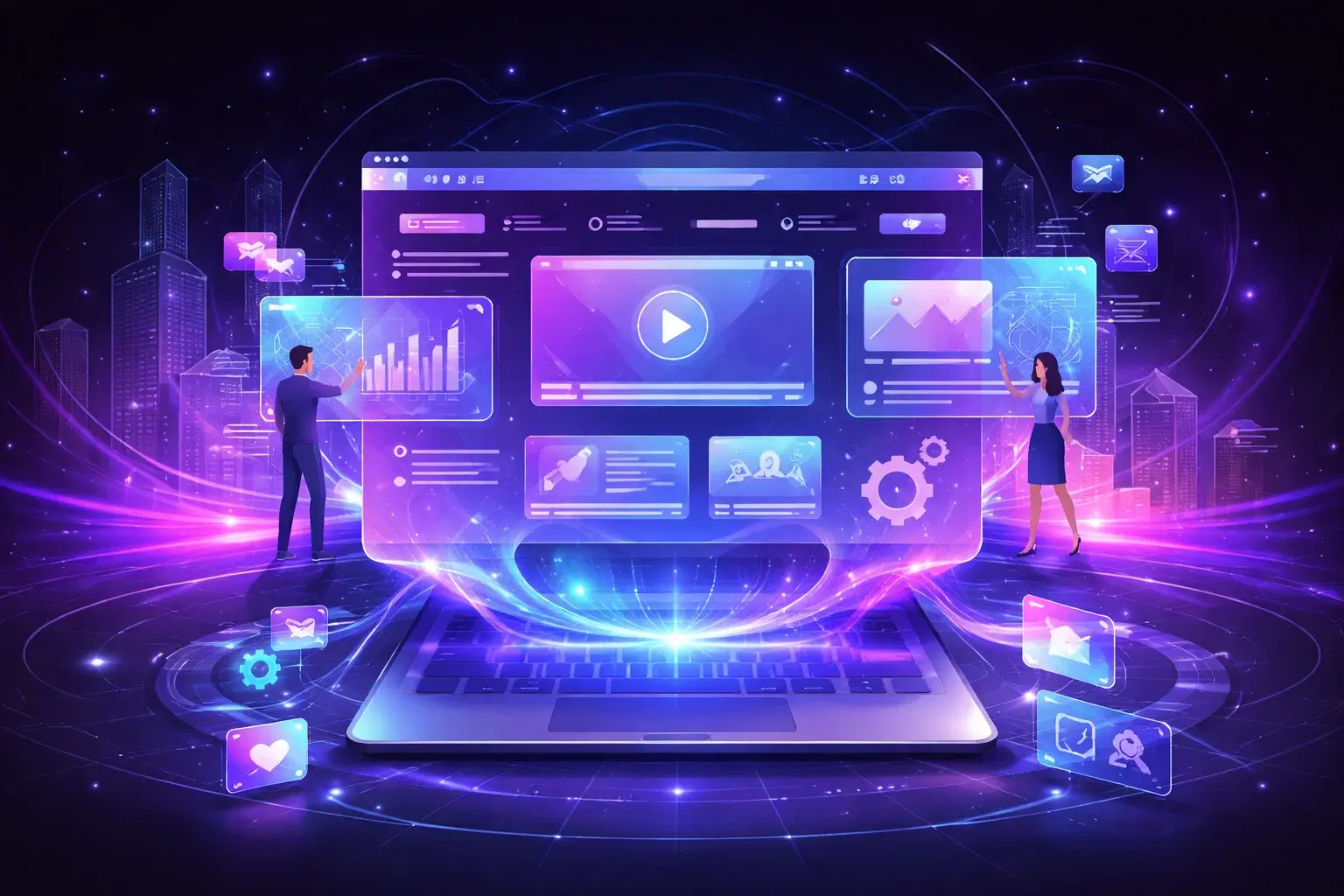
It uses technologies that trick the human eye and brain into perceiving depth and dimension on a flat screen.
The goal is to make digital elements appear to “pop out” of the screen, creating a sense of a virtual world. This approach enhances the user experience, making it more engaging and visually appealing.
The core technological foundations for this design trend include WebXR, 3D rendering engines, and volumetric UI.
WebXR is the key. It’s an API that enables developers to create virtual reality (VR) and augmented reality (AR) experiences directly in the browser.
3D rendering engines like Three.js and Babylon.js are crucial for creating and manipulating 3D objects. Volumetric UI, or user interface, involves design elements that have a tangible, three-dimensional presence.
Together, these technologies enable designers to build truly immersive web interfaces. They allow users to interact with digital content in new and exciting ways.
Get a Custom Holographic WordPress Website
Elevate user experiences with bespoke web design that engages users, integrates natural elements, and delivers multi-sensory experiences.
Historical Evolution From WebGL to WebXR
The journey to modern holographic website design trends began decades ago. Its roots can be traced to early experiments with 3D graphics on the web.
In the 1990s, VRML (Virtual Reality Modeling Language) was an early attempt to create 3D worlds on the internet. While revolutionary for its time, it was complex and slow.
WebGL was a major leap. It is a JavaScript API that enables the rendering of interactive 2D and 3D graphics in any compatible web browser. This opened new possibilities and led to the rise of experimental 3D effects such as parallax scrolling and hover effects.
Websites began incorporating more dynamic elements, setting the stage for the highly personalized user experiences we see today.
The shift to holographic simulation is now happening with WebXR. It combines the power of WebGL with headset and device tracking, allowing for full-fledged virtual reality and augmented reality experiences.
Artificial intelligence and machine learning also play a key role, enabling designers to create even more complex and dynamic design elements.
Key Trends in Holographic Website Design
Holographic website design is evolving rapidly. It combines futuristic aesthetics with interactive technologies to captivate users. Understanding these key trends helps web designers craft engaging and forward-looking experiences.
Immersive Sci-Fi UI Aesthetics with Holographic Flair
The futuristic look of sci-fi movies and video games is now a significant influence on web design trends. Today, expect more websites with a high-tech, game-like feel. These designs feature glowing edges, translucent layers, and vibrant neon palettes.
Microinteractions, which are subtle animations and feedback loops, are also inspired by these aesthetics. They give the digital world a sense of life and responsiveness.
This design trend aims to transport users to another dimension. It feels fresh and new. It’s a great example of how inspiration from one industry can revolutionize another.
From Glassmorphism to Holography in Visual Design
Glassmorphism, with its frosted-glass effect and layered look, was a dominant trend. Now, a new design trend is taking center stage: holographic motifs. This is a higher level of depth and fascination.
Holographic design builds on the layered visual appeal of glassmorphism. It adds shimmering light effects, spectral overlays, and a sense of dynamic energy. This transition is about moving from a simple aesthetic to a more interactive and visually rich one.
It’s about creating a truly immersive experience that goes beyond mere transparency. These design elements offer users an extraordinary visual interest.
Also Read: Web Design Process to Create an Awesome Website
Holographic-Like Interfaces and Multi-Sensory Engagement
Immersive experiences are not just about what you see. They are about all the senses. Holographic-like interfaces, such as Hypervsn’s floating displays, are already used in retail stores and advertising. These are touchless, holographic-style interfaces.
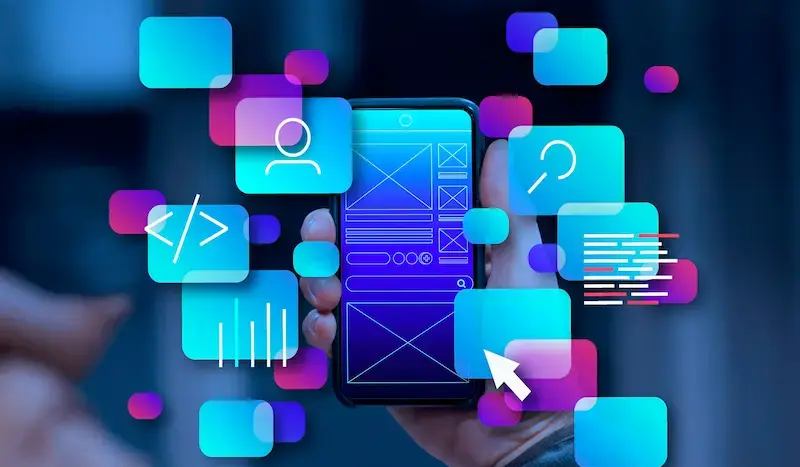
The next evolution is multi-sensory design. This includes haptics (touch feedback), sound, and even smell. Imagine a website where you can virtually “touch” a product.
It could have a sound that responds to your movements. This approach elevates immersion beyond just visual appeal. This growing trend aims to create a truly holistic experience.
Explore Further: Top Web Design Tools for Designers
AI-Driven Personalization and Adaptive Holographic UI
Artificial intelligence plays a critical role in the future of holographic web design. AI algorithms can act as creative co-pilots, enabling highly personalized user experiences. They can also create dynamic layouts and respond in real time to user behavior.
An article explores how edge-intelligent systems, such as Holo-Artisan, could enable personalized holographic museum experiences. These systems use federated learning and ray tracing to adapt real-time displays.
This means the holographic UI can change and evolve based on who views it. This level of personalization makes the digital experience unique for every visitor.
It also helps businesses create more engaging content. Machine learning enables designers to create complex concepts and visual elements more efficiently.
Sustainability, Accessibility, and Performance in Holographic Web Design
As designers create more visually stunning experiences, sustainability and performance must remain a focus. The future of web design is not just about looks.
It’s about creating high-performance, accessible designs. This includes optimizing for speed and responsiveness across all devices and minimizing energy load.
Holographic and 3D features can be resource-intensive. Therefore, designers must be mindful of fluid user experience and minimal energy consumption.
Accessibility is also a top priority. While holographic designs offer a unique visual experience, they must still be usable for everyone.
This means providing accessible fallbacks for people with disabilities. It also means designing with low eye strain in mind.
Dark mode is often a key part of this, as it reduces glare and eye strain. Building a sustainable, accessible, and high-performance site is an ethical and practical necessity.
Technical Foundations and UX Considerations for Holographic Web Design
Building holographic websites requires a firm grasp of cutting-edge technologies and thoughtful UX design. These technical and user-experience considerations ensure that immersive interfaces are both functional and accessible.
Technologies Powering Holographic Web Interfaces
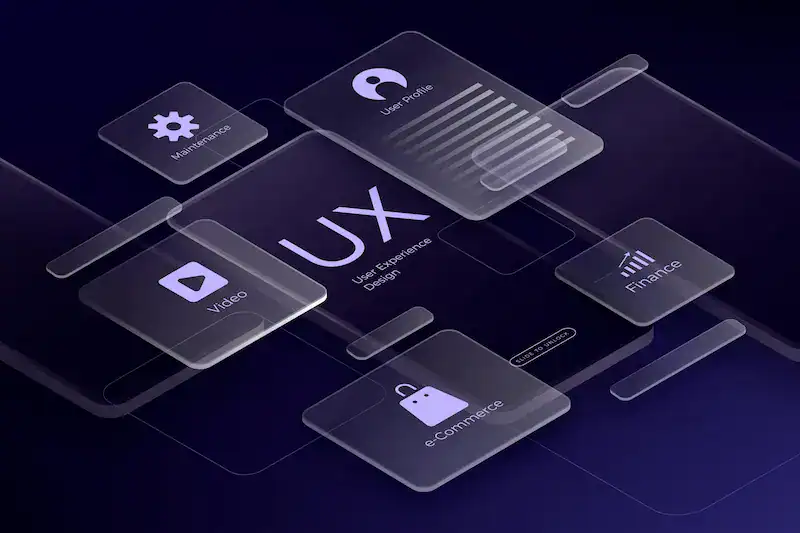
Designers and developers need powerful tools to build these next-generation websites. WebXR is the central technology, but it works in tandem with others. The workhorses are 3D rendering engines like Three.js and Babylon.js.
They handle the creation and manipulation of 3D objects. Advanced techniques, such as volumetric light simulation and ray tracing, create realistic lighting and depth, making virtual objects feel more lifelike.
Edge-based AI systems process data and deliver content in real time. They reduce the need for constant communication with a central server, enabling a more dynamic and responsive experience.
UX Design Strategies for Virtual and Holographic UIs
Designing for a holographic interface requires a different approach. The focus is on guiding users through a dynamic and often non-linear space. UX designers must consider usability and navigation intuitiveness.
They must leave room for motion and interactive elements. Low eye strain is a major concern, especially for complex designs with bright colors and smooth transitions.
The user’s journey must be clear and simple. The design process should put the user at the center. User-centric design is paramount.
Cross-Device Compatibility and Performance Optimization
A key challenge is ensuring that holographic web designs work seamlessly across different devices. Visitors to a site can use desktops, mobile phones, or even emerging holographic-capable devices. The design must adapt fluidly to each.
Performance optimization is vital. This means using lightweight 3D models and optimized assets, implementing lazy-loading for heavy content, and balancing visual appeal with speed.
A slow-loading, beautiful site will lose users. A high-performance holographic site will capture attention and improve retention rates.
Discover More: How Many Types of UX Laws Are There
Real-World Applications and Business Impact of Holographic Website Design
Holographic web design is no longer just a novelty; businesses leverage it for measurable results.
Exploring real-world applications highlights how immersive experiences can enhance engagement, conversion, and brand differentiation.

Industry Use Cases of Holographic Web Design
Holographic website design is more than an artistic pursuit. It has practical applications across many industries.
- Retail and E-commerce: Digital commerce is undergoing a transformation. Ecommerce sites can use holographic design for virtual product try-ons and for creating immersive 3D catalogs. This allows customers to see products from all angles before they buy, which can increase confidence and reduce returns.
- Education and Museums: The Holo-Artisan example is a great one. It shows how personalized, interactive art displays can be created. Holographic interfaces can make complex concepts easier to understand. They can create a visually engaging experience for students. This can transport users to historical sites or ancient worlds.
- Real Estate and Tourism: Real estate agents can offer immersive virtual tours, allowing potential buyers to explore properties without leaving home. The tourism industry can offer holographic previews of destinations, from beaches to historical landmarks.
Benefits for Brands: Engagement, Differentiation, Monetization
The business benefits are compelling. Holographic web design can significantly enhance user engagement and dwell time, and make a brand memorable.
It provides differentiation in a crowded market. This innovation signals that a brand is forward-thinking and modern. It can also enable new monetization models.
Brands can offer premium, experiential interactions. They can provide personalization through AI-driven content.
Challenges and Barriers to Adoption
Despite its promise, adoption faces challenges. The technical complexity and development cost are high. There are hardware constraints. Browser support for WebXR is not universal.
Essential accessibility concerns also exist. The biggest challenge is balancing hype with practicality. The site must be performant and accessible on a wide range of devices.
Integrating Holographic Trends into WordPress
WordPress offers flexible tools for bringing holographic designs to life without compromising performance. Understanding best practices allows designers to implement these trends efficiently while maintaining SEO and usability standards.
WordPress Strategies for Holographic UI Implementation: WordPress powers a huge portion of the web. This makes it a crucial platform for adopting holographic website design. You can start with a holographic-style theme or a visual builder.
Look for plugins that support WebXR or lightweight 3D models. Performance tuning is essential. This includes lazy loading, optimized assets, and responsive fallbacks, which ensure the site remains fast and accessible.
SEO and AI Optimization with Holographic Design: SEO is still a top priority. A beautiful, immersive site is useless if no one can find it. SEO needs a special focus for holographic design. Add alt-text for 3D elements.
Use semantic headings (H1, H2, H3). Use schema for immersive content and structured data for rich results. AI can help here by generating descriptions and metadata.
This supports both SEO and user experience. It ensures that search engines can understand and rank the dynamic content.
Measuring Impact: Metrics that Matter: Once a holographic site is launched, you must measure its impact. Track key metrics. Look at user engagement, such as dwell time and interaction rate. Track conversion rates, monitor SEO visibility, and monitor bounce rates. These metrics will show whether the immersive features are positively affecting your business goals.
Conclusion
Holographic website design is not just an experimental phase. It is a defining design trend. It is an evolution in how users interact with the digital world. Driven by AI and WebXR, it promises visually stunning and highly engaging experiences.
The future of UI is about more than just a visually appealing experience. It’s about creating an interactive, multi-sensory journey. This requires designers and developers to create responsibly.
They must focus on accessibility, sustainability, and performance. The goal is to create a digital world that is both beautiful and functional.
This is the holographic UI frontier. We encourage you to explore prototypes and integrate these trends responsibly. By doing so, you can shape the future of web design with a holographic vision.
FAQs About Holographic Website Design
How does holographic website design improve user experiences?
Holographic website design transforms user experiences by adding depth, interactivity, and immersion. By integrating augmented reality, oversized typography, and natural elements into layouts, websites become more engaging. This keeps customer attention focused while improving navigation and storytelling.
Why are multi-sensory experiences important in modern web design trends?
Multi-sensory experiences allow websites to go beyond visuals by incorporating sound, motion, and haptic feedback. This emerging trend helps engage users on multiple levels, creating memorable interactions. Web designers use these features to differentiate brands and make content more immersive.
What role does artificial intelligence play in holographic website design?
Artificial intelligence is central to next-gen holographic UI. AI algorithms personalize experiences in real time, ensuring content adapts to user behavior. AI also assists web designers by optimizing holographic interfaces for accessibility, performance, and visual harmony.
How do design features like dark mode and oversized typography work with holographic trends?
Dark mode enhances the glow and depth of holographic visuals, while oversized typography ensures clarity and impact within complex 3D layouts. Both trends complement holographic web design by balancing readability with futuristic aesthetics that effectively engage users.
What should web designers focus on when creating holographic interfaces?
Web designers should prioritize intuitive navigation, seamless integration of augmented reality, responsive performance, and the use of natural elements. Combining holographic effects with multi-sensory experiences can capture customer attention and deliver highly engaging user experiences.