Get Your WordPress Content Cited by AI Tools by creating content that is clear, authoritative, and easy for AI systems to understand. As platforms like ChatGPT, Gemini, Perplexity, and Google AI Overviews become popular sources of information, earning citations can significantly increase your brand’s visibility and reach.
Traditional SEO still matters, but AI tools also look for strong topical coverage, direct answers, trustworthy information, and well-structured content. This guide explains how to optimize your WordPress content for both search engines and AI-powered discovery.
AI tools cite content that demonstrates expertise, accuracy, authority, clear structure, and strong topical relevance. Well-organised content with direct answers in the opening passage, trusted author signals, schema markup, and comprehensive topic coverage is most likely to be referenced in AI-generated responses.
Why AI Citations Matter for WordPress Websites?
AI search platforms sent over one billion referral visits to websites in a single month in 2025. That number is growing rapidly as more users turn to AI tools rather than traditional search.
Only 11 percent of domains are cited by both ChatGPT and Perplexity for the same query. The competition is still relatively open. Businesses across the US, UK, Australia, and globally that are now optimizing for AI citations are establishing authority before most competitors have recognized the shift.
Each citation also compounds. Every time an AI tool references your brand on a given topic, the association strengthens, making future citations more likely.
How AI Tools Discover and Evaluate Content?
AI tools use two mechanisms to select content. Real-time retrieval tools like Perplexity, Google AI Overviews, and ChatGPT in web search mode fetch live pages and evaluate the opening passage first. The first 200 words carry disproportionate weight.

Real-Time Retrieval vs Trained Recall
Real-time retrieval tools like Perplexity, Google AI Overviews, and ChatGPT in web search mode fetch live pages and evaluate the opening passage first. The first 200 words carry disproportionate weight in determining whether your content gets cited.
Trained recall is the second mechanism. Standard ChatGPT, Claude, and Gemini draw on training data, meaning content published months ago can still surface in responses today. Both mechanisms reward the same qualities: direct answers, clear structure, demonstrated expertise, and strong trust signals.
Six Signals That Determine Citation Eligibility
Search engine indexing determines whether AI retrieval tools can access your pages at all. E-E-A-T signals affect how AI systems assess the reliability of your source. Entity relationships connect your content to topics and organisations AI models already understand.
Schema markup makes content machine-readable and improves extraction accuracy. Website authority influences which sources AI tools treat as credible references. Content freshness particularly matters for Perplexity, which heavily weights recently updated pages.
Step-by-Step Process to Make Content More Cite-Worthy
The changes that improve AI citation potential are mostly content and structural improvements. Work through these in sequence.

Answer Questions Clearly and Early
The single most impactful change is putting the direct answer at the very start of your content. If the answer is not in the first paragraph, the page is less likely to be cited, regardless of how good the rest of the content is.
Rewrite the opening sentence of your most important pages to directly answer the primary question in one or two sentences. Then follow with context and depth. This structure also improves a site’s eligibility for featured snippets in traditional search results.
Build Topical Authority Around Core Subjects
AI tools favor sources with comprehensive expertise on a subject rather than isolated pieces of content on unrelated topics. A site with ten deeply connected articles on a subject is more likely to be cited than one with a single broad overview.
Build topic clusters by creating supporting content that links to central pillar pages. Cover every meaningful question within your core subjects. Comprehensive topical coverage signals to AI systems that your site is an authoritative reference.
Use Structured Headings and Scannable Content
Clear heading hierarchy, short paragraphs, and logical content flow make your content easier for AI systems to parse and extract accurately. Machine extraction favors content where the relationship between questions and answers is explicit.
Use H2 headings for main sections and H3 headings for sub-sections. Keep paragraphs to two or three lines. Use tables and lists where they clarify comparisons or sequences.
Add Schema Markup to WordPress Content
Schema markup is the most direct technical signal you can send to AI systems about what your content covers and who wrote it. The FAQ schema quality accounts for around 20 percent of citation likelihood in controlled AEO studies.
Add Article schema to blog posts. Add an FAQ schema to content that answers multiple questions. Add HowTo schema to step-by-step guides. Add the Organization and Author schema to your site and author profiles. Rank Math, AIOSEO, and Schema Pro all handle this without coding.
Demonstrate Experience and Expertise
AI tools favor content that shows genuine human expertise over content that aggregates existing information. Include original observations, first-hand examples, specific data points, and expert insight that cannot be found elsewhere.
Add author credentials and professional context to your author profiles. Content with verifiable specific facts and statistics consistently performs better in AI citation contexts than content with vague generalizations.
Get Your WordPress Content Ranking in AI Search and Traditional Search.
Seahawk’s Managed SEO service covers GEO, AEO, technical SEO, schema markup, content optimisation, and AI search visibility so your WordPress site gets cited by ChatGPT, Perplexity, and Google AI Overviews while continuing to rank in traditional search results.
Content Formats AI Tools Prefer to Reference
Some formats are significantly easier for AI systems to extract and cite accurately. Prioritize these when creating citation-worthy content.
- Step-by-Step Guides: Numbered sequences with clear outcomes are easy to extract and directly answer how-to queries.
- Definition-Based Content: Clear definitions are self-contained and quotable. They answer what-is queries in a single extractable passage.
- Comparisons and Alternatives: Content that compares options with clear criteria helps AI generate recommendations.
- Checklists and Frameworks: Structured lists with clear labels are easy to extract as complete answers to process questions.
- Research-Backed Articles: Content citing specific studies, data sources, and verifiable statistics signals reliability to AI systems.
- FAQ Sections: Explicit question-and-answer formatting is one of the strongest citation signals available.
How SEO, AEO, and GEO Work Together?
Traditional SEO helps search engines discover and rank your content in blue-link results. AEO (Answer Engine Optimization) focuses on providing direct, extractable answers that AI systems can pull from your content.
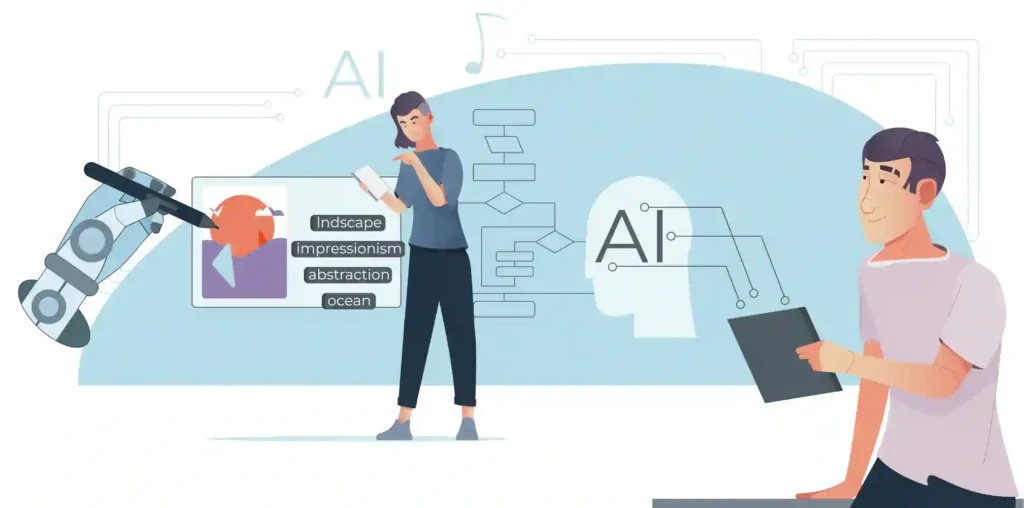
GEO (Generative Engine Optimization) optimizes specifically for citations in AI-generated responses from ChatGPT, Claude, Perplexity, and Google AI Mode. The three share overlapping tactics but target different surfaces. Optimizing for one increasingly improves performance on all three.
What SEO, AEO, and GEO Each Target
Search intent alignment ensures your content addresses the actual question users are asking. Entity optimization connects your content to the named people, organizations, and concepts that AI models already understand well.
Trust signals, including author credentials and E-E-A-T indicators, establish your content as a reliable source. Content with specific verifiable facts performs measurably better in AI citation contexts than content with broad claims.
Technical WordPress Optimizations That Support AI Citations
The technical foundation of your site determines whether AI retrieval tools can access your content at all. Two areas matter most for citation eligibility.
Crawl Access and Indexability
Allow AI crawlers in your robots.txt file. GPTBot for ChatGPT, PerplexityBot for Perplexity, and Googlebot for AI Overviews all need crawl access. Blocking them removes you entirely from consideration for citations. Submit an accurate XML sitemap so AI retrieval tools can quickly discover all your content.
Ensure important pages are indexable and not accidentally blocked by noindex tags. Use clean URL structures that reflect your content hierarchy.
Speed, Security, and URL Structure
Maintain fast page loading and strong Core Web Vitals. Slow pages get crawled less frequently and are deprioritised by AI retrieval tools. Implement HTTPS sitewide. Security signals contribute to the trust evaluation that AI systems apply to citation sources.
Common Reasons AI Tools Ignore Content
Understanding why AI tools skip content is as useful as understanding why they cite it.
- Thin Content: Pages without sufficient depth provide nothing extractable that adds value beyond what other cited sources already cover.
- Weak Expertise Signals: Content without clear authorship or verifiable credentials is treated as less reliable.
- Poor Content Structure: Content where the answer is buried deep rather than stated clearly early is harder to extract accurately.
- Lack of Direct Answers: Content that discusses a topic without giving a clear, direct response gives AI systems nothing clean to cite.
- Outdated Information: Stale content with outdated statistics scores poorly on the freshness signals that influence Perplexity and AI Overviews citations.
- Limited Topical Coverage: Shallow content without connections to related articles signals limited domain authority.
How to Measure AI Visibility and Citations?
Monitor referral traffic from AI platforms in Google Analytics 4 by filtering sessions from chatgpt.com, perplexity.ai, and similar AI tool domains.
Track branded search volume in Google Search Console. AI citations consistently increase the number of people searching for your brand by name after encountering it in AI responses.
Manually query the AI tools most relevant to your audience and check whether your site appears in citations. Tools like Otterly.ai and AI Labs Audit provide more systematic tracking across multiple AI platforms simultaneously.
Future-Proofing Your WordPress Content for AI Search?
AI search experiences are evolving faster than traditional search did. The signals that drive citations in 2026 will shift as AI models improve at evaluating sources.
The safest long-term position is content that is genuinely helpful, demonstrably expert, and structured for both human readers and machine extraction. Websites that build deep topical authority, maintain content freshness, and consistently demonstrate original expertise are best positioned to earn citations across current and future AI platforms.
Conclusion: WordPress Content Cited by AI Tools
AI citations are becoming one of the most valuable sources of visibility and referral traffic for WordPress websites. The window to establish citation authority before your competitors is still open, but it is closing.
Start with the highest-impact changes first. Answer questions directly in your opening paragraph. Add the FAQ schema to your most important content.
Build topical authority through connected content clusters. Allow AI crawlers access to your site. These four changes alone will meaningfully improve your citation potential across ChatGPT, Perplexity, Claude, and Google AI Overviews.
Frequently Asked Questions About AI Citations for WordPress
How do AI tools decide which content to cite?
AI tools evaluate content based on how directly it answers the query, how credible the source is, how well-structured it is for machine extraction, and how comprehensively it covers the topic. The first 200 words carry disproportionate weight. FAQ schema quality, answer-first formatting, and verifiable statistics are among the highest-weighted citation signals.
What is GEO in SEO?
GEO stands for Generative Engine Optimization. It is the practice of structuring content so AI tools like ChatGPT, Perplexity, Claude, Gemini, and Google AI Mode cite your content as a source in their generated answers. It sits alongside SEO, which targets blue-link rankings, and AEO, which targets featured snippets and answer boxes.
Does schema markup help AI tools understand content?
Yes directly. Schema markup provides structured machine-readable data that AI retrieval tools can parse accurately. The FAQ schema is particularly effective, with studies attributing around 20 percent of citation likelihood to its quality. Article, Author, Organization, and HowTo schema all contribute to how AI systems evaluate and cite your content.
How can WordPress websites improve AI visibility?
Allow AI crawlers in your robots.txt file, implement FAQ and Article schema, rewrite your most important page introductions to answer the primary question directly, build topic clusters, add author credentials and E-E-A-T signals, include verifiable statistics, and keep content updated.
What content formats are most likely to be cited by AI?
Step-by-step guides, definition-based content, research-backed articles with specific statistics, FAQ sections, comparison content, and structured checklists all perform well. These formats provide clean extractable answers that AI systems can quote and attribute accurately.
Can AI citations increase website traffic?
Yes. AI referral traffic converts at significantly higher rates than standard organic traffic because users arrive already oriented toward your topic. AI citations also increase branded search volume as users who encounter your brand in AI responses subsequently search for you directly.