

Modern healthcare websites are no longer digital brochures. They are patient acquisition engines, secure communication hubs, and compliance-critical systems. Therefore, building an effective healthcare website requires aligning performance, regulatory requirements, and conversion-driven design with patient trust at the center. Below is a structured breakdown of essential features for healthcare website development.
TL;DR: Healthcare Site Development Essentials
- Build patient-centric information architecture that simplifies navigation and drives faster decisions.
- Implement conversion-focused appointment booking with real-time availability.
- Integrate secure patient portals and telehealth with compliant authentication controls.
- Enforce HIPAA-aligned security, encryption, and audit logging.
- Optimize for mobile-first UX and WCAG accessibility standards.
- Integrate EHR systems using a scalable, API-driven architecture.
- Track patient acquisition with analytics and A/B testing.
- Maintain continuous security, compliance, and feature enhancements post-launch.
Why Healthcare Website Development Requires Specialized Expertise?
Healthcare website development demands more than standard design and coding practices. It requires a structured approach that aligns compliance, clinical integrations, security controls, and patient-centered UX.
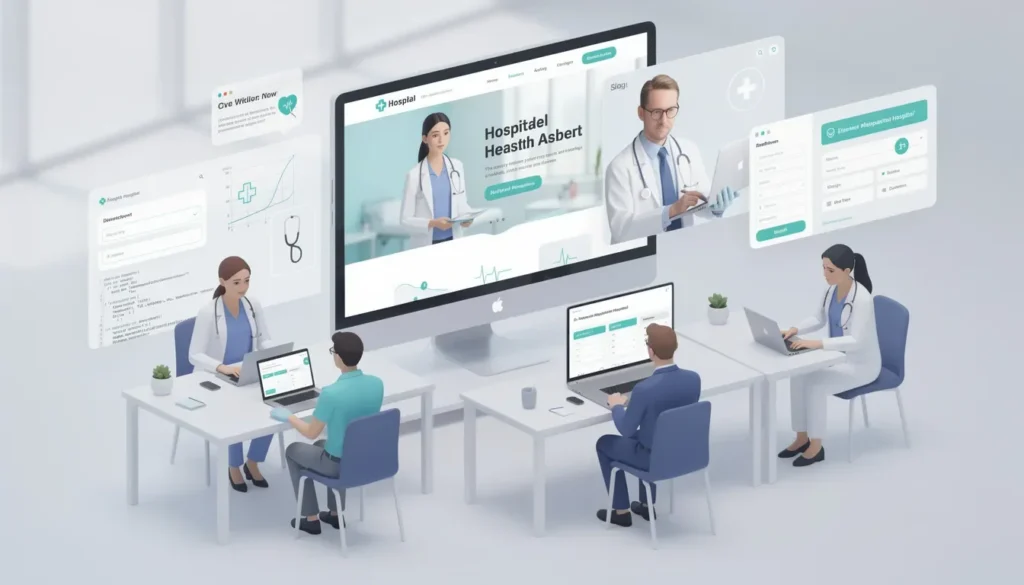
Unlike general business websites, healthcare platforms operate in a high-stakes environment where performance, privacy, and accessibility directly affect patient trust and care delivery.
Therefore, organizations must rely on specialized expertise to build secure, scalable, and conversion-focused digital infrastructure.
- Regulatory Compliance & Risk Management: Healthcare websites must comply with regulations such as the Health Insurance Portability and Accountability Act (HIPAA). Developers must design systems that protect PHI, implement audit logs, and enforce strict access controls. Without regulatory expertise, even simple features can create legal exposure.
- Secure-by-Design Architecture: Healthcare platforms process sensitive medical and appointment data. Consequently, teams must implement encryption in transit and at rest, configure secure hosting environments, and conduct routine penetration testing. Security cannot be retrofitted; it must be architected from day one.
- Clinical System Integrations: Modern healthcare websites connect with EHRs, lab systems, and telehealth platforms. Therefore, developers must build API-first architectures that support HL7/FHIR interoperability standards while maintaining data integrity and uptime.
- Patient-Focused UX in Critical Moments: Patients often access healthcare websites during urgent situations. Hence, clear navigation, mobile-first layouts, and frictionless booking workflows directly influence patient acquisition and long-term trust.
Build a High-Performance Healthcare Website Today
From online booking systems to robust security measures and mobile friendly healthcare experiences, we design platforms that protect data, build trust, and enhance patient care.
Core Essential Features of Healthcare Website Development
Healthcare website development requires a balance between performance, usability, compliance, and patient acquisition. Below are the core essential features that define high-performing healthcare websites.
Patient-Centric Information Architecture
A healthcare website must prioritize clarity and intuitive navigation. Patients often search by symptoms, conditions, or provider names. Therefore, structure content around patient intent rather than internal organizational hierarchy.
- Organize services by specialties, treatments, and conditions.
- Provide filtered provider directories (location, specialty, language, insurance).
- Keep navigation shallow to reduce cognitive load.
- Surface urgent care actions prominently.
As a result, patients find answers faster and move smoothly toward booking an appointment.
Conversion-Driven Appointment Booking System
Appointment scheduling serves as the primary conversion point. Consequently, the booking system must eliminate friction and provide real-time clarity.
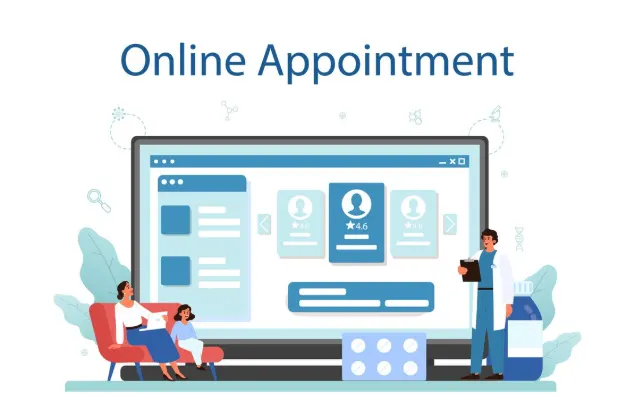
- Display real-time appointment availability.
- Use multi-step forms with progressive disclosure.
- Sync with provider calendars to avoid double bookings.
- Send automated confirmations and reminders.
- Highlight emergency or same-day appointment options.
When designed strategically, the booking flow increases completed appointments and reduces drop-offs.
Secure Patient Portal Integration
A modern healthcare website must integrate seamlessly with a secure patient portal. Patients expect direct access to their health information without unnecessary complexity.
- Implement secure single sign-on (SSO).
- Enable two-factor authentication for sensitive actions.
- Provide access to lab results, prescriptions, and billing.
- Support secure messaging with providers.
- Maintain detailed activity logs for monitoring.
By embedding secure authentication and access controls, organizations strengthen patient trust while maintaining regulatory compliance under frameworks like the Health Insurance Portability and Accountability Act.
Integrated Telehealth Capabilities
Telehealth has become a core component of healthcare delivery. Therefore, integration must go beyond embedding a video link.
- Enable HIPAA-compliant video consultations.
- Provide virtual waiting room functionality.
- Synchronize telehealth sessions with provider calendars.
- Integrate telehealth data with EHR systems.
- Offer device-agnostic access across mobile and desktop.
When telehealth integrates directly into scheduling and patient portals, the experience becomes seamless and scalable.
Mobile-First and Accessibility-Driven UX
Patients increasingly access healthcare websites from mobile devices. As a result, mobile-first design is no longer optional.

- Use thumb-friendly CTAs for quick action.
- Place “Book Appointment” and “Call Now” above the fold.
- Design forms optimized for one-handed use.
- Ensure readable typography and strong contrast ratios.
Accessibility improves usability for all patients, including those with disabilities. Moreover, it strengthens compliance readiness and broadens reach.
Advanced Site Search and Medical Taxonomy
Patients often arrive with specific symptoms or conditions in mind. Therefore, advanced search functionality must support medical terminology and natural language queries.
- Implement predictive search suggestions.
- Structure content with medical taxonomy.
- Map conditions to related providers and services.
- Use tagging systems aligned with clinical categories.
This structured approach not only enhances user experience but also strengthens SEO performance and discoverability.
Performance Optimization and Speed
Healthcare websites must perform reliably under varying traffic conditions. Slow load times reduce conversions and damage credibility. Therefore, performance optimization should be embedded in the technical architecture.

- Optimize Core Web Vitals.
- Implement CDN distribution for global performance.
- Use lazy loading for media assets.
- Deploy scalable cloud hosting infrastructure.
- Configure load balancing to prevent downtime.
By prioritizing speed and uptime, healthcare organizations ensure consistent patient access even during high-demand periods.
Trust-Building Content and Credibility Signals
Trust directly influences whether a patient books an appointment. Therefore, websites must communicate authority, transparency, and credibility at every touchpoint.
- Publish detailed provider bios with credentials and specialties.
- Display verified patient testimonials.
- List accepted insurance providers clearly.
- Highlight certifications, affiliations, and awards.
- Provide accessible privacy policies and compliance statements.
Additionally, consistent branding and professional website design reinforce confidence. When patients see transparent information and credible endorsements, hesitation decreases, and conversion rates improve.
Compliance & Security Features in Healthcare Website Development
Healthcare websites operate in a highly regulated and risk-sensitive environment. Therefore, compliance and security cannot function as secondary considerations; they must anchor the entire development lifecycle.

Data Security Architecture
Healthcare websites must adopt a secure-by-design architecture from the outset.
- First, enforce encryption in transit (TLS 1.2+) and encryption at rest to protect sensitive information.
- Next, implement role-based access controls to restrict PHI visibility based on user permissions.
- Additionally, deploy web application firewalls (WAF), intrusion detection systems, and regular vulnerability scans to prevent unauthorized access.
By embedding layered security controls, organizations reduce exposure to breaches and cyber threats.
HIPAA and Regulatory Compliance Controls
Healthcare organizations must align website infrastructure with the Health Insurance Portability and Accountability Act (HIPAA).
To achieve this, teams should map PHI data flows, minimize unnecessary data collection, and maintain comprehensive audit logs for access monitoring.
Furthermore, execute Business Associate Agreements (BAAs) with third-party vendors and retain compliance documentation for audits. Structured oversight ensures regulatory readiness at all times.
Continuous Monitoring and Risk Management
Compliance is not a one-time checklist. Therefore, conduct routine penetration testing, security audits, and policy reviews.
Monitor system logs continuously and establish incident response protocols. With ongoing governance, healthcare websites maintain both security and integrity, as well as long-term compliance stability.
Launch a HIPAA-Compliant Healthcare Website
Build a secure, scalable, and conversion-focused platform designed to protect patient data and meet strict healthcare regulations.
Technical Architecture & Integrations for Healthcare Website
Healthcare website development requires a resilient technical foundation that supports interoperability, performance, and long-term scalability.
Unlike standard business platforms, healthcare websites must integrate with clinical systems while maintaining strict uptime and data integrity.
Therefore, organizations must design architecture that supports secure data exchange, flexible expansion, and seamless operational workflows.
A well-planned technical framework ensures the website evolves alongside clinical and organizational growth.
EHR and Healthcare System Integrations
Healthcare websites must connect directly with Electronic Health Record (EHR) systems, lab platforms, billing tools, and telehealth solutions.
To achieve this, developers should adopt an API-first architecture and implement interoperability standards such as HL7 and FHIR.
Additionally, systems must validate data exchanges, handle errors gracefully, and maintain synchronization in real time.
When integrations function reliably, appointment scheduling, patient portals, and telehealth workflows remain accurate and efficient.
Scalable Infrastructure Planning
Healthcare traffic can fluctuate significantly due to seasonal demand, emergencies, or marketing campaigns. Therefore, teams must deploy cloud-based infrastructure with autoscaling capabilities.
Load balancing, content delivery networks (CDNs), and containerized deployments further enhance reliability. By planning for growth early, organizations avoid costly re-architecture later.
Reliability, Redundancy & Disaster Recovery
Healthcare websites cannot tolerate extended downtime. Consequently, implement redundancy across servers, maintain automated backups, and define disaster recovery protocols.
Establish rollback strategies and incident response plans to preserve continuity of care and protect patient trust.
Analytics, Conversion Tracking & Continuous Optimization
Healthcare website development does not end at launch. Instead, organizations must continuously measure performance, analyze patient behavior, and refine conversion pathways.
Because healthcare decisions often involve urgency and trust, even small friction points can reduce appointment bookings.

Therefore, teams must implement structured analytics frameworks that connect marketing efforts to measurable patient acquisition outcomes.
By combining conversion tracking with iterative optimization, healthcare organizations can transform their websites into scalable growth engines.
Patient Acquisition Tracking
Healthcare websites must track every meaningful conversion event.
- First, implement call tracking with dynamic number insertion to accurately attribute phone inquiries.
- Next, configure appointment booking funnel tracking to measure form starts, completions, and drop-offs.
- Additionally, monitor telehealth bookings, patient portal registrations, and contact form submissions.
By connecting these metrics to traffic sources, marketing teams can identify high-performing campaigns and eliminate underperforming channels.
Conversion Rate Optimization (CRO) Framework
After tracking acquisition data, organizations should actively test improvements. Run A/B tests on CTAs, booking flows, and landing page layouts.
Furthermore, analyze heatmaps and user session recordings to identify friction points. When teams optimize headlines, button placements, and form steps, they systematically increase conversion rates without increasing ad spend.
Data-Driven Continuous Improvement
Analytics must inform ongoing decision-making. Therefore, establish monthly performance reviews, prioritize improvements in a structured backlog, and measure impact after each release.
Continuous optimization ensures sustainable patient growth and long-term digital performance.
Post-Launch Healthcare Website Maintenance & Governance
Post-launching a healthcare website, organizations must adopt a structured governance model to maintain performance, security, and patient trust.
Because healthcare platforms handle sensitive data and support critical patient interactions, ongoing maintenance is essential.

Therefore, teams should implement continuous monitoring, scheduled reviews, and iterative improvements to ensure the website remains compliant, secure, and aligned with evolving patient expectations.
Regular Penetration Testing & Security Monitoring
Healthcare websites face constant security threats. Consequently, organizations must conduct regular penetration testing to identify vulnerabilities before they are exploited.
In addition, continuous monitoring of system logs, intrusion attempts, and access patterns helps detect anomalies early.
By addressing risks proactively, healthcare providers reduce breach exposure and protect sensitive patient data integrity.
Ongoing Compliance Reviews
Regulatory requirements evolve over time. Therefore, healthcare websites must undergo routine compliance assessments to ensure alignment with standards such as HIPAA and accessibility regulations.
Teams should review data handling processes, update documentation, and validate third-party vendor compliance. Ongoing reviews prevent regulatory gaps and support audit readiness.
Structured Content Refresh Cycles
Medical information changes frequently. As a result, healthcare websites must maintain accurate, up-to-date content.
Implement scheduled content audits to update provider bios, services, insurance information, and educational resources. Fresh, relevant content not only improves patient trust but also supports SEO performance.
Patient Feedback Loops
Patient feedback provides actionable insights into usability and experience gaps. Therefore, organizations should collect feedback through surveys, usability testing, and portal interactions.
By analyzing this data, teams can identify friction points and prioritize enhancements that directly improve patient satisfaction.
Continuous Feature Enhancement Roadmap
Healthcare needs and technologies evolve rapidly. Consequently, organizations should maintain a feature enhancement roadmap aligned with analytics, patient feedback, and operational priorities.
Iterative updates ensure the website scales effectively while supporting long-term care delivery and digital growth.
To Sum Up
Healthcare website development requires far more than visual design; it demands a strategic blend of performance engineering, regulatory compliance, secure integrations, and patient-centered UX.
From appointment booking and telehealth integration to data security and continuous optimization, every feature must support both patient trust and operational efficiency.
Moreover, ongoing governance ensures the platform remains secure, compliant, and scalable as healthcare demands evolve.
When organizations invest in structured architecture, conversion tracking, and proactive maintenance, their websites become high-performing digital assets that strengthen patient relationships, improve access to care, and drive measurable, long-term growth.
FAQs About Healthcare Websites
Why is a well-designed healthcare website important?
A well-designed healthcare website plays a critical role in building digital presence, meeting user expectations, and guiding patients, which increases reliance on online platforms throughout their healthcare journey.
What are the key features of effective healthcare website design?
Essential key features include online appointment scheduling, accessible contact information, mobile responsiveness, secure portals for personal health records, and search engine optimization to support healthcare organizations aiming to grow visibility.
How does healthcare web development improve patient engagement?
Healthcare web development supports enhancing patient engagement by offering digital healthcare services, scheduling appointment tools, patient success stories, and resources aligned with patient needs.
Why are robust security measures necessary in the medical industry?
Because healthcare data is highly sensitive, robust security measures help protect user data, prevent data breaches, and comply with healthcare regulations such as the Accountability Act.
How does integrating electronic health records enhance patient care?
Integrating electronic health records enables seamless data exchange among medical professionals, medical practitioners, and medical devices, enhancing patient care and overall coordination.
Why is mobile-friendly healthcare design essential?
Mobile users expect a mobile-friendly healthcare website and easy contact details for quick phone calls, making mobile responsiveness a critical aspect of modern healthcare websites.
How does website design support the broader healthcare industry?
Strategic website design helps healthcare professionals deliver healthcare services and medical services efficiently while strengthening user-centric healthcare websites that improve access and long-term trust.


