WooCommerce powers millions of eCommerce stores. However, maintaining performance, security, integrations, and customer experience requires ongoing technical oversight. For agencies managing multiple client stores, white-label WooCommerce help and support becomes a strategic advantage rather than an operational burden.
This guide outlines why outsourcing WooCommerce support improves client satisfaction, what services matter most, and how agencies can evaluate the right partner.
TL;DR: White Label WooCommerce Support for Agencies
- White-label support helps agencies scale without increasing internal workload or overhead.
- It improves client satisfaction through proactive maintenance, performance optimization, and fast issue resolution.
- Core services include technical development, integrations, feed management, store operations, and emergency response.
- Structured onboarding, SLAs, and documentation ensure smooth collaboration and predictable outcomes.
- Agencies should assess support gaps, define service packages, and choose a specialized partner like Seahawk Media to ensure long-term scalability and revenue protection.
Why Agencies Should Outsource WooCommerce Support?
Since client expectations are high, any kind of downtime, checkout errors, slow pages, or plugin conflicts can directly impact revenue.
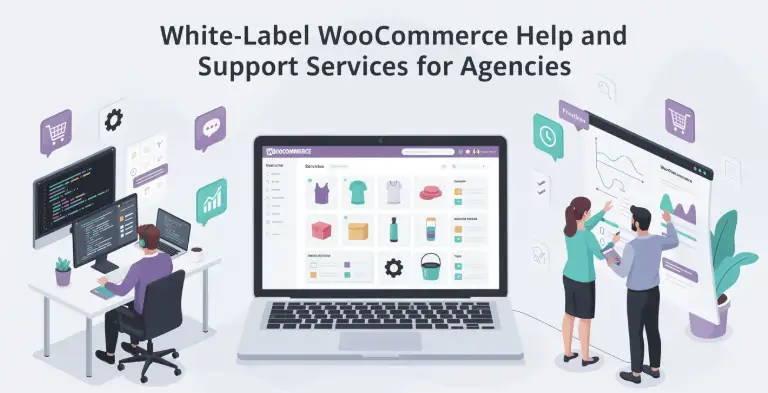
When agencies attempt to handle everything in-house, resources often stretch thin. This can negatively impact client satisfaction. Thus, outsourcing WooCommerce support enables agencies to:
- Deliver faster issue resolution
- Ensure 24/7 technical coverage
- Reduce operational overhead
- Improve store uptime and performance
- Focus on strategy, growth, and client acquisition
As a result, agencies shift from reactive troubleshooting to proactive growth management. This directly enhances customer satisfaction and retention.
Turn WooCommerce Support into a Competitive Advantage
Deliver expert-level support, proactive maintenance, and seamless integrations under your own brand. Strengthen client retention while reducing operational strain and technical risk.
Role of White-Label WooCommerce Help and Support Services
White-label support allows agencies to offer WooCommerce expertise under their own brand. The client interacts with the agency, while a specialized backend team handles technical execution.
The role typically includes:
- Technical troubleshooting
- Plugin and theme updates
- Performance optimization and security hardening
- Store enhancements
In other words, it extends your agency’s capabilities without increasing internal headcount.
Core White Label Services for WooCommerce Stores
Running a WooCommerce store involves more than launching products and processing orders.
Agencies must manage performance, security, integrations, compliance, and customer experience often across multiple client stores. As demand grows, internal teams can quickly become overstretched.
That is where white label WooCommerce services create measurable value. By partnering with a specialized backend team, agencies expand technical capacity, reduce risk, and maintain service quality.
Below are the core white label WooCommerce help agencies should expect from their partners when needing support for WooCommerce stores at scale.
Technical Capabilities: WordPress Developers and Custom Code
WooCommerce operates on WordPress, which means technical depth in WordPress development is non-negotiable.
While many stores rely on pre-built themes and plugins, serious eCommerce brands require customization, optimization, and continuous refinement.

A white label partner must provide experienced WordPress developers who understand WooCommerce architecture, database structure, hooks, and filters.
More importantly, they should work proactively to prevent issues instead of reacting after breakdowns occur.
WordPress Developers: Implementation and Ongoing Optimization
Dedicated WordPress developers handle:
- Theme customization and child theme management
- Plugin configuration and compatibility testing
- Performance optimization and caching setup
- Security hardening and vulnerability patching
- Core and plugin update management
Furthermore, developers ensure that updates do not break checkout flows or disrupt custom functionality. Through staging environments and QA testing, they minimize downtime and protect revenue.
Custom Code: Audit, Fix, and Maintain
Many WooCommerce stores depend on custom-built plugins, third-party extensions, or bespoke features. Over time, these can create technical debt, performance bottlenecks, or security vulnerabilities.
A white label support team should:
- Conduct structured code audits
- Identify deprecated functions and conflicts
- Refactor inefficient logic
- Fix compatibility issues after updates
- Maintain version control and documentation
As a result, stores remain scalable and stable. Instead of accumulating technical risk, agencies deliver long-term reliability to their clients.
WooCommerce Integration Services and Solutions
Modern WooCommerce stores operate within a broader digital ecosystem. Payment gateways, CRMs, ERPs, inventory systems, shipping tools, marketing automation platforms, and analytics software must all work seamlessly together.
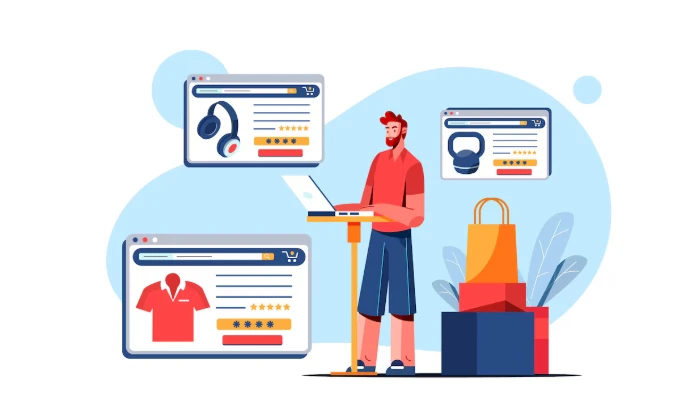
However, integration errors can lead to order mismatches, inaccurate inventory, failed transactions, or reporting gaps. Therefore, white label integration expertise becomes essential.
API Integrations and Webhooks: A qualified support partner should manage:
- WooCommerce REST API integrations
- Custom API development
- Webhook configuration
- Real-time data synchronization
- Middleware setup for complex workflows
For example, syncing WooCommerce with a CRM ensures that customer data flows automatically into marketing pipelines. Similarly, ERP integrations help maintain accurate stock levels and accounting records.
By handling these integrations correctly, agencies reduce operational friction and improve store efficiency.
Third-Party Tools and Platform Sync: Beyond APIs, white label teams should configure and maintain integrations such as:
- Payment gateways (Stripe, PayPal, Authorize.net)
- Shipping platforms (ShipStation, EasyPost)
- Inventory management systems
- Marketing automation software
Moreover, they should troubleshoot sync errors, resolve webhook failures, and monitor logs for anomalies. Instead of waiting for clients to report issues, proactive monitoring ensures continuity of service.
Google Merchant Center and Product Feed Integration
For WooCommerce stores running paid ads, product feed accuracy directly impacts performance. Google Merchant Center errors can disapprove products, suspend accounts, or reduce ad visibility.
Consequently, white label feed management becomes a revenue-critical service.
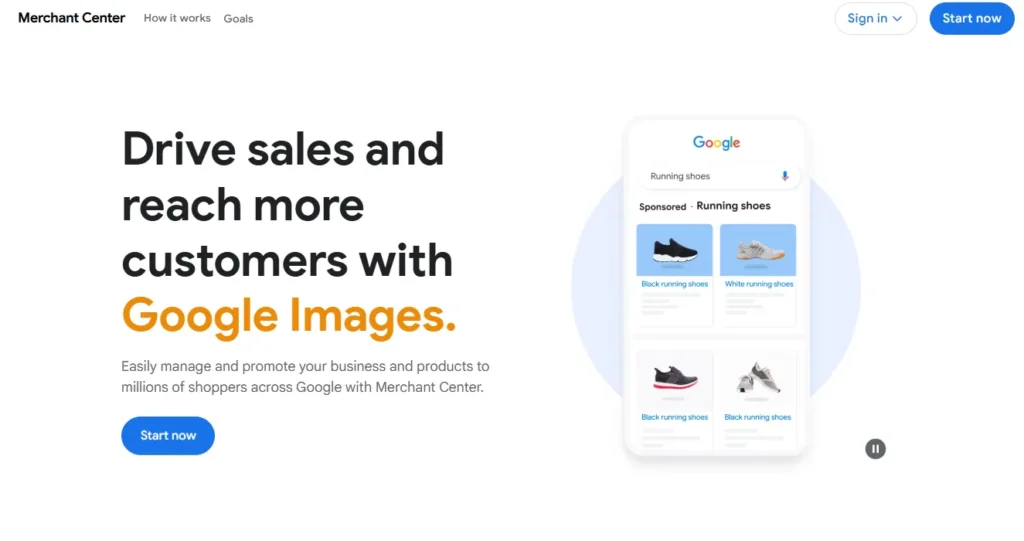
- White label teams should configure product feeds from WooCommerce, map product attributes accurately, optimize titles & descriptions for Shopping ads, ensure proper category alignment, and maintain structured data compliance
- Furthermore, they should validate feeds against Google policies to prevent disapprovals. Even small data inconsistencies, such as missing GTINs or pricing mismatches, can disrupt campaigns.
- Ongoing support should also include feed diagnostics review, error resolution, sync automation, tax & shipping configuration validation, and performance optimization adjustments.
By maintaining clean and compliant feeds, agencies protect advertising ROI. As a result, clients experience consistent visibility across Google Shopping and Performance Max campaigns.
Store Operations: Order, Shipping, Tax, and Accounting
While front-end design influences conversions, backend operations determine customer satisfaction. If orders fail, shipping rates miscalculate, or taxes apply incorrectly, trust declines quickly.
White label WooCommerce support ensures that operational systems run smoothly.
Order Management and Workflow Optimization: Support teams should test checkout processes, resolve payment failures, configure order statuses & automation, manage refunds and dispute handling, and optimize cart and checkout performance.
Additionally, they should review abandonment issues and identify potential friction points. Even minor checkout delays can reduce conversion rates.
Shipping and Tax Configuration: WooCommerce stores often require complex shipping rules and tax compliance across multiple regions. Therefore, support services must include:
- Shipping zone configuration
- Real-time carrier integration
- Flat-rate and dynamic pricing setup
- Tax rule implementation
- VAT and sales tax compliance adjustments
Accurate configuration ensures transparency at checkout and reduces post-purchase disputes.
Accounting and Financial Integrations: Financial accuracy is critical for growing stores. White label teams should assist with:
- Integration with accounting tools like QuickBooks or Xero
- Automated invoice generation
- Revenue tracking alignment
- Payment reconciliation
By synchronizing WooCommerce with accounting systems, agencies provide clients with financial clarity and compliance.
Emergency Support and Incident Response
Even well-maintained WooCommerce stores encounter unexpected issues. Server outages, plugin conflicts, malware attacks, or sudden traffic spikes can disrupt operations.
Therefore, structured incident response is non-negotiable. A white label partner must provide rapid, organized emergency support.
- 24/7 Monitoring and Alert Systems: Proactive monitoring should include uptime tracking, performance alerts, security scanning, malware detection, and error log monitoring. Through automated alerts, teams identify problems before they escalate into revenue loss.
- Defined Escalation and SLA Frameworks: Emergency response should follow clearly defined Service Level Agreements (SLAs), including guaranteed response times, priority-based ticket handling, escalation workflows, root-cause analysis reports, and post-incident documentation. Moreover, support teams should maintain staging environments and rollback capabilities. If an update causes a conflict, they can quickly restore a stable version.
- Disaster Recovery and Backups: Reliable white label services also include automated daily backups, off-site storage, one-click restore functionality, and staging-to-production deployment workflows. In worst-case scenarios, disaster recovery protocols ensure minimal downtime and data loss.
Seahawk Media’s White-Label WooCommerce Support for Agencies
Scaling WooCommerce support across multiple client accounts requires structure, technical depth, and predictable processes.
Seahawk Media’s white-label WooCommerce support helps agencies extend their capabilities without expanding internal teams.

Below is how we structure our white-label eCommerce help and support for agency partners.
Onboarding, Handoffs, and Documentation for WooCommerce Store Clients
Effective partnerships begin with structured onboarding. We follow a streamlined intake process to understand each WooCommerce store’s architecture, integrations, hosting environment, and existing customizations. This ensures clarity before any technical work begins.
- First, the team conducts a comprehensive store audit covering performance, security posture, plugin ecosystem, and custom code dependencies.
- Next, they establish access protocols, staging environments, and version control workflows. As a result, agencies gain full visibility into technical status and risk exposure.
Additionally, we emphasize documentation. Our team maintains detailed SOPs, access logs, update histories, and deployment notes.
This approach minimizes knowledge gaps during team transitions or account handoffs. Consequently, agencies avoid service disruptions while maintaining operational continuity for their clients.
Pricing Models, SLAs, and Packaging WooCommerce Solutions
Predictable pricing strengthens agency-client relationships. We offer flexible engagement models designed to align with different agency business structures.
Agencies can choose from:
- Tiered support plans
- Dedicated developer allocations
- Project-based development support
Moreover, clearly defined Service Level Agreements (SLAs) establish expectations around response times, issue prioritization, and resolution windows. This transparency reduces ambiguity and builds trust.
From a packaging standpoint, agencies can bundle WooCommerce maintenance, performance optimization, security monitoring, and emergency support into structured service tiers.
Instead of selling ad hoc technical fixes, they present comprehensive eCommerce stability plans. As a result, agencies position support as an ongoing value-driven investment rather than a reactive expense.
Sales Enablement: Positioning WooCommerce Help and Support
Technical capability alone does not drive growth; positioning does. We support agencies in articulating WooCommerce support as revenue protection and performance assurance.
Rather than framing services as “maintenance,” agencies can position them as:
- Conversion stability management
- Revenue risk mitigation
- Performance optimization infrastructure
- eCommerce scalability support
Furthermore, agencies can leverage audit reports, performance benchmarks, and risk assessments as sales tools. These assets help demonstrate immediate value during client conversations.
By aligning technical support with business outcomes, such as uptime, faster checkout, and secure transactions, agencies can strengthen their pitch and improve close rates.
Risk Management, Backups, and Disaster Recovery for WooCommerce Stores
WooCommerce stores process transactions continuously, which means downtime directly impacts revenue. We implement proactive risk management systems to reduce operational vulnerability.
- First, we deploy automated daily backups with secure off-site storage. This ensures rapid restoration in case of data corruption or accidental deletions.
- Additionally, we use staging environments to test updates before pushing changes live, minimizing deployment risks.
- Security monitoring and malware scanning further protect store integrity. If incidents occur, structured escalation protocols and rollback procedures enable fast recovery.
- Robust disaster recovery planning also safeguards both client revenue and agency reputation.
By mitigating risks proactively, agencies maintain service continuity and build long-term trust with their WooCommerce clients.
Conclusion and Next Steps for Agencies Seeking WooCommerce Help
White-label WooCommerce support enables agencies to scale efficiently while maintaining technical excellence and client satisfaction.
Instead of managing reactive fixes, agencies can deliver proactive maintenance, performance optimization, and risk mitigation under their own brand. This approach not only protects client revenue but also strengthens long-term retention.
Next, assess your current support gaps and identify operational bottlenecks. Then, define clear service packages aligned with client needs.
Finally, partner with a specialized WooCommerce support provider that offers structured SLAs, documentation, and emergency response. With the right framework in place, your agency can grow confidently and sustainably.
FAQs About White-Label WooCommerce Help
What are WooCommerce support services?
WooCommerce support services help agencies maintain, optimize, and secure an online store to ensure smooth operations and long-term stability.
How do support teams handle technical problems?
Dedicated teams handle technical problems by reviewing support requests, diagnosing root causes, and resolving issues before they impact sales or performance.
Can WooCommerce support improve customer satisfaction?
Yes, proactive maintenance and improved customer interactions lead to a better customer experience and stronger customer feedback.
Do support providers manage integrations?
They configure third-party integrations, payment processing systems, and WooCommerce extensions across ecommerce platforms to ensure seamless functionality.
Is ongoing maintenance necessary for growth?
Yes, it is. Ongoing maintenance like regular monitoring, weekly updates, and optimization helps protect revenue growth as your business grows.
Do experts handle WordPress-related tasks?
Yes, WordPress experts manage WooCommerce plugin updates and maintain WordPress websites built on this popular content management system.
How can agencies get support efficiently?
Agencies can get support through structured communication channels, ensuring their website, add-ons, and backend systems remain stable.