A WordPress website is never truly finished. The moment it goes live, it becomes part of a fast moving digital environment where updates, security risks, performance expectations, and user behavior constantly evolve. Without ongoing care, even a well built site can slowly degrade in speed, stability, and trust.
WordPress maintenance exists to protect that investment. It ensures your website remains secure, functional, and reliable as your business grows. For website owners, this means fewer surprises, less downtime, and more time spent focusing on growth instead of troubleshooting issues. For agencies, maintenance creates a structured way to support clients long after launch while building predictable long term value.
As WordPress sites become more complex and business critical, maintenance is no longer optional. It is a core operational requirement. Understanding what proper WordPress website maintenance includes and how to choose the right plan is essential for both site owners and agencies managing multiple client websites.
What WordPress Maintenance Really Means Today
WordPress maintenance is often misunderstood as occasional updates or quick fixes when something breaks. In reality, modern maintenance is an ongoing system designed to prevent problems before they affect users or revenue.
A well maintained WordPress site operates like a monitored infrastructure rather than a static project. Updates are planned and tested, security risks are identified early, performance is continuously optimized, and issues are addressed before they escalate.
This shift has become necessary because WordPress ecosystems are more dynamic than ever. Websites rely on multiple plugins, third party integrations, hosting environments, and custom functionality. Each update or change introduces potential risk if not handled carefully.
Maintenance today is not about reacting to issues. It is about maintaining stability, protecting data, and ensuring the website consistently supports business goals. When done correctly, maintenance fades into the background while reliability and performance remain visible to users.
Reliable WordPress Maintenance That Scales With You
Keep client sites secure, fast, and stable with expert WordPress maintenance designed for growing websites and agencies.
Core Elements of a Professional WordPress Maintenance Plan
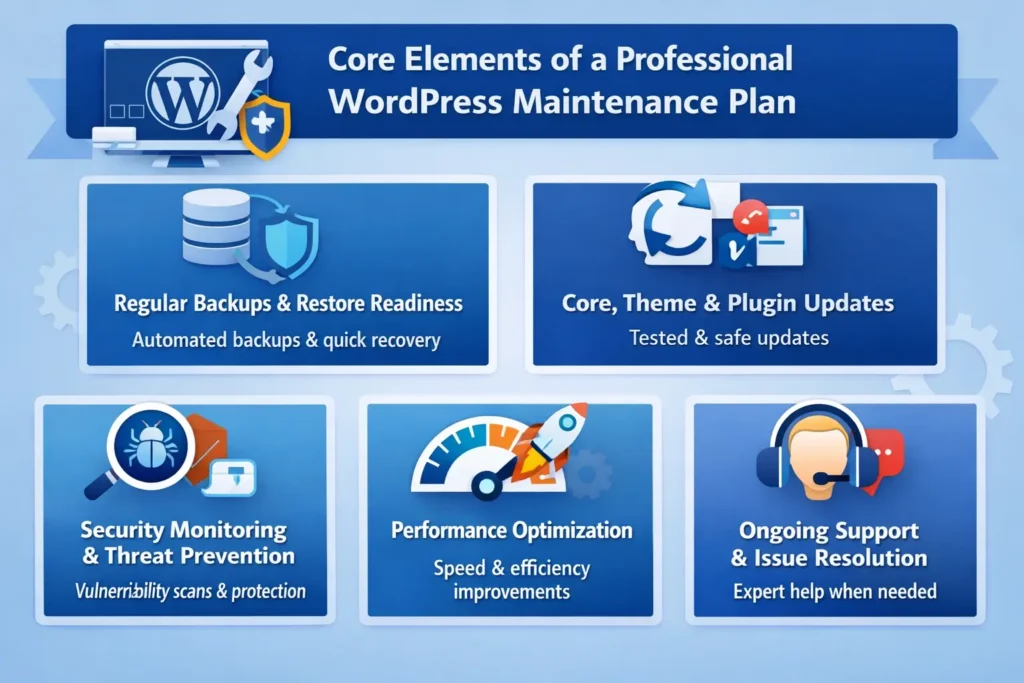
A high quality WordPress maintenance plan goes far beyond basic updates. It combines preventative care with expert oversight to keep websites stable, secure, and efficient over time.
Regular Backups and Restore Readiness
Backups are the foundation of any maintenance plan, but their value depends on how they are handled. Professional maintenance includes automated backups performed on a consistent schedule and stored securely offsite.
Equally important is restore readiness. Backups must be tested and easily recoverable so websites can be restored quickly if an update fails, data is lost, or security is compromised. Without tested restore processes, backups alone provide a false sense of security.
WordPress Core Theme and Plugin Updates
Updates keep WordPress sites secure and compatible, but they also introduce risk if applied carelessly. A professional maintenance plan ensures updates are reviewed, tested, and applied in a controlled way.
This includes WordPress core updates, theme updates, and plugin updates. Testing helps prevent conflicts, broken layouts, and functionality issues that often occur when updates are applied directly to live sites without validation.
Security Monitoring and Threat Prevention
Security threats evolve constantly, and WordPress sites are frequent targets due to their popularity. Maintenance plans include proactive security monitoring to detect vulnerabilities, suspicious activity, and unauthorized access attempts.
This typically involves malware scanning, firewall configuration, login protection, and patching known vulnerabilities. If an issue does occur, professional maintenance ensures a rapid response to contain and resolve the threat before it causes serious damage.
Performance Monitoring and Optimization
Website speed plays a direct role in user experience, search visibility, and conversions. Maintenance plans include performance checks that identify slow load times, inefficient queries, and resource heavy assets.
Ongoing optimization may involve database cleanup, caching configuration, image optimization, and hosting level improvements. These efforts help maintain fast load times as content and traffic grow.
Ongoing Technical Support and Issue Resolution
Even with preventative care, issues can still arise. A strong maintenance plan includes access to WordPress experts who can diagnose and resolve problems efficiently.
This support removes the burden from site owners and agencies who would otherwise need to troubleshoot complex technical issues on their own. Reliable support ensures problems are resolved quickly without disrupting business operations.
How to Choose the Right WordPress Maintenance Plan
Choosing a WordPress maintenance plan should be a strategic decision, not a rushed purchase based on price alone. The right plan aligns with your business goals, website complexity, and risk tolerance.
Budget Versus Business Risk
Maintenance costs should be evaluated against the cost of downtime, security breaches, and lost trust. A cheaper plan may save money upfront but can become expensive if it fails during critical moments.
Revenue generating websites often benefit from investing in more comprehensive coverage, while simpler sites may start with essential services and scale as needs grow. The key is understanding what failure would cost your business.
Business Size and Website Role
The size of your business matters, but the role your website plays matters even more. A small ecommerce site processing payments daily may require more robust maintenance than a large company with a simple informational site.
Solo creators may need core updates and security monitoring, while growing businesses often benefit from extended support, performance optimization, and faster response times. Evaluating the website’s importance to operations helps determine the appropriate level of care.
Website Complexity and Custom Functionality
Every WordPress site is built differently, and the level of complexity directly affects maintenance needs. A simple brochure site requires a very different level of care compared to a site with ecommerce, memberships, multilingual content, or custom integrations.
Complex websites often rely on multiple plugins, custom code, and external services such as payment gateways or CRM tools. Each of these elements introduces potential points of failure. A maintenance plan must account for this by offering deeper testing, tighter security controls, and closer performance monitoring.
To evaluate complexity, consider how many plugins your site uses, whether custom code is involved, and how often content or features change. Websites handling user data or transactions also require stronger security and compliance focused maintenance.
The more moving parts a website has, the more important proactive maintenance becomes. Plans that are not designed for complexity often fail when sites scale.
Scope of Services Included
Many WordPress maintenance plans appear similar on the surface, but the real difference lies in how services are delivered. Two plans may both include updates and backups, yet the execution quality can vary significantly.
It is important to understand whether backups are daily or real time, where they are stored, and how quickly restores can be performed. Support limits also matter. Some plans cap support hours or restrict communication channels.
Update handling is another key factor. Professional plans test updates before deployment, while basic plans may push updates directly to live sites. Security coverage should also be reviewed closely to confirm whether malware removal is included or only scanning.
A clear understanding of service scope helps prevent surprises and ensures the plan addresses your actual pain points.
Provider Experience and Accountability
The quality of a maintenance plan depends heavily on the team behind it. Experience maintaining WordPress sites at scale matters more than marketing promises.
Look for providers with a proven track record, transparent communication, and documented processes. Reviews and case studies provide insight into how issues are handled when something goes wrong.
Accountability is equally important. Knowing who manages your site, how many sites they oversee, and how quickly they respond builds trust. Providers who communicate clearly during onboarding and sales are more likely to maintain that standard over time.
Benefits of WordPress Maintenance for Website Owners
When website owners partner with a reliable maintenance provider, the benefits extend far beyond technical upkeep. The value is felt in day to day operations and long term growth.
Peace of Mind and Operational Stability
Maintenance removes the constant anxiety of unexpected issues. Website owners no longer need to worry about updates breaking functionality or security risks going unnoticed. This stability allows teams to focus on strategy, content, and growth instead of firefighting problems.
Consistent Uptime and Reliability
Downtime impacts credibility and revenue. Maintenance plans include monitoring that detects issues early and resolves them before users are affected. This proactive approach keeps websites available and dependable, even during high traffic periods.
Faster Performance and Better User Experience
Ongoing optimization ensures websites remain fast as content grows. Clean databases, optimized assets, and proper caching result in smoother user experiences. Faster sites reduce bounce rates and support stronger conversion performance.
Stronger Security and Risk Reduction
Security is not a one time setup. Maintenance plans provide continuous protection through monitoring, scanning, and updates. When threats arise, immediate response minimizes damage and prevents long term consequences.
Why WordPress Maintenance Plans Matter for Agencies
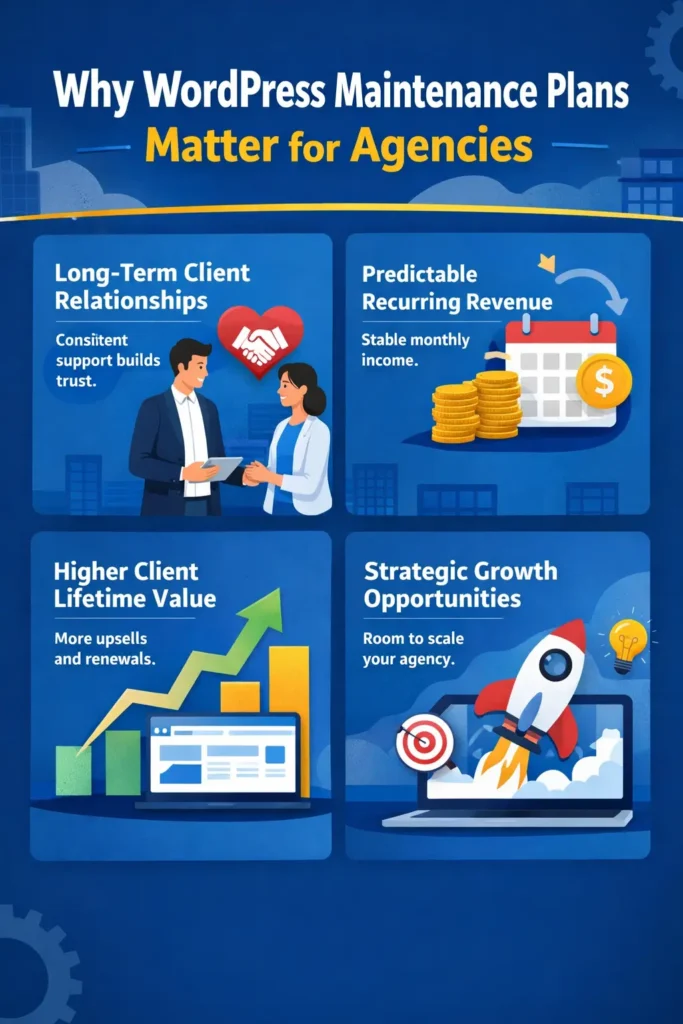
For agencies, maintenance plans are not just an add on service. They are a foundation for sustainable growth.
Long Term Client Relationships
Maintenance shifts agencies from project based engagements to ongoing partnerships. Regular check ins, performance reports, and proactive improvements keep agencies involved in clients’ success beyond launch.
This consistent value builds trust and reduces churn.
Predictable Recurring Revenue
Monthly maintenance plans create stable revenue streams. Predictable income allows agencies to plan resources, invest in growth, and reduce dependence on one off projects.
Higher Client Lifetime Value
Clients receiving ongoing support are more likely to return for redesigns, feature expansions, and optimization work. Maintenance keeps agencies top of mind and positioned as long term strategic partners.
How Seahawk Approaches WordPress Maintenance

Seahawk provides WordPress maintenance as a proactive, expert led service focused on stability, performance, and security. Rather than reacting to issues, Seahawk emphasizes prevention, clear communication, and measurable outcomes.
Maintenance services are designed to support both individual website owners and agencies managing multiple sites. From updates and monitoring to performance optimization and expert support, Seahawk ensures websites remain reliable as businesses grow.
Clear reporting and responsive communication help clients understand what is happening behind the scenes while removing the operational burden of website upkeep.
WordPress Maintenance Is Not Optional Anymore
Modern websites operate in an environment where speed, security, and reliability directly impact business outcomes. Without proper maintenance, even well designed WordPress sites become vulnerable to downtime, performance loss, and security threats.
A professional maintenance plan protects more than just code. It protects brand reputation, customer trust, and revenue. Whether you manage a single site or dozens of client websites, investing in ongoing care ensures your digital presence remains strong and dependable.
As WordPress continues to power more business critical websites, maintenance becomes a foundational part of long term success rather than an optional extra.
Frequently Asked Questions
How often should a WordPress website be maintained
WordPress websites should be maintained on an ongoing basis rather than occasionally. Core updates, plugin updates, backups, and security checks should happen weekly at a minimum, while monitoring for uptime and security threats should run continuously. Performance optimization and deeper reviews are typically done monthly. Regular maintenance prevents small issues from turning into serious problems that affect user experience or revenue.
Can I handle WordPress maintenance on my own
It is possible to manage basic maintenance on your own, especially for small or low risk websites. However, as websites grow in complexity, manual maintenance becomes time consuming and risky. Updates can cause conflicts, security threats may go unnoticed, and performance issues often require technical expertise. Professional maintenance ensures updates are tested, issues are resolved quickly, and your website remains stable without pulling focus from your core business.
What happens if my website breaks during an update
A professional WordPress maintenance plan includes tested backups and recovery processes. If an update causes issues, the site can be restored to a stable version quickly while the problem is identified and fixed. This minimizes downtime and prevents data loss. Without a proper maintenance plan, recovery often takes longer and can result in lost traffic, revenue, or customer trust.