What are the emerging e-commerce trends to watch? As the digital marketplace prepares for another year of innovation, this article explores the key trends poised to drive the future of e-commerce. Discover the technologies and strategies that will equip you to confidently navigate the online commercial landscape, all without the usual jargon.
Key Takeaways
- AI-powered personalization uses machine learning to enhance the shopping experience, offering tailored product recommendations and dynamic pricing strategies based on customer data analysis to boost sales and loyalty.
- Mobile commerce is now a driving force for online shopping, emphasizing the need for responsive web design and seamless mobile payment options, further accelerated by advanced technologies such as PWAs.
- Integrating AR and VR technologies provides customers with immersive and interactive product visualizations, increasing engagement and confidence in online purchases and setting a new standard in e-commerce experiences.
Why Emerging E-commerce Trends Matter for Business Growth
Emerging ecommerce trends matter because they directly shape how people discover products, evaluate brands, and make purchasing decisions. The ecommerce landscape continues to evolve as consumer behavior shifts toward convenience, speed, and hyper-personalized experiences.

Online shoppers now expect seamless checkout experiences, flexible payment options such as wallets, credit cards, Apple Pay, and buy-now-pay-later services, along with fast shipping and reliable customer support. Ecommerce businesses that fail to adapt risk losing relevance in an increasingly competitive ecommerce market.
Artificial intelligence plays a significant role in driving growth across ecommerce platforms. AI-powered personalization enables retailers to deliver product recommendations tailored to individual customer preferences, informed by purchase history, product searches, and browsing behavior.
This improves average order value, supports cross-selling, and increases repeat purchases. Tools such as AI chatbots enhance customer service by offering real-time assistance during product discovery and checkout processes.
Generative AI also supports content creation, from product descriptions to email marketing campaigns and video content that boosts engagement.
Social commerce is another powerful driver of growth. Platforms like Instagram, Facebook, and TikTok shop allow shoppers to purchase products directly within social feeds without leaving the platform.
User-generated content, influencer collaborations, and social proof help ecommerce brands connect with Gen Z and millennials who value authenticity and community. These trends are not a fad. They reflect long-term changes in consumer expectations, shopping habits, and digital interactions.
Ecommerce leaders who align their marketing strategies with these trends position their brands for sustained online sales growth and stronger customer loyalty.
Top Emerging E-commerce Trends to Watch Out For
The ecommerce industry continues to evolve as new technologies, changing consumer behavior, and innovative shopping experiences reshape how people buy online.
Understanding these emerging ecommerce trends helps businesses stay competitive, meet customer expectations, and drive sustainable growth in a rapidly changing digital marketplace.
AI-Powered Personalization
Envision an online store that anticipates customer needs before they even occur. This isn’t mere fantasy; it’s made possible with AI-powered personalization.
As one of the critical trends revolutionizing the e-commerce landscape, AI-powered personalization enhances the customer experience by making it more personalized and relevant. How does this work? Allow us to elaborate!
AI can analyze customer data through machine learning algorithms to provide tailored product recommendations and dynamic pricing strategies. For industries like building materials ecommerce, this personalization can streamline buyer decision-making by presenting the most relevant materials for specific projects.
This enhances the relevance of the products showcased to customers and encourages them to make a purchase. As a result, it’s not surprising that many e-commerce businesses are embracing this trend to increase sales and brand loyalty.
Find Out: Ways to Increase Your Bottom of the Funnel Conversions
Machine Learning for Product Recommendations
Here’s a fun fact: Did you know that machine learning can revolutionize product recommendations in e-commerce? Machine learning can improve online shopper satisfaction by analyzing transactions and forecasting customer behavior.
One shining example is Jones Road Beauty, which utilizes machine learning to create personalized product recommendations, demonstrating a practical application of this trend in customized marketing campaigns for e-commerce.
Dynamic Pricing Strategies
Moreover, AI and machine learning play a significant role in shaping dynamic pricing strategies. Businesses can adjust prices dynamically by processing vast amounts of data to analyze customer behavior, market trends, and competitor pricing.
This real-time analysis enables businesses to optimize revenue and profitability in response to shifting market conditions.
Are you prepared to use this strategy to your advantage?
Mobile Commerce Dominance
As we continue to ride the wave of digital transformation, mobile commerce is one new e-commerce trend that’s making a splash. With the number of consumers shopping online through their mobile devices on the rise, it’s clear that the future of e-commerce lies in the palm of our hands. What’s fueling this trend, you ask? Let’s examine further.
Some reasons why mobile shopping is on the rise include:
- The convenience of shopping from anywhere at any time.
- Social media platforms like Instagram and TikTok offer seamless mobile shopping experiences.
- Technological advancements in mobile commerce, such as Progressive Web Apps (PWAs), offer an enhanced shopping experience specifically designed for mobile users.
These factors have contributed to the growing popularity of mobile shopping among online shoppers, making it easier than ever to shop online.
Responsive Web Design
In the mobile-first world of e-commerce, having a responsive web design is no longer an option but a necessity. After all, what’s the point of having a stunning website if it doesn’t look or function well on mobile devices? Responsive web design ensures a smooth and effortless experience on any device, adapting the layout and content for easy access.
As a result, it significantly boosts user satisfaction and increases conversion rates. A great example of this is the Shoppable Instagram post, which allows users to shop directly from the website, creating a seamless and efficient shopping experience.
Build a Website That Truly Reflects Your Brand
Say goodbye to cookie-cutter templates and hello to custom WordPress design with Seahawk.
Seamless Mobile Payments
Another critical aspect of mobile commerce is the seamless mobile payment experience. With features like one-click payments and digital wallets, customers can complete their purchases with just one click, eliminating the hassle of repeatedly entering payment details.
This streamlines the payment process, saving valuable time for busy consumers on their mobile devices and leading to increased impulse purchases and overall sales.
Explore: Basic Principles of Website Design That Drive Sales
Augmented Reality (AR) and Virtual Reality (VR) Integration
From mobile devices, let’s now shift our focus to another exciting development in the e-commerce world: The integration of Augmented Reality (AR) and Virtual Reality (VR).

These technologies are revolutionizing e-commerce platforms, offering immersive product visualization and interactive shopping experiences that closely mimic a physical store setting. Are you curious about how AR and VR are transforming e-commerce? Let’s investigate.
AR technology offers the following benefits:
- Overlays brand or product content with the buyer’s world
- Allows customers to engage with the product wherever they are
- Elevates the relevance of products showcased to customers
- Encourages customers to make a purchase.
On the other hand, VR technology offers personalized shopping experiences and fosters stronger brand recall through its immersive nature.
AR in Product Visualization
When it comes to product visualization, AR technology is a game-changer. By overlaying digital information onto the physical world, AR allows customers to:
- Visualize how a product would look in their environment
- Try before they buy
- Reduce returns
- Increase customer confidence
A great example of a company using AR for product visualization is IKEA. The Place mobile app utilizes Apple’s ARKit platform for customers to visualize digitally reproduced 3D product images in their homes. This feature enhances the shopping experience by providing a more immersive and interactive way to view products.
Read: Customize WooCommerce Templates & Product Pages
VR Shopping Experiences
On the other hand, VR offers an immersive and interactive way for customers to explore products, providing a shopping experience that closely mimics a visit to a physical store. Imagine a customer who wants to purchase an RV carport that requires installation.
VR allows customers to see the carport before it’s even built, measure its dimensions, and even try out different customizations before placing their order.
This immersive interaction fosters a profound understanding of the product and its utility, empowering customers to make well-informed purchasing choices, ultimately driving up customer satisfaction and reducing return rates.
As VR technology advances, it may become a standard part of the shopping journey, further blurring the lines between physical and digital retail spaces. Companies seeking to integrate VR solutions into their business can benefit from expert AR/VR development services to create seamless, engaging experiences for their customers.
Social Commerce Expansion
From VR and AR, let’s turn to a trend closer to our daily lives: Social Commerce. From VR and AR, let’s turn to a trend closer to our daily lives: Social Commerce. With the rise of social media platforms and their integration with e-commerce functionalities, we’re witnessing an exciting expansion of social commerce.
As businesses explore new avenues, integrating WooCommerce with WhatsApp provides a seamless way to connect with customers.
To further enhance customer engagement, implementing WhatsApp automation can streamline order updates, reminders, and support messages, ensuring timely communication without manual effort. Shoppable posts, ads, and influencer collaborations drive sales and brand awareness on platforms like Instagram and TikTok. Wondering how these features are reshaping e-commerce? Let’s delve into that.
Meanwhile, influencer collaborations drive sales by leveraging their trust and influence with their audience. These endorsements spark discussions among followers, encourage the sharing of experiences and opinions, and generate user-generated content, all of which contribute to building credibility and driving sales for the brand.
Shoppable Posts and Ads
Shoppable posts and ads on social media platforms are designed to make it easy for consumers to click through and make a purchase with product tags.
They eliminate the need for consumers to leave the social media platform and visit the e-commerce website, thus streamlining the shopping journey and ultimately boosting conversion rates. Implementing these features requires sophisticated AdTech software development to ensure seamless integration between social platforms and e-commerce systems.
Know: Ecommerce World-class Shopping & UI Design Experience
Influencer Collaborations
Influencer collaborations are incredibly effective at driving greater customer engagement and outperforming traditional branded posts. As influencer recommendations influence most consumers, it’s clear that they play a vital role in attracting new customers through organic traffic.
Need Help Building an E-commerce Online Store?
With WooCommerce, we can easily build a successful e-commerce store for you. Don’t miss out on this lucrative opportunity!
Green Commerce and Sustainability
As we continue to navigate the e-commerce landscape, one e-commerce trend that cannot be ignored is the rise of green commerce and sustainability in the e-commerce industry.
As consumers become more conscious of their shopping habits, e-commerce businesses are increasingly focusing on environmentally friendly practices.
In this context, an e-commerce business must adapt to meet these new demands. What does this entail in real-world terms? Let’s uncover the practical implications.
Environmentally friendly packaging options, such as utilizing biodegradable materials and minimizing excess packaging, appeal to eco-conscious consumers and help reduce environmental impact.
At the same time, ethical sourcing practices demonstrate a brand’s commitment to social and ecological responsibility, attracting conscious consumers and elevating their brand reputation.
Explore: Critical SEO Trends to Follow
Environmentally Friendly Packaging
Environmentally friendly packaging options are making a significant impact on green commerce. By using biodegradable and recyclable materials, businesses not only reduce their carbon footprint but also appeal to eco-conscious consumers.
Companies like Plaine, Lush, and ASOS are leading the way in using environmentally friendly packaging, showing how this practice can contribute to a brand’s sustainability goals and customer appeal.
Ethical Sourcing and Manufacturing
Ethical sourcing and manufacturing practices play a crucial role in green commerce. By ensuring that products are obtained through responsible and sustainable methods, businesses can demonstrate their commitment to social and environmental responsibility. This enhances their brand reputation and appeals to conscious consumers who value ethical practices.
Voice Search Optimization
As technology evolves, voice search is emerging as a critical trend in e-commerce.

With the rising popularity of voice-activated assistants like Amazon Alexa and Google Assistant, optimizing for voice search is becoming necessary for businesses. How can companies harness this trend to enhance their visibility? Let’s investigate further.
Voice search optimization involves:
- Adjusting your SEO strategy to accommodate the conversational and question-based queries typically used in voice search
- Targeting long-tail, question-based keywords
- Aligning your content with natural, conversational language
By implementing these strategies, businesses can improve their chances of appearing in voice search results.
Keyword Strategies
In voice search optimization, keyword strategies play a crucial role. By targeting questions and long-tail keywords, businesses can improve their search engine rankings and increase their visibility. Additionally, companies can use powerful keyword tools like Answer the Public, Google Keyword Planner, and Wordstream to identify relevant keywords and optimize their content accordingly.
Voice-Activated Assistants
Voice-activated assistants, such as Amazon Alexa and Google Assistant, are becoming increasingly popular tools for online shopping.
By interpreting voice commands and swiftly carrying out the requested tasks, these assistants provide a seamless and convenient shopping experience. As a result, optimizing for voice search has become essential for e-commerce businesses.
Omnichannel Retailing
In today’s fast-paced e-commerce landscape, consumers expect a seamless shopping experience across all channels. This is where omnichannel retailing comes in.
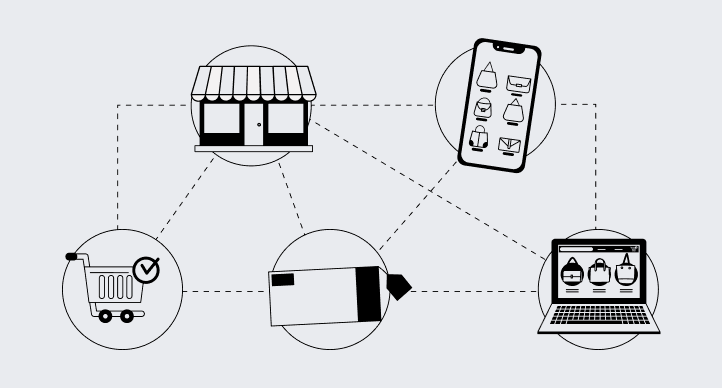
By providing a unified shopping experience across online and offline channels, omnichannel retailing meets customer expectations and enhances their overall shopping experience. What implications does this have for businesses? Let’s examine this in more detail.
Omnichannel retailing involves integrating various shopping channels to provide a seamless and unified customer experience. Whether a customer is shopping online from a mobile device, laptop, or brick-and-mortar store, the experience should be consistent and complementary.
But that’s not all. Efficient inventory management and fulfillment strategies are crucial for ensuring timely delivery and product availability, thereby enhancing the overall shopping experience.
Unified Customer Experience
A unified customer experience in omnichannel retailing ensures that every interaction is consistent and seamless across different touchpoints and channels, optimizing the customer journey. This not only enhances the customer experience but also:
- improves brand perception
- boosts conversion rates
- expands customer data resources
- improves internal collaboration
- ultimately leads to enhanced crisis management
- provides a solid competitive advantage.
Inventory Management and Fulfillment
Efficient inventory management is crucial in omnichannel retailing, including e-commerce store operations. It ensures that the right products are in the right place at the right time, enhancing the customer experience.
In addition, efficient fulfillment strategies ensure the timely delivery of products, further enhancing customer satisfaction and loyalty.
Subscription-Based Business Models
As we continue to explore the top e-commerce trends, let’s turn our attention to subscription-based business models.
These models are gaining popularity in e-commerce, offering a steady stream of recurring revenue and opportunities for customer retention. How do these models function, and what advantages do they provide for businesses? Let’s uncover the facts.
Subscription-based business models involve selling a product or service on a regular basis, typically on a monthly or annual basis. Customers pay a recurring fee to access the product or service, providing a steady revenue stream for the business.
Additionally, these models offer opportunities for customer retention, as companies can offer special perks and incentives to keep subscribers engaged.
Recurring Revenue
The beauty of subscription models lies in their ability to:
- Generate recurring revenue
- Build strong customer relationships
- Provide products or services regularly
- Ensure a steady and predictable stream of revenue
- Offer features like automatic renewals and upselling opportunities
All of these factors contribute to the stability of these revenue streams.
Indeed, businesses like Netflix and Spotify have thrived using this model, proving that subscription models can be a powerful tool for growth and success.
Customer Retention Strategies
In subscription-based business models, customer retention is critical. By implementing effective customer retention strategies, businesses can increase the lifetime value of their customers and reduce churn. Some strategies to consider include:
- Offering special perks to loyal customers
- Maintaining open lines of communication with customers through newsletters or personalized emails
- Personalizing the customer experience by tailoring recommendations or offers based on their preferences
By implementing these strategies, businesses can improve customer retention and drive growth.
Companies can build long-term customer relationships and ensure sustainable growth by focusing on customer retention.
Data Privacy and Security Concerns
In today’s digital age, data privacy and security are paramount. With increasing concerns about data breaches and privacy violations, businesses must take necessary measures to protect customer data and ensure secure transactions.
From complying with GDPR to implementing secure payment processing methods, companies are responsible for building customer trust by prioritizing data privacy and security. Let’s investigate these crucial aspects further.
GDPR compliance protects customer data and demonstrates a commitment to privacy, building consumer trust. On the other hand, secure payment processing methods, such as SSL encryption and tokenization, protect customer information and reduce the risk of fraud. Businesses can mitigate risks and enhance customer trust and loyalty by ensuring data privacy and security.
Read: Best WordPress Security Service Providers
GDPR Compliance
Ensuring GDPR compliance is crucial for businesses trading with European citizens. Companies can showcase their dedication to customer privacy, build trust, and meet essential regulatory requirements.
Furthermore, GDPR compliance helps businesses avoid severe penalties and fines, making it an essential aspect of data privacy and security.
Secure Payment Processing
Secure payment processing is another crucial aspect of data privacy and security in e-commerce. Businesses can protect sensitive customer information during transactions by implementing secure payment processing methods like SSL encryption and tokenization. Additionally, these methods help minimize the risk of fraud, enhancing customer confidence and trust in the business.
Global E-commerce Market Expansion
As we explore the top e-commerce trends, let’s turn our attention to the global expansion of the e-commerce market. With more and more businesses venturing into international markets, the potential for cross-border sales is immense. How can companies leverage this potential, and what tactics can they employ to meet the varied needs of customers? Let’s delve into this.
Cross-border e-commerce sales enable e-commerce businesses to reach new markets and increase revenue through their e-commerce site. However, to ensure a seamless shopping experience for international customers, companies must implement localization strategies for their e-commerce stores.
These strategies can include language translation, currency conversion, and adapting sales plans and UX strategies to support native languages. By doing so, businesses can ensure that their products and services resonate with local customers, boosting global sales.
Know: How to Speed Up Your eCommerce Website
Cross-Border Sales
Cross-border sales open the door to untapped markets, expanding your market reach and unleashing the potential for massive sales growth. However, to tap into these opportunities, businesses must strategically choose their target markets, localize their website, and employ a tactical business approach. This ensures success in the global e-commerce market, allowing firms to cater to the diverse needs of international customers.
Localization Strategies
Localization strategies are crucial in catering to diverse customer needs in the global e-commerce market. Some key strategies include:
- Language translation ensures that customers can navigate and understand the website in their native language.
- Offering currency conversion to allow customers to view and purchase products in their local currency.
- Analyzing target markets, adapting sales plans and UX strategies to support native languages, building trust with local customers, and creating a seamless user experience.
By implementing these strategies, businesses can ensure a seamless shopping experience for international customers and increase their chances of success in the global market.
How Businesses Can Keep Up With Emerging E-Commerce Trends
Keeping up with emerging ecommerce trends requires a proactive and data-driven approach. Ecommerce businesses must continuously monitor changes in consumer demand, shopping behaviors, and technology adoption across sales channels.
Analytics tools, such as Google Analytics, and platform-level insights help merchants track website traffic, conversion rates, and checkout performance. These insights support more intelligent business decisions and improve return on investment across marketing and operations.
Artificial intelligence tools play a critical role in helping retailers stay competitive. AI systems enable personalization at scale by delivering recommendations based on real-time user behavior and preferences.
Marketing automation, powered by AI personalization, allows brands to send targeted email campaigns, loyalty program updates, and product launch messages at the optimal time. A/B testing across product pages, checkout experiences, and payment methods helps teams refine the buying experience and reduce friction.
Ecommerce platforms also need a flexible tech stack that supports omnichannel experiences. Shoppers move between smartphones, desktops, social platforms, and even living rooms when browsing and purchasing goods.
Businesses should ensure consistent experiences across ecommerce sites, marketplaces, apps, and social shopping channels. Investing in customer support tools, communication tools, and ai chatbots improves customer interactions and satisfaction.
Training teams to understand industry trends and experiment with innovation is equally important. Successful brands treat trend adoption as an ongoing process, not a one time step. By focusing on agility, data, and customer journeys, businesses can adapt more quickly and meet the rising expectations of their customers.
Challenges and Risks of Adopting Emerging E-Commerce Trends
While emerging ecommerce trends unlock growth opportunities, they also introduce challenges that businesses must address carefully.
Implementing artificial intelligence, augmented reality, or voice commerce often requires significant investment in infrastructure, training, and system integration. Without clear goals and performance tracking, these investments may fail to deliver meaningful returns on investment.
Data privacy and security concerns present another significant risk. Ecommerce shoppers share personal information, payment details, and purchase history across platforms.
Compliance with regulations, secure payment processing, and transparency around data usage are essential to maintaining trust. AI-driven personalization must strike a balance between relevance and respect for consumer privacy to avoid damaging a brand’s reputation.
Operational complexity also increases as businesses expand sales channels and adopt new technologies. Managing inventory, order fulfillment, returns, and delivery options across ecommerce stores, marketplaces, and social platforms can strain supply chains and logistics. Poor execution leads to delayed shipping, inconsistent experiences, and frustrated customers.
Not every trend fits every business model. Some trends may suit B2C ecommerce, but not B2B buyers or niche markets. Others may appeal to Gen Z shoppers but miss the preferences of seniors or different demographics. Treating trends as a checklist instead of evaluating real customer needs creates wasted effort and budget.
To reduce risk, ecommerce brands should test new techniques through pilots, measure impact using analytics, and align adoption with long-term business performance goals. Thoughtful implementation enables businesses to innovate while maintaining efficiency, ensuring stable cash flow, and fostering customer loyalty.
Wrapping Up
As we wrap up our journey through the top e-commerce trends of 2025, it’s clear that the e-commerce landscape is more dynamic and exciting than ever. From AI-powered personalization to green commerce and voice search optimization, as well as global market expansion, these trends are shaping the future of e-commerce and redefining how consumers shop.
As we navigate this exciting landscape, remember that staying ahead of these e-commerce trends is vital to success. Are you ready to embrace these e-commerce trends and transform your online business?
FAQs About Top Emerging E-commerce Trends to Watch
Why are emerging ecommerce trends important for online businesses?
Emerging ecommerce trends help businesses adapt to changing consumer expectations and market shifts. They enhance customer experiences, boost conversions, and foster long-term growth in a competitive ecommerce landscape.
How does artificial intelligence impact the ecommerce experience?
Artificial intelligence enables personalized shopping experiences through product recommendations, dynamic pricing, and AI chatbots. It enhances customer service, accelerates decision-making, and boosts the average order value.
What role does social commerce play in modern online shopping?
Social commerce enables shoppers to discover and purchase products directly on platforms such as Instagram, Facebook, and TikTok. It boosts engagement through user-generated content, influencer marketing, and social proof.
How can ecommerce businesses keep up with changing trends?
Businesses can track ecommerce trends using analytics tools, customer data, and market research. Investing in flexible ecommerce platforms, automation, and continuous testing helps brands adapt faster.
What challenges do businesses face when adopting new ecommerce trends?
Common challenges include high implementation costs, data privacy concerns, and operational complexity. Poor alignment with customer needs can also reduce return on investment and impact customer loyalty.