Businesses need more than a website today. They need a platform that unifies content, data, and customer interactions at scale. WordPress Enterprise DXP solutions enable organizations to combine the flexibility of WordPress with enterprise-grade digital experience capabilities.
Whether you run a global retail brand or a multi-division B2B company, these platforms help you engage customers at every digital touchpoint with speed and precision.
TL;DR: Enterprise-Grade Digital Experience With WordPress
- WordPress has evolved well beyond a CMS into a full-stack digital experience platform for enterprise organizations.
- Modern WordPress DXP platforms offer composable architecture, personalization engines, and omnichannel content delivery.
- Top options include WordPress VIP, WP Engine Atlas, Pantheon, and custom composable builds.
- Choosing the right solution depends on your integration needs, scalability goals, and total cost of ownership.
What is a WordPress Enterprise DXP Solution and Why It Matters?
Understand how WordPress evolves into a powerful DXP to deliver personalized, scalable digital experiences.

Definition of Digital Experience Platform in the Enterprise Context
A Digital Experience Platform (DXP) is an integrated set of technologies that enables businesses to manage, deliver, and optimize digital experiences across multiple channels.
Unlike a traditional content management system, a DXP connects content, commerce, data, and marketing into a single, unified layer.
In an enterprise context, a DXP must handle complex workflows, large content volumes, compliance with sensitive data regulations, and integration with internal and external systems, such as CRMs, ERPs, and marketing stacks.
The platform must scale without performance degradation and support hundreds of editors, developers, and business users simultaneously.
How WordPress Evolves from CMS to Enterprise DXP?
WordPress began as a blogging platform. It has since grown into the world’s most widely used CMS.
But the real shift happened when enterprises began combining WordPress’s content management strengths with headless delivery, REST APIs, GraphQL, and third-party microservices.
Today, modernizing to block themes and adopting headless architecture are core steps in this evolution. The result is a WordPress DXP that serves as a flexible content layer powering web and mobile apps, digital signage, and beyond.
Composable DXP vs Monolithic DXP Comparison
A monolithic DXP bundles every capability, content management, personalization, analytics, and ecommerce into one tightly coupled system. It is easier to set up but hard to change. Vendor lock-in is a common concern.
A composable DXP takes a modular approach. You pick best-of-breed tools for each function and connect them via APIs. WordPress fits naturally into this model as the content layer.
You can add a customer data platform, a personalization engine, or analytics tools independently, without replacing the entire stack.
Using micro-frontends in WordPress with Gutenberg blocks is one way enterprises apply composable architecture in practice. Each front-end component is independently deployable and maintainable.
Why Enterprises Are Choosing WordPress Enterprise DXP Solutions?
Enterprise organizations are moving to WordPress-based DXPs for several reasons.
- First, the open-source ecosystem significantly reduces vendor lock-in risk.
- Second, the WordPress community offers a vast marketplace of plugins and integrations.
- Third, the WordPress content creation experience is familiar and accessible to non-technical teams.
Finally, organizations migrating from outdated systems find it easier to migrate to WordPress from any legacy CMS than to adopt an entirely new proprietary platform. This lowers switching costs and accelerates digital transformation timelines.
Build a Future Ready WordPress DXP
Partner with experts to design, implement, and optimize a scalable WordPress DXP tailored to your business goals.
Key Benefits of WordPress Enterprise DXP Solutions for Businesses and Enterprises
WordPress Enterprise DXP solutions deliver measurable value across the organization:
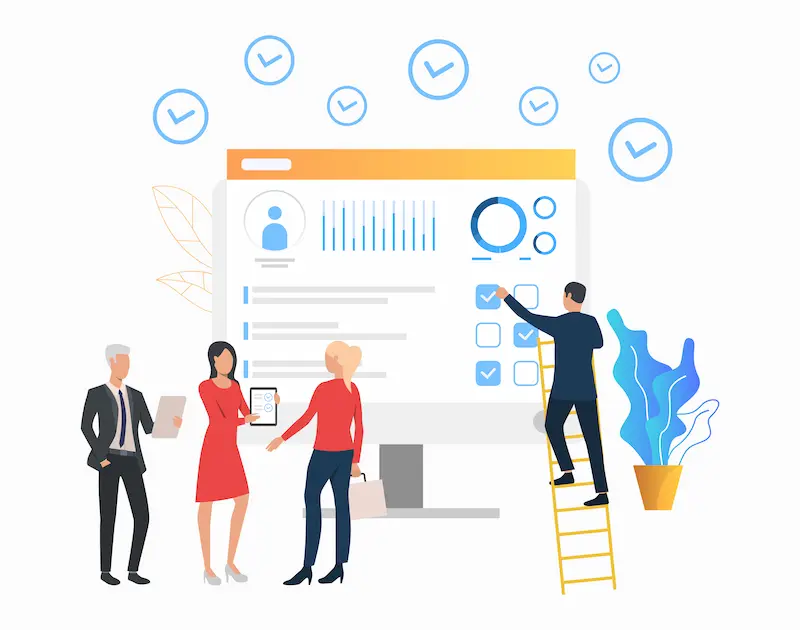
- Greater speed to market. Editors can publish and update digital content without developer involvement. Pre-built workflows accelerate campaign management and reduce bottlenecks.
- Seamless digital experiences across channels. A composable DXP delivers consistent content to web, mobile apps, email marketing campaigns, and digital touchpoints simultaneously.
- Better customer insights. By connecting a customer data platform to WordPress, enterprises can analyze customer data across all interactions. This supports smarter segmentation, targeting, and personalization.
- Lower total cost. Open-source tools reduce licensing fees compared to proprietary monolithic DXP platforms. Combined with the fastest WordPress hosting options, enterprises can optimize infrastructure costs while maintaining high availability.
- Reduced vendor lock-in. Because WordPress runs on open standards and REST APIs, organizations can swap out individual components, whether that is a personalization engine, an analytics tool, or an ecommerce layer, without rebuilding the entire platform.
- Improved customer satisfaction. Personalized, fast, and consistent experiences across channels drive higher engagement and conversion rates.
Core Capabilities of Top WordPress Enterprise DXP Solutions
Explore the essential features that enable seamless content management, integration, and omnichannel delivery.
Advanced Content Management and Headless CMS Capabilities
Enterprise DXPs built on WordPress use it primarily as a headless CMS. WordPress handles all content creation, approval workflows, and publishing, while the front end is served via frameworks such as Next.js or Nuxt.
The benefits of a Next.js headless WordPress setup include faster page loads, better SEO performance, and the ability to deliver content to any device or platform through a single API endpoint. This cleanly separates the content layer from the presentation layer.
Digital Asset Management Integration
Enterprise teams produce large volumes of images, videos, documents, and structured content. A DXP integrates Digital Asset Management (DAM) tools directly with WordPress.

This gives teams a centralized repository for all digital content, with built-in metadata, version control, and permission management.
Customer Data Platform and Personalization Engines
A personalization engine analyzes customer behavior, purchase history, and engagement signals in real time. It then instructs the DXP to automatically customize content for each visitor.
When connected to WordPress, platforms like Salesforce CDP or Segment allow marketers to customize content based on user attributes.
This enables truly personalized experiences at scale without requiring manual segmentation for every campaign. Dynamic landing pages are one direct output of this integration.
Omnichannel Content Delivery Across Web, Mobile, and Devices
One of the key features of an enterprise DXP is the ability to deliver content simultaneously across channels such as websites, mobile apps, email marketing, voice interfaces, and even IoT devices.
WordPress handles structured content creation once. The API then distributes it across multiple channels without duplication. This is fundamental to enabling businesses to maintain brand consistency while reducing content production costs.
Ecommerce and Transactional Experience Integration
Many enterprise DXPs integrate ecommerce capabilities directly. WordPress, paired with WooCommerce or headless commerce APIs like Shopify or BigCommerce, supports rich transactional experiences.
Whether you operate B2B online stores or B2C e-commerce storefronts, this integration allows unified management of product content, pricing, and customer journeys.
You can review a detailed Shopify vs WordPress comparison to understand how both platforms stack up in enterprise ecommerce.
Data Analytics Reporting and AI-Driven Insights
Data analytics capabilities help enterprises track how customers interact with content at every stage of the funnel.
AI-powered tools surface insights automatically, identifying which content drives conversions, which pages have high exit rates, and how customer segments behave across various channels.
Teams that need broader reporting options beyond native analytics often explore Google Analytics alternatives that integrate directly with WordPress and offer richer enterprise-level reporting.
API-First Architecture and Microservices Integration
An API-first architecture means every function in the DXP is accessible via an API. This enables easy integration with external systems, including CRMs and ERPs, as well as marketing automation platforms and customer relationship management tools.
Serverless architecture in WordPress web development extends this further. It allows enterprise teams to run microservices as independent functions without managing server infrastructure. The result is a leaner, more scalable platform.
Identity Management, Access Control, and SSO
Enterprise users need role-based access control, Single Sign-On (SSO), and multi-factor authentication.
Top WordPress DXP platforms integrate with identity providers such as Okta, Microsoft Entra ID (formerly Azure Active Directory, or Azure AD), and OneLogin. This protects sensitive data and ensures that internal teams, partners, and customers each access only what they should.
A WordPress security consultant can help define the right identity architecture for your organization’s specific industry regulations and compliance requirements.
Top WordPress Enterprise DXP Solutions to Consider in 2026
Discover leading platforms and tools that help enterprises build flexible and future-ready digital experiences.
WordPress VIP Enterprise DXP Solution
WordPress VIP is Automattic’s enterprise-grade cloud platform. It is purpose-built for high-traffic, high-availability environments.
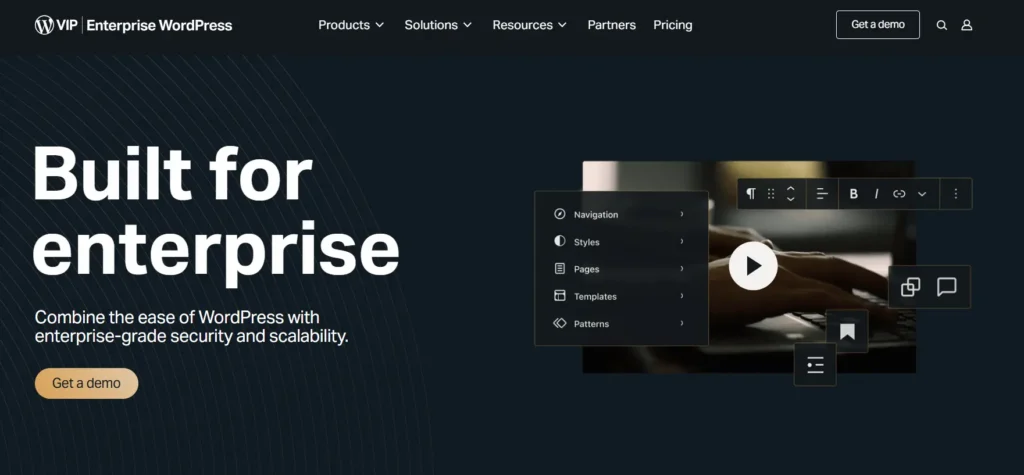
It includes managed infrastructure, application performance monitoring, code deployment workflows, and enterprise SLA guarantees.
WordPress VIP powers digital experiences for major media companies, global retailers, and financial institutions.
It supports headless architectures and connects with enterprise MarTech stacks. Its multisite support makes it suitable for organizations managing multiple brands or regional sites under a single platform.
WP Engine Atlas Headless WordPress Platform
WP Engine‘s Atlas platform provides a fully managed headless WordPress environment. It combines WordPress as the back-end content layer with JavaScript front-end frameworks. Atlas includes Atlas Content Modeler, Faust.js, and a global CDN.
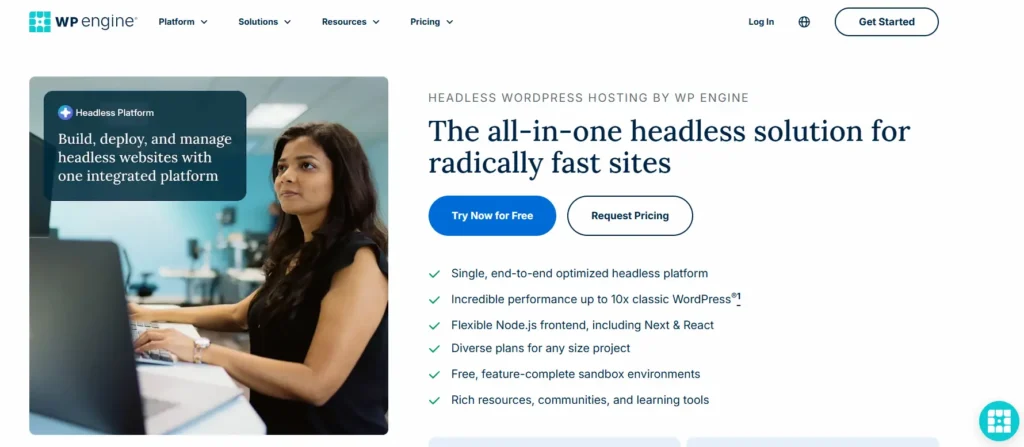
For enterprise teams moving away from traditional CMS platforms, Atlas delivers faster development and deployment while maintaining the familiar WordPress editorial experience.
Pantheon WebOps Platform for Enterprise WordPress
Pantheon is a WebOps platform that streamlines the development, testing, and deployment lifecycle for WordPress sites. It offers automated testing pipelines, multi-dev environments, and performance tools built for enterprise-scale.
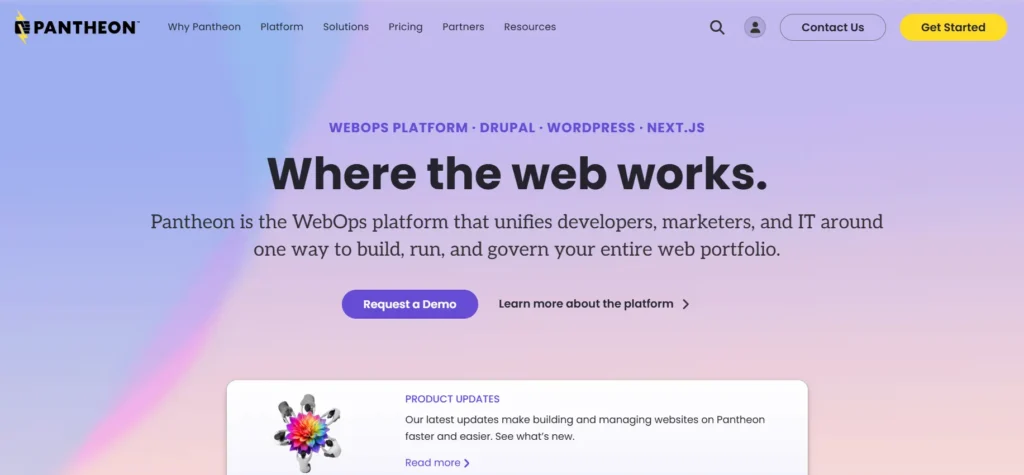
Load-balancing solutions for high-traffic websites are critical at this scale, and Pantheon handles them natively through its infrastructure layer. This makes it a strong choice for enterprises with unpredictable traffic spikes.
Acquia Digital Experience Platform with WordPress Integration
Acquia is a Drupal-native DXP that integrates effectively with WordPress via its headless content APIs. It brings enterprise-grade CDN, cloud hosting, and marketing automation capabilities into a unified stack.
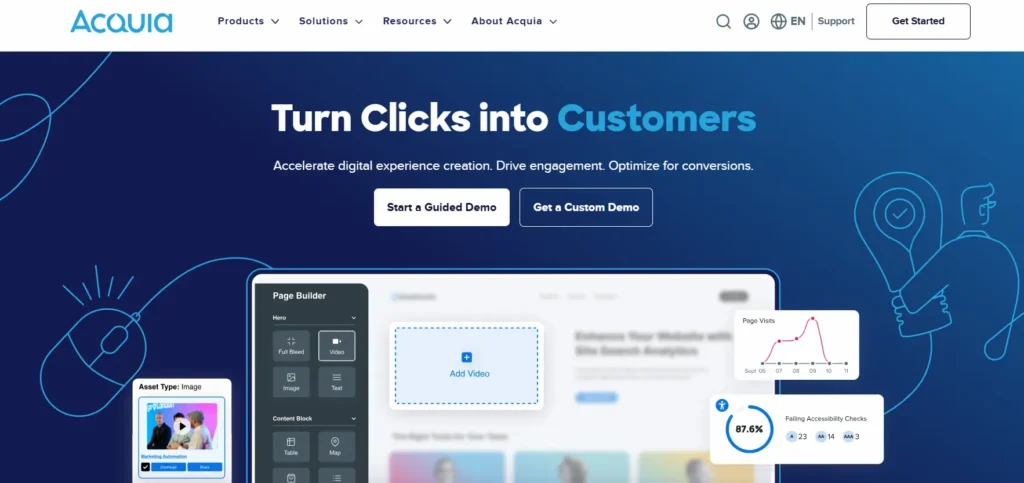
Organizations using Acquia alongside WordPress benefit from Acquia’s campaign management tools, personalization features, and customer journey orchestration capabilities, all connected through APIs.
Contentful API-First DXP with WordPress Integration
Contentful is a headless CMS and API-first DXP platform. While not WordPress-native, it pairs well with WordPress as a secondary editorial interface.
Teams use Contentful for structured content modeling and connect it to WordPress for blog, editorial, and web content management.
Its composable architecture makes it easy to integrate with virtually any third-party tool in the MarTech stack, from analytics platforms to customer relationship management systems.
osDXP Open Source Digital Experience Platform
osDXP is an open DXP initiative built on WordPress. It brings together a curated set of open-source tools, including DAM, search, personalization, and analytics, in an integrated WordPress ecosystem.
For enterprises wary of vendor lock-in, osDXP presents a compelling alternative to proprietary monolithic DXP platforms. It gives organizations full control over their integration capabilities without long-term license commitments.
Custom-Built WordPress Composable DXP Solutions
Many enterprises build their own composable DXP on top of WordPress. They use WordPress as the content management backbone, then add best-of-breed tools for commerce, analytics, personalization, and identity management.
This approach requires a dedicated team of WordPress developers and architects. Understanding the trade-offs between building in-house and partnering with a WordPress development company is essential before committing to this path.
Custom WordPress theme development plays a key role in aligning the platform with brand and UX requirements.
WordPress Enterprise DXP vs Traditional CMS Key Differences Explained
A traditional CMS focuses narrowly on web content creation and publishing. It manages pages, posts, and media within a single website. It does not natively connect to customer data, external systems, commerce platforms, or personalization engines.
- An enterprise DXP like WordPress extends far beyond this. It manages content across digital touchpoints, connects with internal and external systems, and delivers consistent, seamless digital experiences across channels.
- It also supports data analytics, identity management, and campaign management natively or through API integrations.
- Enterprises migrating from platforms like Ektron or Squiz Matrix often discover during the process that their legacy system was a traditional CMS masquerading as an enterprise platform.
- One major advantage is user friendliness. Enterprise DXPs built on WordPress keep the familiar editing interface while adding enterprise capabilities beneath the surface. Non-technical marketing teams can operate the platform without constant developer support.
Another difference is ongoing costs. Traditional CMS platforms often carry high licensing fees. WordPress-based DXPs use open-source foundations, which can significantly lower costs, though infrastructure, custom development, and support should be factored into the total cost analysis.
Use Cases of WordPress Enterprise DXP Solutions Across Industries
See how different industries leverage WordPress DXP to enhance customer engagement and business outcomes.
- Media and Publishing: Large media organizations use WordPress DXPs to manage thousands of articles daily and deliver content to web, app, and syndication channels simultaneously. WordPress VIP powers many of these operations.
- Retail and Ecommerce: Retailers combine WordPress with headless commerce APIs to manage product catalogs, run personalized promotions, and deliver consistent customer experiences across mobile apps and online stores. WordPress page builders help marketing teams rapidly design campaign landing pages without engineering support.
- Healthcare: Healthcare organizations use DXPs to deliver patient-facing content, manage compliance documentation, and integrate with electronic health record systems. Role-based access and SSO protect sensitive data and ensure compliance with industry regulations.
- Financial Services: Banks and financial services firms use enterprise DXPs to personalize product recommendations, manage customer journeys, and deliver digital content across customer portals, email, and mobile apps.
- Education: Universities and online learning platforms use WordPress-based DXPs to manage course content, personalize learner experiences, and integrate with LMS tools. Creating eLearning websites on WordPress provides a strong foundation for these deployments.
- Local and Regional Businesses: Smaller enterprise organizations and multi-location businesses also benefit from WordPress DXPs. WordPress for local businesses demonstrates how even smaller deployments can benefit from advanced content management and marketing integration.
How to Choose the Right WordPress Enterprise DXP Solution for Your Business?
Choosing the right platform begins with an honest assessment of your business needs. Consider the following:
- Integration capabilities: What internal and external systems does the DXP need to connect with? CRM, ERP, marketing automation platforms, or analytics tools? Ensure the platform supports robust API connectivity.
- Scalability: Will your platform need to handle millions of visitors? Does it support high availability and failover? Hosting infrastructure matters significantly at enterprise scale.
- Personalization requirements: Do you need real-time personalization across channels? Look for platforms with a built-in or connectable customer data platform.
- Content governance: Large organizations need workflows, approval processes, and role-based permissions for content management. Evaluate how each platform handles editorial governance at scale.
- Vendor lock-in risk: Avoid platforms that make it expensive or difficult to migrate data and content to other systems in the future. Open-source foundations and API-first architecture reduce this risk.
- Total cost of ownership: Factor in licensing, hosting, development, and ongoing maintenance costs. For organizations comparing white-label or managed options, white-label platforms for SaaS companies offer a cost-effective managed alternative.
- Support and expertise: Enterprise deployments are resource-intensive. Ensure a dedicated team or agency partner is available for implementation and ongoing optimization.
Future Trends in WordPress Enterprise DXP Solutions
The DXP space is evolving quickly. Here are the trends shaping the next generation of WordPress-based enterprise platforms:
- AI-driven content creation and optimization: AI tools are being embedded directly into WordPress editorial workflows. They assist with content generation, SEO optimization, and personalization at scale.
- Composable architecture adoption: More enterprises are moving away from monolithic DXPs toward composable stacks. WordPress’s open architecture makes it a natural fit for this shift. Future-proofing the stack through open APIs and modular components is a top priority.
- Edge delivery and serverless computing: Content delivery at the edge, closer to the user, is becoming standard for high-performance DXPs. Combined with serverless functions for backend logic, this dramatically reduces latency.
- Unified customer data and privacy compliance: As privacy regulations tighten globally, DXPs must handle consent management, data residency, and privacy compliance as core features rather than afterthoughts.
- New features in headless WordPress: The WordPress REST API and WPGraphQL ecosystem continue to mature. Expect richer support for new features like real-time collaboration, structured content modeling, and multi-tenant deployments.
Conclusion
WordPress Enterprise DXP solutions represent a powerful convergence of flexibility, scale, and open-source innovation.
They enable enterprises to manage complex content operations, deliver personalized digital experiences across multiple channels, and integrate with the tools that power modern marketing and customer engagement.
Whether you choose a managed platform like WordPress VIP, a headless solution like WP Engine Atlas, or build a custom composable DXP from the ground up, the right approach depends on your team’s capabilities, your integration requirements, and your long-term digital strategy.
The most successful enterprises treat their DXP not as a static technology purchase but as an evolving platform. They invest in strong architecture, continuous optimization, and a clear content strategy.
That combination is what transforms a powerful platform into truly seamless digital experiences that drive customer satisfaction and business growth.
FAQs About WordPress Enterprise DXP Solutions
What is a digital experience platform DXP in the WordPress CMS space?
A digital experience platform DXP extends the WordPress CMS space by providing tools for managing content, personalization, and customer engagement across channels.
How do WordPress Enterprise DXP solutions improve customer experience?
They enhance the customer experience by integrating tools for personalization, campaign management, and analytics, enabling organizations to deliver relevant content.
Can WordPress DXP handle unstructured content efficiently?
Yes, WordPress DXP solutions manage unstructured content using flexible frameworks and APIs, making the entire process of organizing and delivering content seamless.
How does WordPress DXP compare to other platforms?
Compared to other platforms, WordPress offers flexibility, cost efficiency, and an open ecosystem while still providing tools for scalability and integration.
Do WordPress Enterprise DXP solutions support design prototyping and business needs?
Yes, they support design prototyping and adapt to diverse business needs by integrating with a range of development, testing, and optimization tools.