Shopify or WordPress comes down to simplicity versus control. Shopify is better for businesses that want a fully hosted ecommerce platform with fast setup and less technical work. WordPress with WooCommerce is better for businesses that want deeper customization, stronger content and SEO flexibility, and more control over long-term growth.
This guide compares Shopify and WordPress across design, hosting, ecommerce features, SEO, pricing, multilingual support, mobile apps, and customer support so you can choose the right platform for your store.
TL;DR
- Shopify is best for beginners who want a fast, all-in-one ecommerce setup with minimal technical work.
- WordPress with WooCommerce offers greater flexibility, customization, and long-term scalability.
- Shopify offers easier setup, built-in hosting, and faster launch time.
- WordPress gives more control over SEO, design, and advanced ecommerce features.
- Shopify has predictable monthly pricing, while WordPress costs vary based on hosting and plugins.
- Choose Shopify for simplicity and speed, and WordPress for control, growth, and customization.
Shopify vs WordPress: Key Differences
Shopify and WordPress solve different ecommerce needs. Shopify is a hosted platform designed for fast setup and easy store management, while WordPress with WooCommerce is a self-hosted solution built for flexibility, customization, and long-term growth.
What is Shopify?
Shopify is a fully hosted ecommerce platform that includes everything you need to run an online store. It handles hosting, security, payments, and core ecommerce features in a single system, making it easier to launch and manage without technical effort.
When Should You Choose Shopify?
Choose Shopify if you want a simple, ready-to-use ecommerce platform with fast setup and minimal technical work. Shopify is the better choice when your priority is launching quickly and managing your store without dealing with hosting, security, or complex configurations.
You should choose Shopify if:
- You want an all-in-one platform that includes hosting, payments, and ecommerce features.
- You need a beginner-friendly interface for managing products, orders, and customers.
- You want to launch your store quickly without development effort.
- You prefer predictable monthly pricing instead of variable setup costs.
- You want built-in integrations for selling on social media, marketplaces, and POS systems.
Best for: beginners, small businesses, and brands that want speed, simplicity, and low maintenance.
What is WordPress WooCommerce?
WordPress with WooCommerce is a self-hosted ecommerce setup that gives you full control over your website. You manage hosting separately and use plugins to add features, which allows deeper customization, better content integration, and more control over SEO and scalability.
When Should You Choose WordPress (WooCommerce)?
Choose WordPress with WooCommerce if you want full control over your website, SEO, and long-term customization. WordPress is the better choice when your priority is flexibility, content-driven growth, and the ability to scale your ecommerce store with custom features.
You should choose WordPress if:
- You need complete control over design, functionality, and website structure.
- You want stronger SEO control with flexibility over content, metadata, and site architecture.
- You plan to scale your store with custom features, plugins, and integrations.
- You want a content-driven strategy combining blogging, marketing, and ecommerce.
- You are comfortable managing hosting, plugins, and technical setup.
Best for: Growing businesses, SEO-focused brands, and teams that need flexibility and long-term scalability.
Quick Comparison: WooCommerce vs Shopify
Here is a quick comparison of Shopify vs WordPress based on the most important decision factors. This will help you understand which platform fits your ecommerce needs at a glance.
| Feature | Shopify | WordPress + WooCommerce |
|---|---|---|
| Best For | Beginners, quick store launch | Custom stores, long-term growth |
| Ease of Use | Very easy, no technical setup | Moderate, requires setup |
| Hosting | Included (fully managed) | Self-hosted (choose provider) |
| SEO | Good out of the box | Strong with full control |
| Customization | Limited to platform ecosystem | Highly flexible and extensible |
| Ecommerce Features | Built-in, ready to use | Plugin-based (WooCommerce) |
| Pricing | Fixed monthly plans | Variable based on setup |
| Scalability | Easy within Shopify limits | Scales with hosting and setup |
Shopify is better for simplicity and speed, while WordPress is better for control, SEO, and long-term growth.
Quick Comparison
- Setup: Shopify is faster and easier to launch. WordPress requires more setup but gives more control.
- Hosting: Shopify includes hosting. WordPress requires third-party hosting.
- Customization: Shopify offers structured customization. WordPress allows greater control over design and functionality.
- SEO and Content: Shopify handles basics well. WordPress offers stronger long-term SEO flexibility.
- Scalability: Shopify scales easily within its system. WordPress scales with your hosting and setup.
Key takeaway: Shopify is better for simplicity and speed. WordPress is better for flexibility, content, and long-term control.
Build an e-Commerce Site to Leave a Lasting Impression on Your Visitors
We have you covered with our custom design plans to transform your ideas into stunning results for your website traction.
Shopify vs WordPress: Feature-by-Feature Comparison
This section compares Shopify vs WordPress across the key factors that impact ecommerce success, including design, hosting, SEO, pricing, and scalability.
Use this breakdown to understand which platform fits your business needs based on ease of use, flexibility, and long-term growth.
Platform Design and UX
Platform design and user experience directly impact how quickly you can launch your store and how easily you can manage it over time. Shopify focuses on simplicity and speed, while WordPress with WooCommerce offers deeper design control at the cost of greater setup effort.
- Shopify provides a streamlined interface with built-in ecommerce layouts, making it easier to launch and manage a store without technical skills.
- WordPress offers full design flexibility through themes, plugins, and custom code, allowing you to create a completely unique store experience.
- Shopify themes are optimized for ecommerce by default, while WordPress requires additional setup with WooCommerce and supporting plugins.
- WordPress offers advanced customization for branding and UX, but it has a steeper learning curve than Shopify.
Verdict: WordPress for design flexibility, Shopify for ease of use and faster setup.
Read More: How To Execute Content Marketing With Link Building?
Web Hosting
Hosting determines how your ecommerce site performs, scales, and how much control you have over your setup. Shopify simplifies hosting by managing everything for you, while WordPress gives you full control through third-party hosting providers.
- Shopify is a fully hosted platform, so it handles servers, security, updates, and performance without requiring technical setup.
- WordPress requires separate hosting from providers like Hostinger, WP Engine, or Pressable, giving you control over speed, resources, and configuration.
- Shopify offers convenience and reliability, but limits access to server-level customization and advanced configurations.
- WordPress lets you choose hosting based on your traffic, performance needs, and budget, making it easier to scale.
Verdict: Shopify for convenience and ease; WordPress for control over hosting and scalability.
Also Check: List Of Free WooCommerce Themes
Storefront Design
Storefront design affects how your brand looks, how users interact with your store, and how easily you can customize the experience.
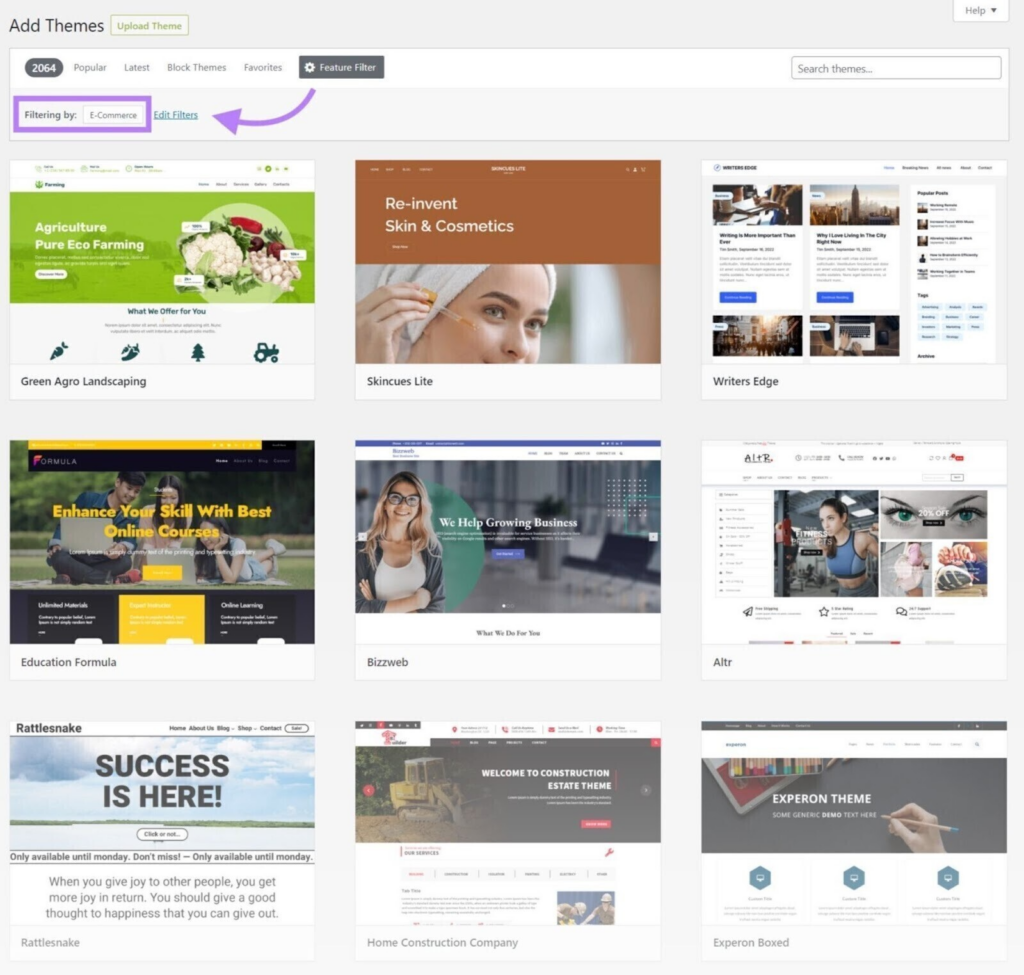
Shopify focuses on ready-to-use ecommerce themes, while WordPress offers greater design flexibility at the cost of more setup effort.
- Shopify provides pre-designed, ecommerce-ready themes with built-in product pages, carts, and checkout, allowing faster store setup.
- WordPress offers a much larger theme ecosystem with full customization through themes, plugins, and page builders like Elementor or Divi.
- Shopify includes a built-in theme editor for quick design changes, while WordPress customization depends on your theme, plugins, and development approach.
- WordPress allows deeper control over layout, design, and user experience, but requires more time and technical effort to achieve it.
Verdict: Shopify for faster design setup, WordPress for complete design flexibility.
Keep Reading: Guide to Creating Your Website Design RFP
Ecommerce Functionality
Ecommerce functionality determines how easily you can sell products, manage operations, and scale your store.
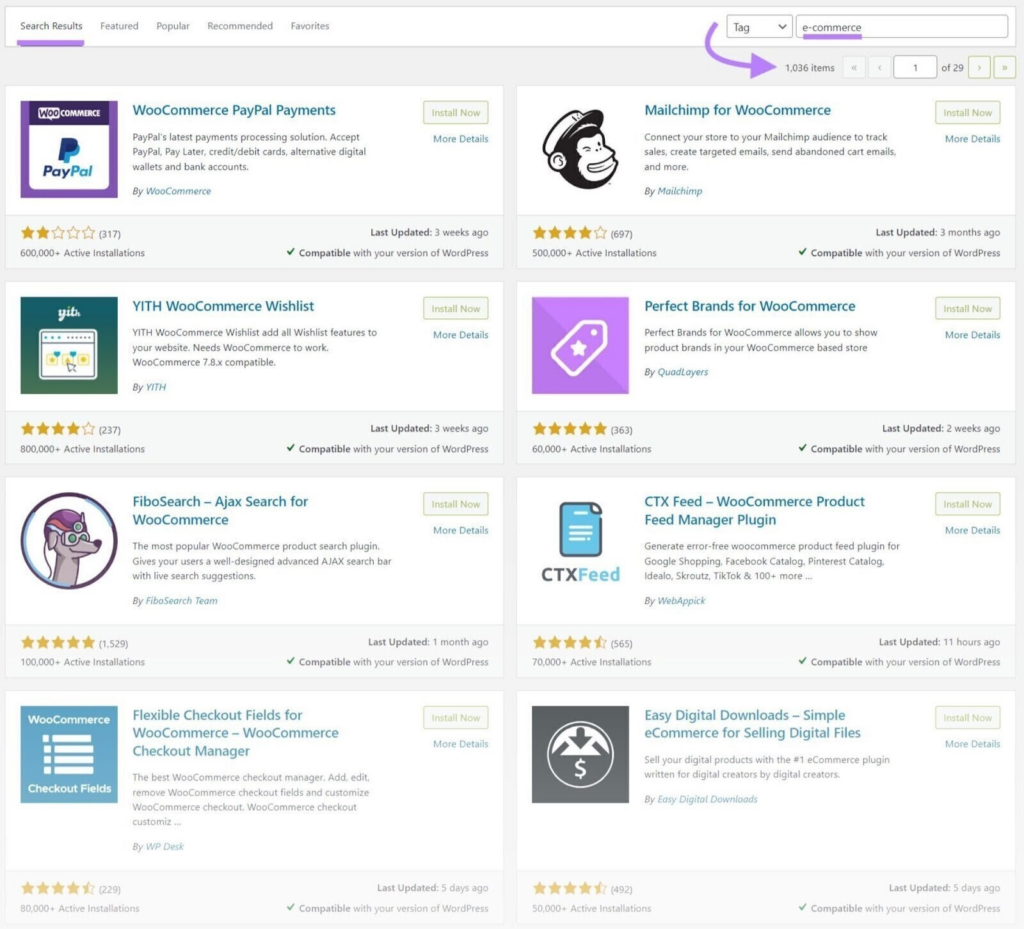
Shopify offers built-in ecommerce tools for faster setup, while WordPress with WooCommerce provides more flexibility through plugins and customization.
- Shopify includes built-in features for product management, payments, shipping, inventory, and multi-channel selling, making it easier to launch and manage a store quickly.
- WordPress with WooCommerce supports the same core ecommerce features but relies on plugins to extend functionality, giving more control over how your store operates.
- Shopify simplifies multi-channel selling with direct integrations for platforms like Facebook, Instagram, and Amazon, as well as POS systems for offline sales.
- WordPress allows deeper customization and access to a large plugin ecosystem, but setting up advanced ecommerce features often requires more configuration.
Verdict: Shopify for built-in ecommerce simplicity. WordPress for flexible, customizable ecommerce functionality.
Search Engine Optimization (SEO)
WordPress is generally better for ecommerce SEO because it gives you more control over content, site structure, and technical optimization.
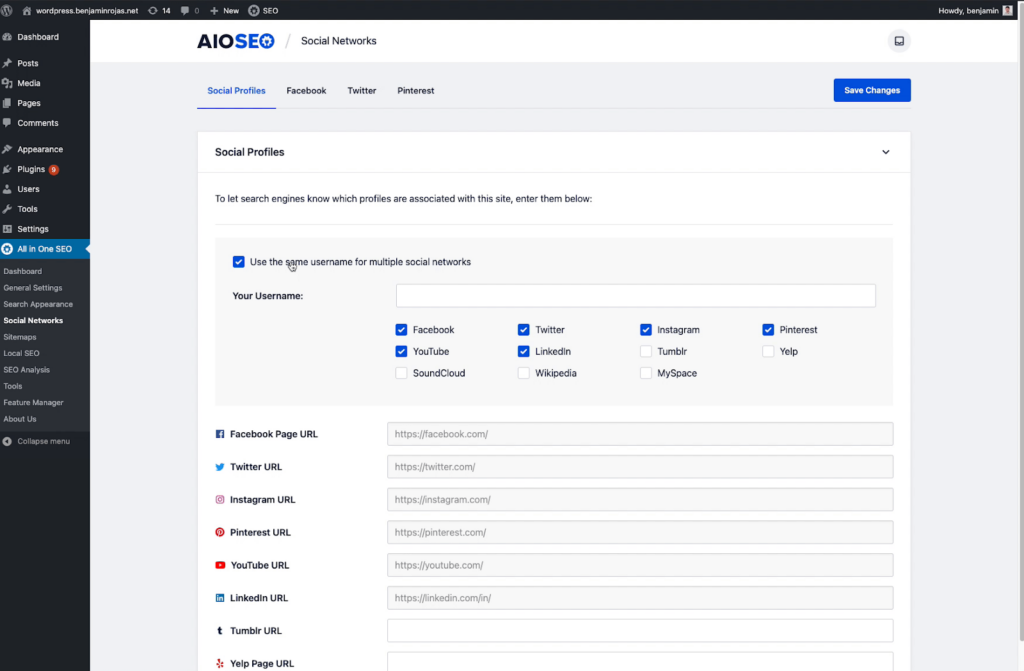
Shopify handles SEO basics well, but offers less flexibility for advanced customization.
- Shopify manages core technical SEO elements like sitemaps, robots.txt, and hosting performance automatically, making it easier for beginners.
- WordPress requires SEO plugins like Rank Math or AIOSEO, but provides deeper control over metadata, URLs, schema, and technical SEO settings.
- Shopify includes built-in fields for titles and meta descriptions, while WordPress allows full customization through plugins and code-level edits.
- WordPress supports more flexible site and content strategies, which is important for scaling SEO across large product catalogs and content-driven pages.
Verdict: WordPress for advanced SEO control and long-term scalability, Shopify for easier SEO setup.
Keep Reading: WooCommerce Site Speed: Quick Tips to Speed Up Your Online Store
GDPR Compliance
GDPR compliance depends more on how your website is configured than on the platform itself. Both Shopify and WordPress support GDPR requirements, but they handle implementation differently.
- Shopify includes built-in tools and apps for cookie consent, data requests, and privacy policies, making it easier to set up basic compliance.
- WordPress requires plugins for GDPR features, but it also offers greater flexibility for customizing consent management, data handling, and compliance workflows.
- Shopify simplifies compliance for most stores, while WordPress allows deeper control for businesses with complex legal or regional requirements.
- Both platforms support user data access, deletion requests, and integration with third-party compliance tools.
Verdict: Shopify for easier compliance setup, WordPress for flexible, customizable GDPR controls.
Multilingual Sites
Multilingual support is important if you want to sell across different regions and languages. Both Shopify and WordPress support multilingual ecommerce, but they approach it differently.
- Shopify simplifies multilingual setup through apps like Translate & Adapt, making it easier to add multiple languages and currencies without heavy configuration.
- WordPress with WooCommerce supports multilingual stores via plugins such as WPML or Polylang, enabling greater control over translations, currencies, and regional content.
- Shopify is easier to manage for basic multilingual stores, while WordPress offers more flexibility for complex, multi-region setups.
- WordPress can scale to support many languages and localized experiences, but requires proper setup to avoid performance or SEO issues.
Verdict: Shopify for easier multilingual setup, WordPress for advanced multilingual flexibility and control.
Read: Weglot Review: Make Your Websites Reach a Global Audience!
Mobile Apps
Mobile apps allow you to manage your store on the go and monitor performance in real time.
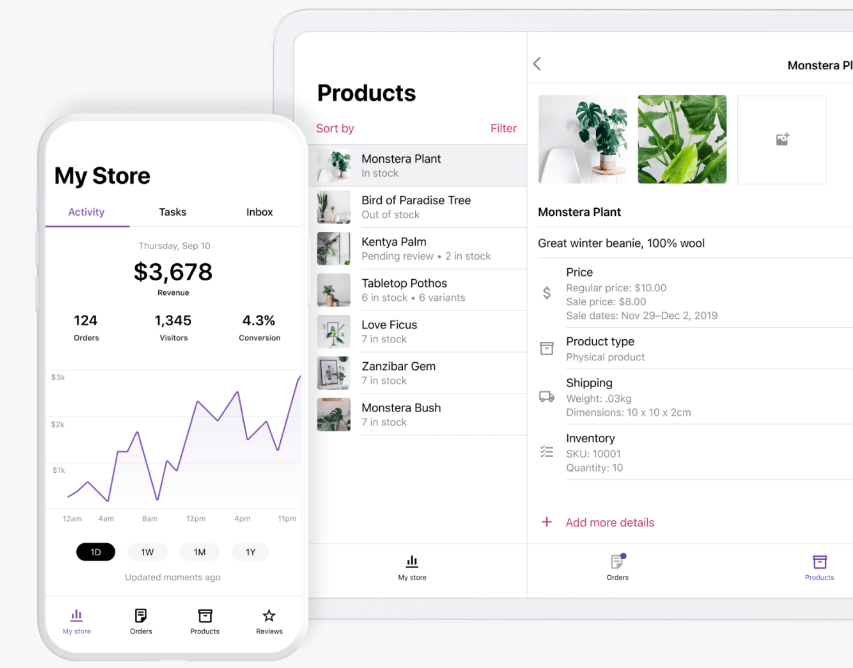
Both Shopify and WordPress support mobile management, but Shopify offers a more streamlined experience.
- Shopify provides a dedicated mobile app with built-in features for managing products, orders, customers, and marketing from one place.
- WordPress users can manage stores through the WooCommerce mobile app, which supports product updates, order tracking, and basic analytics.
- Shopify apps are easier to use and require less setup, while WordPress functionality depends on plugins and configuration.
- Both platforms support mobile-friendly storefronts, but Shopify themes are optimized by default, while WordPress depends on the theme and performance setup.
Verdict: Shopify for easier mobile management, WordPress for flexible mobile customization.
Customer Support
Customer support affects how quickly you can resolve issues and keep your store running smoothly. Shopify provides centralized support, while WordPress relies on a distributed support ecosystem.
- Shopify offers 24/7 support through chat, email, and help centers, making it easier to get immediate assistance.
- WordPress does not have centralized support, but offers help through community forums, documentation, and plugin or theme-specific support teams.
- Shopify is better for beginners who need quick and reliable help, while WordPress support quality depends on your hosting provider and plugins.
- WordPress offers access to a wide range of specialized support, but finding the right solution may take longer.
Verdict: Shopify for direct, reliable support; WordPress for flexible but decentralized support options.
Also Read: WooCommerce Vs Shopify: Who Wins?
Pricing
When comparing pricing between Shopify and WordPress, it’s important to consider various factors. Pricing is one of the biggest differences between Shopify and WordPress. Shopify uses a fixed monthly subscription model, while WordPress costs vary based on hosting, plugins, and customization.
- Shopify offers predictable monthly pricing plans that include hosting, security, and core ecommerce features, making budgeting easier.
- WordPress is free to use, but requires separate spending on hosting, domain, themes, plugins, and development, which can vary widely.
- Shopify is generally more expensive upfront but offers most features on a single platform, reducing setup complexity.
- WordPress can be more cost-effective in the long run, especially for businesses that want to control costs and scale gradually.
Verdict: Shopify for predictable pricing and simplicity, WordPress for cost flexibility and long-term control.
Did You Know? – How To Migrate From Shopify to WooCommerce?
Conclusion
Shopify vs WordPress ultimately comes down to simplicity versus control. Shopify is the better choice for businesses that want a fast, all-in-one ecommerce platform with minimal technical effort and predictable costs.
WordPress with WooCommerce is the better choice for businesses that want deeper customization, stronger SEO control, and flexibility to scale their store over time.
If your priority is speed, ease of use, and a fully managed solution, choose Shopify. If your priority is long-term growth, content-driven SEO, and full control over your website, choose WordPress.
FAQs About Shopify and WordPress
Which is better for ecommerce, Shopify or WordPress?
Shopify is better for beginners and fast setup, while WordPress is better for SEO, flexibility, and long-term scalability.
Is Shopify easier to use than WordPress?
Yes, Shopify is easier because it is a fully hosted platform with built-in features. WordPress requires setup, hosting, and plugin management.
Which platform is better for SEO, Shopify or WordPress?
WordPress is better for SEO because it gives more control over content, metadata, and site structure. Shopify handles basic SEO well, but has limitations.
Is WordPress cheaper than Shopify?
WordPress can be cheaper initially, but costs vary based on hosting and plugins. Shopify has fixed monthly pricing, making costs more predictable.
Can Shopify handle large ecommerce stores?
Yes, Shopify can handle large stores easily, but customization and control are limited compared to WordPress.
When should you choose Shopify over WordPress?
Choose Shopify for a fast, simple, and fully managed ecommerce solution with minimal technical effort.