
Driving traffic to a website is only half the job. The real challenge begins after visitors arrive. Pages need to load quickly. Forms must work without errors. Checkout flows should feel smooth and secure. When even small issues appear, users hesitate, leave, and rarely return.
This is where ongoing WordPress maintenance and support quietly shape conversion success. A well maintained website builds trust, removes friction, and keeps users focused on taking action. Maintenance is no longer just about keeping a site online. It plays a direct role in turning visitors into leads, customers, and repeat buyers.
This guide explains how WordPress maintenance and support contribute to higher conversion rates and why businesses that invest in ongoing care consistently outperform those that rely on one time fixes.
Why Website Performance Directly Impacts Conversion Rate
Every interaction on a website sends a signal to the user. Speed, responsiveness, and reliability shape how trustworthy a brand feels within seconds.
Page Speed and First Impression Psychology
Users decide whether to stay or leave almost instantly. A slow loading page creates frustration before any message is delivered. Even a one second delay can reduce engagement and increase abandonment. When pages load quickly, users feel confident, focused, and more willing to explore.
Ongoing WordPress maintenance keeps themes, plugins, and scripts optimized so pages load efficiently. Over time, sites that are not maintained accumulate clutter that quietly slows performance. Regular optimization prevents this buildup and protects first impressions.
Downtime Lost Trust and Missed Revenue
Downtime does more than block access. It damages credibility. When users encounter error messages or unavailable pages, trust erodes immediately. They rarely wait and often move to competitors.
Proactive maintenance reduces the risk of outages by monitoring uptime, updating components, and addressing issues before they escalate. Fewer interruptions mean fewer lost opportunities and a more reliable conversion funnel.
Keep Your WordPress Website Healthy and Conversion Ready
Get reliable updates, security checks, performance optimization, and ongoing support to keep your site fast, stable, and ready to convert.
How WordPress Maintenance Improves Site Speed and Stability
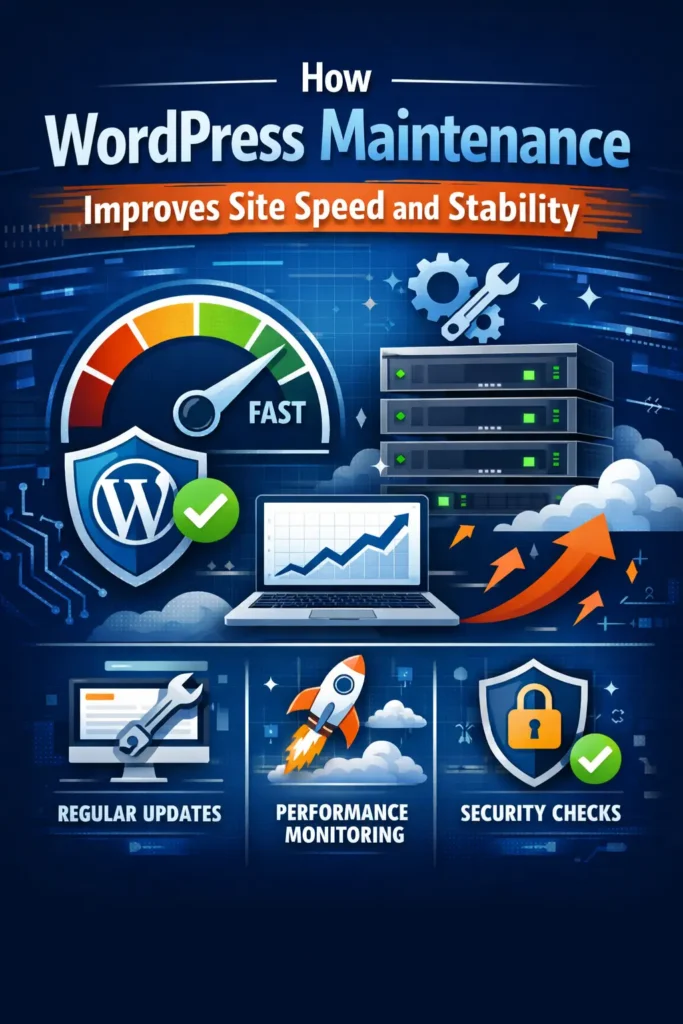
Speed and stability are not achieved once. They require ongoing attention as content grows, plugins evolve, and traffic patterns change.
Core Updates, Theme Cleanup, and Performance Tuning
WordPress core updates often include performance improvements and bug fixes. Skipping these updates causes compatibility issues that slow down the site. The same applies to outdated themes and unused plugins.
Maintenance removes unnecessary plugins, updates active ones, and keeps themes lightweight. Performance tuning keeps the site running efficiently instead of gradually slowing over time.
Database Optimization and Server Level Improvements
Behind every WordPress site is a database that stores posts, revisions, metadata, and logs. Without cleanup, this database becomes bloated and sluggish.
Routine optimization removes unnecessary data and improves query efficiency. Combined with server level enhancements, this keeps response times fast even during traffic spikes. Faster interactions lead to smoother browsing and higher completion rates.
Security Maintenance Builds User Trust and Conversion Confidence
Security is deeply connected to conversion psychology. Users may not understand technical details, but they quickly sense risk.
Preventing Hacks Malware and Warning Messages
A hacked site often shows warning messages, redirects, or broken layouts. These signs immediately stop conversions. Even after cleanup, damaged trust can linger.
Ongoing security maintenance reduces this risk by applying patches, monitoring vulnerabilities, and blocking malicious activity early. Prevention protects both reputation and revenue.
SSL Monitoring, Backups, and Threat Protection
Visible security signals such as HTTPS reassure users during signups and payments. When certificates expire or errors appear, hesitation increases.
Maintenance includes SSL monitoring, regular backups, and threat protection that work together to keep the site secure and trustworthy. When users feel safe, they are far more likely to convert.
How Ongoing Support Reduces Friction in the Customer Journey
Conversion issues are often subtle. A form may stop submitting. A checkout button might fail on certain devices. Without support, these issues can persist unnoticed.
Fixing Broken Forms, Checkout Errors, and Layout Issues
Forms and checkout flows are core conversion points. Even minor errors can cause silent losses. Users rarely report issues. They simply leave.
Ongoing support tests, monitors, and fixes these elements quickly, reducing friction and keeping conversion paths clear.
Supporting Plugins Integrations and Third Party Tools
Marketing tools, analytics, payment gateways, and CRM integrations all depend on compatibility. When updates conflict, features break.
Support teams monitor these integrations and resolve conflicts before they affect users. Smooth integrations mean smoother conversions.
Why Updated Content and Functionality Convert Better
Outdated websites feel neglected. Users notice when layouts look old or features behave inconsistently.
Keeping WordPress Themes and Layouts Conversion Ready
Modern themes prioritize clarity, readability, and intuitive navigation. Maintenance ensures layouts remain aligned with current usability standards.
Small improvements such as spacing, typography, and responsive behavior significantly influence how comfortable users feel taking action.
Updating Plugins to Match Evolving User Expectations
Plugins evolve to meet new expectations such as faster checkout flows, improved accessibility, and better form validation. Keeping plugins updated ensures users experience these improvements without disruption.
The Role of Maintenance in Mobile and Cross Browser Conversions
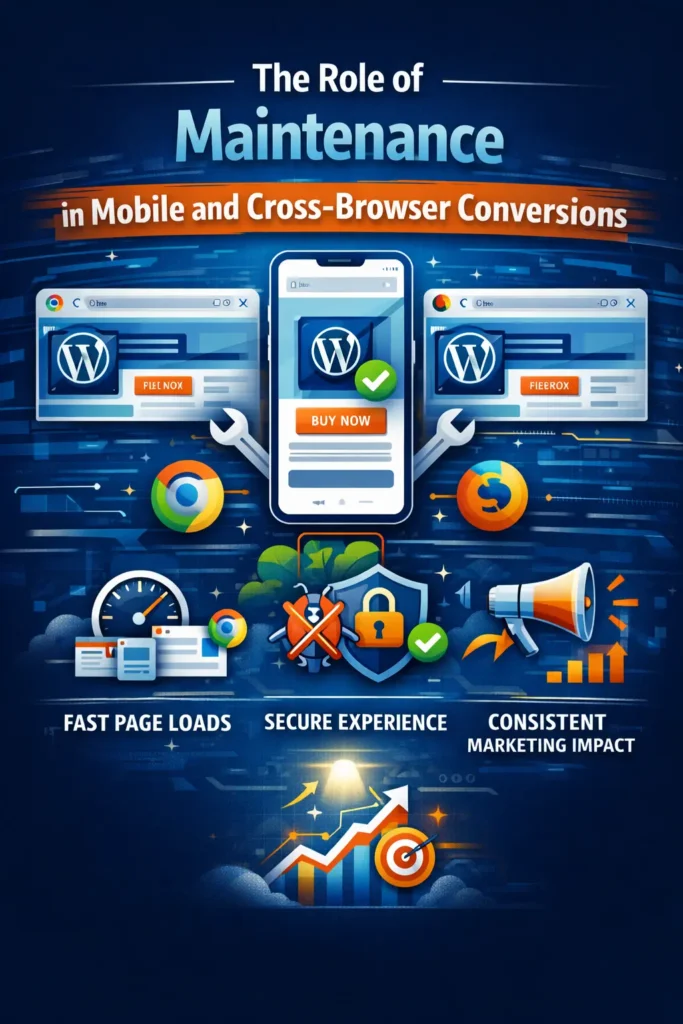
A large portion of users browse and convert on mobile devices. Consistency across environments is essential.
Mobile Performance and Responsiveness
Mobile users are less patient and more sensitive to delays. Maintenance ensures responsive layouts, optimized images, and fast mobile performance.
When mobile experiences are smooth, conversion rates improve significantly.
Browser Compatibility Testing and Fixes
Different browsers handle scripts differently. Without testing, hidden issues can block interactions for certain users.
Maintenance includes compatibility checks and fixes that ensure consistent functionality across browsers, protecting conversions that would otherwise be lost.
How Proactive Monitoring Prevents Conversion Drop Offs
Most website issues do not announce themselves. A form stops submitting. A page loads slower than usual. A plugin conflict breaks a checkout step for certain users. When businesses wait for customers to report these problems, conversions are already lost.
Proactive monitoring changes this completely. By continuously tracking website performance, uptime, and error patterns, issues are identified at the earliest stage. Speed drops, unusual behavior, or system warnings are addressed before they disrupt the user journey. This prevents frustration from building and keeps visitors moving smoothly toward action.
Performance Monitoring and Early Issue Detection
Ongoing monitoring keeps a close watch on page load times, server response, and functional errors. When performance begins to dip, teams can step in immediately rather than waiting for visible damage. Catching problems early ensures small technical issues do not quietly turn into conversion barriers.
Real Time Alerts and Fast Resolution
Real time alerts allow immediate response when something goes wrong. Faster resolution means less disruption to active campaigns, promotions, or sales flows. Users continue to experience a stable and reliable website, even while fixes happen behind the scenes.
Why Businesses See Higher ROI With Managed WordPress Maintenance
WordPress maintenance is often treated as a necessary expense. In reality, it plays a direct role in protecting revenue and improving long term returns. A well maintained website performs consistently, supports marketing efforts, and reduces costly interruptions.
Less Downtime, Fewer Emergencies, More Focus on Growth
When maintenance is handled proactively, businesses face fewer urgent issues and unexpected outages. Teams are no longer pulled into reactive problem solving. Instead, they can focus on improving content, refining campaigns, and enhancing user experience. This shift from reaction to growth driven work creates measurable business value.
Consistent Experience Builds Repeat Conversions
A website that works reliably builds confidence over time. Visitors know what to expect and feel comfortable returning. This consistency strengthens trust, increases engagement, and makes repeat conversions easier. When users do not encounter friction, they are far more likely to take action again.
How Seahawk Helps Businesses Turn WordPress Into a Conversion Engine

Seahawk treats WordPress maintenance as a growth function, not a background task. Every update, optimization, and fix is handled with one goal in mind, helping visitors move forward with confidence.
Instead of reacting to problems after they affect users, Seahawk focuses on prevention. Performance is continuously optimized so pages load quickly even as content and traffic grow. Security is actively managed to protect customer data and preserve trust at key conversion points such as forms and checkouts.
Proactive monitoring ensures issues are detected early, often before they are visible to users. When something does need attention, expert support steps in quickly to resolve it without disrupting the customer journey. The result is a WordPress website that feels reliable, responsive, and professional at all times.
With Seahawk handling the technical foundation, businesses can invest more energy into marketing, content, and sales, knowing their website is built to support conversions rather than silently holding them back.
Who Needs Ongoing WordPress Maintenance the Most
Not every website feels the impact of maintenance in the same way. Some businesses can tolerate minor issues for a while. Others lose leads, revenue, or credibility the moment something breaks. Ongoing WordPress maintenance becomes essential when a website plays an active role in driving business outcomes rather than just presenting information.
Ecommerce Websites and Online Stores
Ecommerce sites depend on flawless performance. A slow product page, a broken cart, or a failed payment gateway can instantly stop a sale. Customers rarely retry. They move on. Regular maintenance keeps checkout flows stable, product data synced, security tight, and performance consistent during high traffic periods. For online stores, maintenance directly protects daily revenue.
Lead Generation and Service Based Websites
Websites built to capture leads rely heavily on forms, landing pages, and integrations. When forms fail, emails do not send, or pages load slowly, potential customers disappear without notice. Ongoing maintenance ensures that every contact form, tracking tool, and conversion element works as intended, so marketing efforts actually deliver results.
Growing Brands and Marketing Driven Businesses
As brands grow, websites evolve quickly. New plugins, new pages, and new campaigns introduce complexity. Without maintenance, this growth leads to performance issues, conflicts, and security risks. Ongoing care keeps the site stable while supporting constant updates and experimentation.
Membership Platforms and Content Heavy Websites
Sites with logged in users, gated content, or frequent updates require extra attention. Performance issues, login errors, or security gaps can frustrate loyal users and increase churn. Maintenance ensures smooth user experiences, consistent access, and long term trust.
Businesses that Rely on Their Website for Credibility
For many businesses, the website is the first and sometimes only interaction a customer has with the brand. Outdated design, broken pages, or security warnings immediately raise doubts. Regular maintenance keeps the site polished, professional, and reliable, reinforcing confidence at every step.
Final Thoughts on WordPress Maintenance and Conversion Rate Growth
WordPress maintenance is no longer just technical housekeeping. It has become a strategic investment in user experience, trust, and conversion rate growth. A well maintained website supports every stage of the customer journey, from first visit to final action.
Websites that are fast, secure, and reliable remove hesitation from decision making. Users focus on the value offered instead of worrying about broken pages, slow load times, or security concerns. This sense of confidence directly influences how willing visitors are to engage, sign up, or complete a purchase.
When WordPress maintenance is handled consistently and proactively, it creates a strong foundation for growth. Traffic turns into meaningful action, conversions become more predictable, and the website evolves into a dependable asset that supports long term business success.
Frequently Asked Questions
How often should WordPress maintenance be done to improve conversion rate?
WordPress maintenance should be handled on an ongoing basis rather than as a one time task. Core updates, plugin updates, performance checks, and security monitoring should happen regularly to prevent issues before they affect users. Consistent maintenance keeps the site fast, stable, and trustworthy, which directly supports better engagement and higher conversion rates over time.
Can WordPress maintenance really impact conversion performance?
Yes. WordPress maintenance plays a direct role in conversion performance. Slow loading pages, broken forms, security warnings, or checkout errors often cause users to leave without taking action. Regular maintenance removes these friction points, improves user confidence, and ensures every part of the website works as expected, making it easier for visitors to convert.
Is managed WordPress maintenance better than fixing issues as they appear?
Managed WordPress maintenance is far more effective than reactive fixes. Waiting for issues to appear often means conversions are already lost. Proactive maintenance focuses on prevention, monitoring, and early resolution, which protects ongoing marketing efforts and revenue. Businesses benefit from fewer emergencies, more consistent performance, and a website that supports growth instead of slowing it down.


