
Every customer who visits your online store has a different intent. Some are browsing. Some are ready to buy. Some abandoned a cart last week and need a nudge. Treating all of them the same is one of the costliest mistakes a modern eCommerce brand can make.
Hyper-personalization in eCommerce uses real-time data, AI, and behavioral signals to deliver unique, relevant experiences to each individual shopper. It goes far beyond adding a customer’s name to an email. It means showing the right product, at the right time, through the right channel, every single time.
This guide breaks down why hyper-personalization matters, what real-world brands are doing with it, and how you can build a strategy that actually drives results.
Hyper personalization in eCommerce uses real-time behavioral data, AI, and predictive analytics to deliver individualized shopping experiences, distinct from basic personalization, which relies on static segments or demographic groupings.
It operates across product recommendations, email timing, pricing offers, and on-site content. Data sources include browsing history, purchase patterns, search queries, and session behavior. Retailers that apply it report measurable improvements in conversion rates and customer retention.
Why Hyper Personalization Matters for Modern eCommerce Brands?
Generic shopping experiences are losing ground. Shoppers today have access to thousands of options. What keeps them loyal is relevance, not just price or convenience.

Changing Consumer Expectations for Personalized Online Shopping
Today’s online shoppers expect more than basic recommendations. They want experiences that feel intuitive, like the store already knows what they need.
According to McKinsey, over 70 percent of consumers now expect companies to deliver personalized interactions. Nearly the same number feel frustrated when that does not happen. This shift in expectation is permanent.
Younger shoppers, especially Millennials and Gen Z, have grown up on platforms like Netflix, Spotify, and Instagram. These platforms learn their preferences continuously. When they arrive at an eCommerce site that offers no such experience, the contrast is jarring. Bounce rates climb. Conversions fall.
This is not a preference. It is a baseline. Brands that treat personalization as optional are falling behind those that treat it as a foundation.
The Role of First-Party Data in Customer Experience Personalization
Third-party cookies are disappearing. Privacy regulations like GDPR and CCPA have reshaped what data brands can collect and how. This is not a setback; it is an opportunity for brands that are ready to collect and use first-party data responsibly.
First-party data includes purchase history, on-site behavior, search queries, wishlist activity, email clicks, and support interactions. When unified in a single customer profile, this data becomes the engine of genuine hyper-personalization.
Brands that own rich first-party data assets can build detailed customer profiles without relying on external trackers. They can personalize at scale while respecting user privacy, thereby building trust.
How Hyper Personalization Supports Omnichannel Commerce?
Customers do not shop through one channel. They discover a product on Instagram, research it on a desktop, and buy it through their phone. They expect a consistent, personalized experience at every step.
Hyper-personalization supports omnichannel commerce by carrying each customer’s context across channels. If someone adds a product to a cart on mobile, they should see it when they log in on desktop. If they browse sneakers on the app, the email they receive later should reflect that interest, not promote hiking boots.
This continuity is what transforms a fragmented experience into a fluid, customer-centric journey.
Analyzing Customer Intent With AI and Predictive Analytics
Understanding what a shopper wants right now, not what they bought three months ago, is the key insight that separates hyper-personalization from basic segmentation.
AI and predictive analytics analyze behavioral signals in real time. They consider browsing patterns, scroll depth, time spent on product pages, and even the sequence of pages visited. From these signals, models predict what a customer is most likely to want next.
This means a shopper actively comparing running shoes can be served a dynamic banner featuring the exact category they are browsing, without any manual configuration. The AI automatically matches at scale.
Create Personalized Experiences That Convert
Build a custom WordPress eCommerce website designed to deliver tailored customer journeys and drive more sales.
Benefits of Hyper Personalization in eCommerce
Hyper-personalization delivers measurable business outcomes across the entire customer lifecycle. Here is what brands consistently see when they implement it well.
Improves Customer Experience and Shopping Satisfaction
When a store reflects a shopper’s actual interests, the experience feels effortless. They spend less time searching and more time deciding. This reduction in friction directly improves satisfaction.
A personalized experience communicates that the brand understands the customer. That emotional signal, of being seen and understood, drives positive brand associations that outlast any individual transaction. Solid product UI/UX design reinforces this by ensuring personalized content is displayed intuitively across device types.
Increases Conversion Rates and Sales Revenue
Personalized product recommendations consistently outperform generic listings. Research from Epsilon shows that personalized experiences make 80 percent of consumers more likely to purchase.
When a shopper is shown products aligned with their intent, based on real behavior, not assumptions, the relevance drives action. Conversion rates rise because the offer meets the need. Revenue follows.
Boosts Customer Engagement Across Channels
Personalization extends engagement beyond the checkout. Personalized email campaigns see significantly higher open rates and click-through rates than generic broadcasts. Personalized push notifications feel timely rather than intrusive.
When a brand adapts its messaging to individual behavior, each touchpoint becomes more meaningful. Shoppers engage more. They share more. They return more often. This kind of multi-channel engagement is the foundation of long-term eCommerce growth through online reputation management.
Enhances Product Discovery and Recommendations
Most eCommerce catalogs are too large for any shopper to navigate manually. Hyper-personalization solves the discovery problem.
By surfacing products that match a customer’s demonstrated preferences, the store becomes easy to explore. Shoppers find items they would never have found through a search alone. This increases average order value, reduces decision fatigue, and makes the shopping experience feel curated.
Strengthens Customer Loyalty and Retention
Customers who feel understood come back. Personalization creates a relationship dynamic that generic stores cannot replicate. When a brand remembers preferences, surfaces relevant arrivals, and communicates in ways that feel tailored, the customer’s cost of switching to a competitor rises.
Loyalty programs that incorporate personalized rewards, based on individual purchase history and preferences, are significantly more effective than one-size-fits-all point systems.
Reduces Cart Abandonment and Purchase Friction
Cart abandonment is one of the most persistent challenges in eCommerce. The average abandonment rate across industries sits at nearly 70 percent.
Hyper-personalization addresses this through personalized recovery flows. A reminder email that shows the exact abandoned item, paired with a relevant complementary product and a context-aware incentive, converts far better than a generic “you left something behind” message.
Reducing friction at checkout by surfacing preferred payment methods and pre-filled shipping details, based on past behavior, also prevents drop-offs. Integrating the right payment gateway ensures that personalized checkout flows perform reliably across all user segments.
Improves Marketing ROI Through Targeted Campaigns
Broad campaigns waste budget on audiences unlikely to convert. Hyper-personalization concentrates spending on the right people at the right moment.
Personalized paid campaigns, using behavioral segments rather than demographic buckets, consistently deliver lower cost per acquisition and higher return on ad spend. Brands can apply these principles alongside remarketing in PPC strategies to re-engage high-intent shoppers who have already visited the site.
When every campaign dollar targets someone with demonstrated relevant intent, efficiency improves dramatically.
Real-World Examples of Hyper Personalization in eCommerce
Theory is useful. But seeing how leading brands implement hyper-personalization makes the strategy concrete and actionable.
Amazon and AI-Powered Product Recommendations
Amazon’s recommendation engine drives an estimated 35 percent of its total revenue. That statistic alone explains why AI-powered product recommendations are now standard expectations rather than competitive advantages.
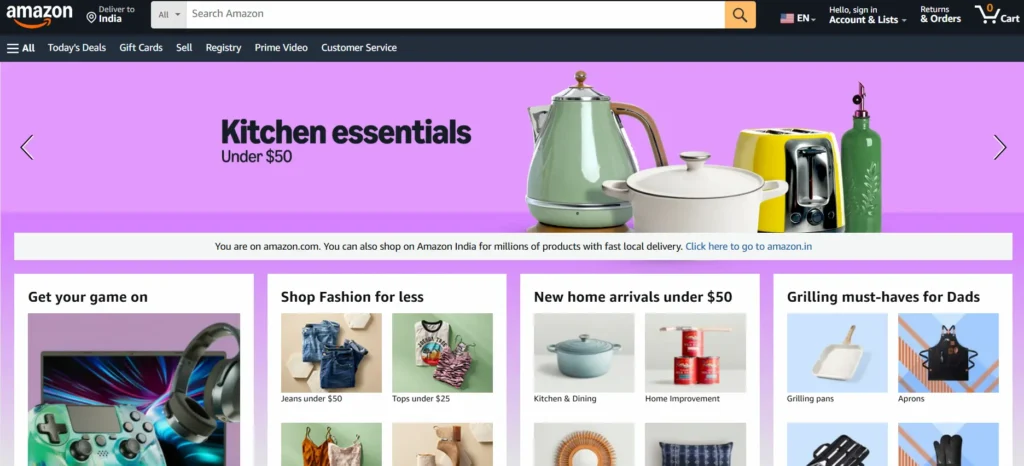
Amazon uses collaborative filtering, purchase history, browsing behavior, and real-time signals to surface products at every stage of the shopping journey.
“Customers who bought this also bought,” “Inspired by your browsing history,” and “Your recommendations” are all powered by the same underlying AI system, constantly updated as user behavior changes.
What makes Amazon’s approach distinct is that personalization is not a feature layered on top of the experience. It is the architecture of the experience itself.
Netflix-Style Personalization Lessons for eCommerce Brands
Netflix does not sell products. But the personalization principles behind its recommendation system translate directly to eCommerce.

Netflix personalizes not just what content is surfaced, but also which thumbnail image is shown, in what order results appear, and when content is promoted to each user. Every element of the interface is a personalization lever.
eCommerce brands can apply this philosophy to product imagery, homepage banners, category page ordering, and even the sequence of upsell offers. The lesson from Netflix is that personalization is not one feature; it is a design principle that touches every layer of the user experience.
Spotify’s Personalized User Experience and Engagement Model
Spotify‘s Discover Weekly playlist shows what happens when personalization feels like a gift rather than an algorithm. Users do not feel surveilled; they feel understood.
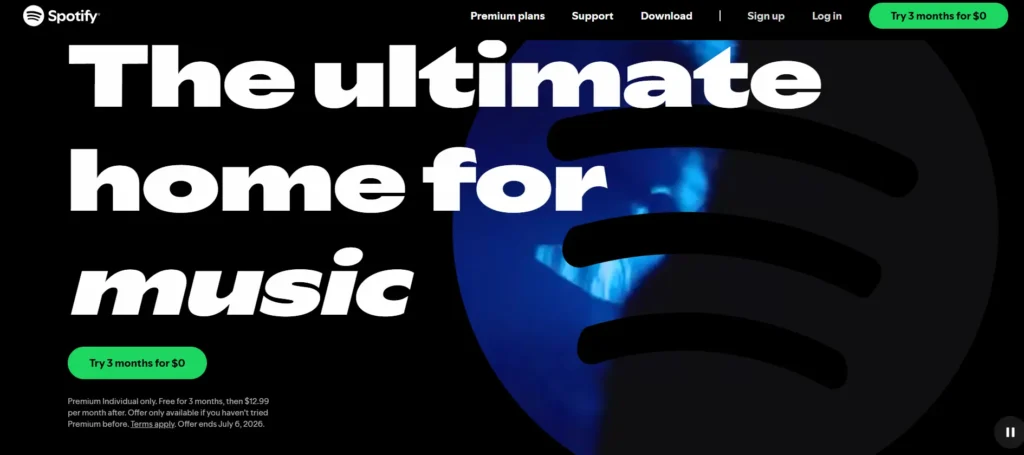
Spotify achieves this by combining listening history, user behavior, and collaborative signals from millions of similar listeners. The result feels personal because it is deeply accurate.
For eCommerce brands, the lesson is emotional: personalization should feel like curation, not tracking. When customers feel that a brand has matched them perfectly, engagement deepens. They trust the next recommendation. They come back to see what is new.
This is exactly the kind of experience that an excellent web design process can embed in a store’s architecture, making personalization feel native, not bolted on.
Sephora’s Personalized Beauty Shopping Experience
Sephora’s approach to hyper-personalization spans its app, website, in-store kiosks, and loyalty program. Their Beauty Insider program collects purchase history and beauty preferences to deliver personalized product recommendations, birthday gifts, and exclusive offers tailored to each member.
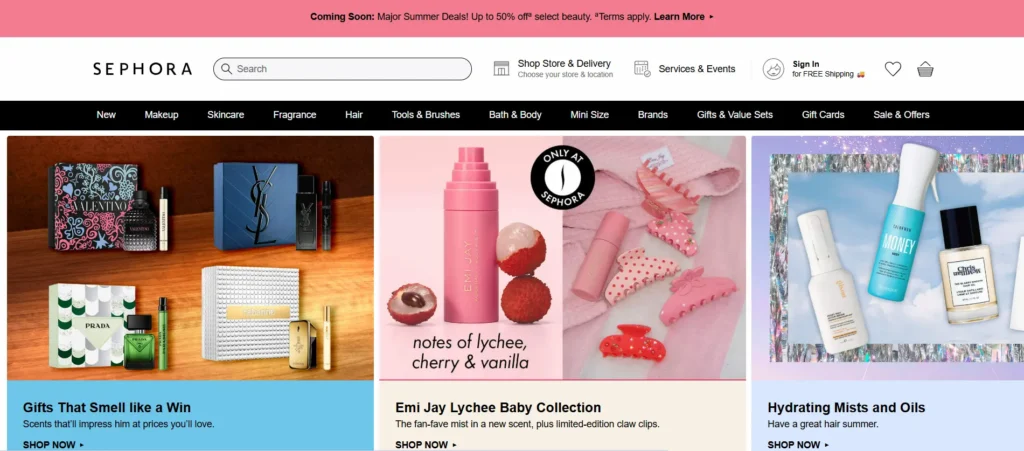
Their “Color IQ” tool matches foundation shades to individual skin tones. Their app tracks purchases and offers tutorials for products the customer actually owns. Every touchpoint reflects personal history.
Sephora demonstrates how hyper-personalization works across channels, not just online. Their branding strategy is built around making each customer feel like the store was designed for them personally.
Starbucks and Location-Based Personalized Offers
Starbucks uses its mobile app to deliver personalized offers based on location, time of day, purchase history, and even weather. A customer who regularly orders a cold brew at 8 AM on weekdays might receive a push notification offering a discount on their usual order just before their typical commute time.
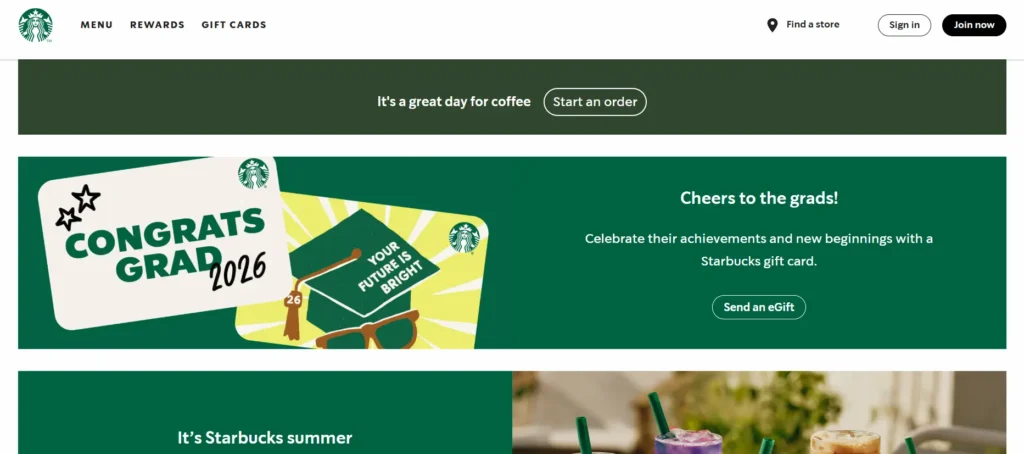
This level of contextual, behavior-driven personalization converts because it is relevant and timely. It does not feel like marketing. It feels like service.
For eCommerce brands with mobile apps, this model shows the power of combining location-based mobile commerce signals with purchase history to deliver offers that feel almost predictive.
Hyper Personalization Strategies for eCommerce Success
Implementing hyper-personalization does not require an overnight technology overhaul. These strategies provide a practical roadmap, from foundational data infrastructure to advanced AI applications.
Build a Unified Customer Data Strategy
Hyper-personalization is only as good as the data that powers it. Before deploying any personalization feature, brands need a unified view of each customer.
A Customer Data Platform (CDP) consolidates data from your website, mobile app, email platform, CRM, and point-of-sale system into a single profile. This unified profile becomes the source of truth for all personalization decisions.
Start by auditing what data you currently collect. Identify gaps. Build data collection mechanisms that respect user privacy and comply with applicable regulations.
Then structure that data in ways that can feed personalization tools. Using the right WordPress CRM plugins is one practical starting point for smaller eCommerce businesses building their first unified data layer.
Segment Customers Based on Behavior and Intent
Not all personalization needs to be at the individual level. Smart behavioral segmentation groups customers based on shared intent signals, and then delivers tailored experiences to each segment.
Behavioral segments might include first-time visitors, repeat browsers who have never purchased, high-value customers with recent activity, and lapsed customers showing re-engagement signals. Each segment deserves a different experience.
Segmentation based on real-time intent is more powerful than demographic or geographic segmentation alone. A 45-year-old executive and a 22-year-old student may share the same product interest at the same moment. Behavioral signals capture that. Demographics do not.
Implement AI-Driven Product Recommendations
Product recommendation engines are the most visible layer of hyper-personalization, and among the highest-ROI investments a brand can make.
Modern AI recommendation engines use collaborative filtering, content-based filtering, and hybrid approaches to surface products that match individual preferences. They update in real time as shopping behavior changes within a session.
Implementing recommendations across multiple touchpoints, the homepage, product pages, cart, and post-purchase emails, maximizes their impact. Leverage AI SEO trends in your content strategy to ensure that personalized recommendation pages are also optimized for organic discovery.
Personalize Website Content for Different Customer Journeys
The homepage a first-time visitor sees should differ from the one a loyal returning customer sees. A shopper who has browsed athletic wear three times this week should land on a homepage featuring athletic wear, not the latest promotion for kitchenware.
Dynamic content blocks allow eCommerce sites to swap banners, hero images, featured categories, and even navigation elements based on customer profile data. This requires close attention to web design challenges, such as maintaining page performance and visual consistency while serving dynamic content.
Test different personalized experiences using A/B and multivariate frameworks. Let data determine which content variations drive the most engagement and conversion for each segment.
Deliver Personalized Email Marketing Campaigns
Email remains one of the highest-converting channels in eCommerce, and personalization significantly amplifies that performance.
Go beyond using the customer’s first name. Personalize subject lines based on recently viewed products. Time sends are based on when each individual is most likely to open. Segment lists by purchase stage. Trigger behavioral emails, cart abandonment, post-purchase follow-up, and re-engagement, based on real actions taken in your store.
Tools like the best social media publishing tools work alongside email platforms to maintain personalization signals across marketing channels, helping you build a more consistent view of each customer’s engagement patterns.
Use Dynamic Pricing and Promotional Offers Responsibly
Dynamic pricing, adjusting prices based on demand, inventory, customer segment, or competitive signals, is a powerful personalization lever. But it must be implemented carefully to avoid perceptions of price discrimination.
Personalized promotional offers are generally safer and equally effective. Showing a loyal customer a discount on their most frequently repurchased item, or offering a first-time buyer an incentive calibrated to their browsing behavior, delivers relevance without triggering fairness concerns.
Always ensure that pricing personalization is transparent and consistent with your stated policies. Trust is the foundation on which all personalization efforts rest.
Leverage Predictive Analytics to Anticipate Customer Needs
Predictive analytics moves personalization from reactive to proactive. Instead of responding to what a customer just did, predictive models anticipate what they are likely to do next.
This enables proactive personalization: reaching out to a customer with a replenishment reminder before they even realize they need it, or surfacing a new product line that matches their evolving taste profile before they begin searching.
Combining LLM seeding techniques with customer data modeling can also improve how AI systems learn from and represent your customer base, creating more accurate behavioral models over time.
Create Personalized Mobile Commerce Experiences
More than 70 percent of global eCommerce traffic now comes from mobile devices. Personalization strategies must be designed for mobile-first environments.
This means push notifications timed to individual behavior patterns, app experiences that load personalized content instantly, and checkout flows optimized for each user’s preferred payment method.
Consider how responsive design beyond mobile principles can ensure that personalized content renders correctly across all device types and screen sizes, from phones to tablets to foldable screens.
Mobile personalization also opens the door to location-based offers, augmented reality try-ons, and voice commerce, all driven by individual behavioral signals.
Optimize Customer Support With AI-Powered Assistance
Personalization extends to customer service. AI-powered chatbots and support assistants that can access a shopper’s full purchase and interaction history deliver faster, more relevant help.
Instead of asking “Can you tell me your order number?”, a personalized support experience greets the customer by name, references their recent order, and proactively offers solutions based on common issues for that product type.
This shifts support from a cost center to a loyalty-building touchpoint. Customers who receive fast, personalized support resolve issues quickly and are more likely to purchase again.
For eCommerce stores on WordPress, tools covered in a WordPress maintenance agency context can help ensure the underlying infrastructure stays stable as AI support integrations scale.
Hyper Personalization Trends Shaping the Future of eCommerce
The personalization landscape is evolving rapidly. Several trends are redefining what is possible, and what shoppers will expect in the next few years.
- AI-Generated Product Descriptions and Imagery. Generative AI now enables brands to create unique product descriptions, banner images, and email content tailored to individual customer profiles at scale. What once required weeks of creative work can now be automated and personalized simultaneously.
- Zero-Party Data Strategies. As privacy regulations tighten, forward-thinking brands are investing in zero-party data, information customers share willingly through quizzes, preference centers, and product configurators. This data is highly accurate and carries no compliance risk.
- Real-Time Intent Recognition. Next-generation personalization engines analyze micro-behaviors, cursor movements, scroll patterns, and hover time to predict intent within a single session. These systems adapt the on-page experience in real time, before any traditional behavioral signal has accumulated.
- Conversational Commerce. AI-powered chat interfaces are becoming personalized shopping assistants. They learn customer preferences through natural conversation, surface relevant products, and guide shoppers to purchase with zero friction.
- Hyper-Personalized Loyalty Ecosystems. Loyalty programs are evolving from point-collection schemes into personalized engagement platforms. Brands are using individual behavioral data to design rewards, challenges, and milestones that feel uniquely meaningful to each member.
Staying ahead of these trends requires investment in both technology and organizational capability, including teams skilled in data strategy, AI governance, and customer experience design.
Hyper Personalization Tools and Technologies for eCommerce Businesses
Building a hyper-personalization capability requires the right technology stack. Here are the key tool categories most eCommerce brands rely on.
- Customer Data Platforms (CDPs). Platforms like Segment, Bloomreach, and Tealium unify customer data from all sources into a single, actionable profile. A CDP is the prerequisite for any serious personalization program.
- AI Recommendation Engines. Tools like Dynamic Yield, Nosto, Barilliance, and Certona power real-time product recommendations across website, email, and app channels. Many now include visual search and behavioral AI capabilities.
- Email and Marketing Automation. Platforms like Klaviyo, Brevo, and HubSpot support behavioral triggers, dynamic content blocks, and sophisticated segmentation, the building blocks of personalized email and SMS campaigns.
- Predictive Analytics Platforms. Tools like Optimove, Retention Science, and Google Analytics 4’s predictive audiences apply machine learning to customer data to forecast behavior and enable proactive personalization.
- A/B and Multivariate Testing. Platforms like Optimizely and VWO allow brands to test personalized content variations at scale, ensuring that personalization decisions are grounded in performance data rather than assumptions.
- CRM Systems. A robust CRM integrates with your CDP and marketing tools to maintain a full interaction history for every customer, enabling support teams and marketing automation systems to personalize every touchpoint.
Using SEO tools alongside your personalization stack ensures that the content driving organic traffic is also structured to support personalized experiences once visitors arrive on site.
The right combination of tools depends on your store’s scale, existing technology stack, and the specific personalization use cases you prioritize. Start with a CDP and recommendation engine; these two components deliver the highest immediate ROI.
Conclusion: Creating Customer-Centric eCommerce Experiences With Hyper Personalization
Hyper-personalization in eCommerce is not a trend. It is a structural shift in how brands build relationships with customers. The brands that win are those that treat every shopper as an individual, not a demographic, not a segment, not an email address.
The benefits are clear: higher conversion rates, lower cart abandonment, stronger loyalty, and better marketing ROI. The examples are compelling: Amazon, Netflix, Spotify, Sephora, and Starbucks have each built competitive moats through personalization that would take years to replicate without the same data infrastructure.
The strategies are actionable: start with unified data, build behavioral segments, implement AI-driven recommendations, personalize email and mobile experiences, and expand into predictive analytics as your capability matures.
The tools are available to businesses of every size. The question is not whether to invest in hyper-personalization; it is how quickly you can build the foundation.
Focus on collecting first-party data ethically. Invest in technology that unifies the data into a coherent customer view. Use AI to translate data into personalized experiences across every channel. And measure every decision against real customer outcomes, conversion, retention, and lifetime value.
When personalization is done right, it does not feel like marketing. It feels like service. That is the standard worth building toward.
FAQs About Hyper Personalization in eCommerce
What is hyper-personalization in eCommerce?
Hyper-personalization is an advanced marketing approach that uses real-time customer data, artificial intelligence, and behavioral insights to deliver highly relevant shopping experiences. It goes beyond basic personalization by tailoring content, recommendations, and offers to individual users.
How is hyper-personalization different from traditional personalization?
Traditional personalization often relies on basic information such as a customer’s name or purchase history. Hyper-personalization uses real-time behavior, preferences, location, and predictive analytics to create more accurate and dynamic experiences.
What are the main benefits of hyper-personalization in eCommerce?
Hyper-personalization improves customer experience, increases engagement, boosts conversion rates, strengthens customer loyalty, and helps businesses generate higher revenue through more relevant interactions.
How does AI support hyper-personalization in eCommerce?
AI analyzes large amounts of customer data to identify patterns, predict future behavior, and deliver personalized recommendations, content, promotions, and product suggestions in real time.
What data is needed for hyper-personalization?
Businesses typically use first party data such as browsing behavior, purchase history, search activity, product preferences, email interactions, and customer demographics to create personalized shopping experiences.


