A premium domain name is a powerful asset in today’s digital landscape. It’s more than just a web address; it is often the foundation of a successful brand and a significant factor in achieving online success.
Unlike a regular domain or standard domain, a premium option carries a significantly higher price due to its inherent value, offering immense benefits for search engines, marketing efforts, and attracting more site visitors, ultimately leading to increased customer acquisition.
Understanding what a premium domain name is and the process of buying a premium domain is crucial for anyone serious about their online presence.
This comprehensive guide will explain the value, characteristics, costs, and steps involved in securing one of these high-value domains.
Understanding Premium Domain Names
A premium domain stands out from the crowd. It represents a highly desirable name that offers concise, memorable wording and closely connects to a specific industry or high-demand keyword.
People often view these domains as the digital real estate equivalent of prime commercial property.

What Makes a Domain “Premium”?
The designation of a domain as “premium” comes from its perceived value and strong market demand. Several factors combine to make certain domains appear premium:
- Memorability and Brandability: A premium name is typically easy to spell and recall. This aids in branding and word-of-mouth marketing. They help establish instant credibility and trust.
- Keyword Rich: Many premium domains contain highly sought-after, keyword-rich terms or generic terms that attract relevant traffic. An example is “Cars.com” or “Insurance.com.” This relevance helps search engines understand the site’s topic.
- Concise: Shorter domains are generally more valuable because they are easier for users to type, remember, and include in marketing.
- Top-Level Domain (TLD): The .com extension remains the gold standard and holds the highest value, although new, relevant TLDs (such as .ai, .tech, or .store) can also be considered premium within their respective industries.
- High Demand: A domain with a high volume of related searches and strong interest from multiple companies or investors is in high demand, driving up the premium prices.
The difference often hinges on the initial cost. While a regular domain might cost less than $20 for initial registration, premium domains can cost from hundreds to millions of dollars.
Ready to Secure Your Premium Domain and Launch Your Website?
Get a memorable domain and a fully functional WordPress site fast with our expert WordPress Quicksite service.
Characteristics of Premium Domains
The characteristics that define a premium domain name directly contribute to its immense value and competitive edge.
| Characteristic | Description | Benefit |
| Short Length | One or two common words or acronyms. | Easy to remember, less chance of typos. |
| Keyword Relevance | Contains high-volume, industry-specific keywords. | Boosts visibility in search results and organic traffic. |
| Brandable | Unique, catchy, and instantly conveys what the business does. | Stronger brand identity and brand recall among customers. |
| TLD | Typically a .com, but can include other relevant TLDs. | High trust and familiarity with site visitors. |
| Age/History | An older domain might have an established backlink profile and domain authority (SEO). | Provides a head start in search engine rankings. |
A domain possessing these qualities is instantly seen as a more valuable digital asset for any online business.
Types of Premium Domains
The high initial price and purchase process for a premium domain often depend on who owns it: the domain registries or a third-party seller.
Registry Premium Domains: These are domains that the official registry (the organization managing the TLD) has reserved and priced at a premium rate from the outset due to their inherent quality, regardless of whether they have ever been registered.
- Cost: High initial price and often high renewal fees.
- Acquisition: You can usually register these directly through an accredited registrar, though at a much higher price than a standard domain.
Aftermarket Premium Domains (Resale): Individuals or companies who bought these domains for development or investment purposes now sell them in the secondary market (also known as the aftermarket) to earn a profit.
- Cost: Very high initial price (negotiable purchase price), but renewal fees may revert to standard rates after the initial transfer.
- Acquisition: The purchase involves negotiating with the current owner or their broker through an auction or marketplace.
Why Invest in a Premium Domain?
Choosing a premium domain over a cheaper regular domain is a strategic investment in the long-term value of your business. The benefits extend far beyond just having a nice web address.

- Instant Credibility and Trust: A concise, professional domain name like “https://www.google.com/search?q=Finance.com” immediately establishes authority and trustworthiness with site visitors. This helps convert more potential ROI into actual customers.
- Superior Branding and Memorability: A highly brandable name is easy to recall and share, directly boosting your marketing and word-of-mouth referrals. It’s the cornerstone of a strong branding strategy.
- Enhanced SEO and Visibility: Although Google has stated that it doesn’t give a direct ranking boost solely for having keywords in the domain, a keyword-rich name generates a higher click-through rate (CTR) in search results. Higher CTR signals relevance to search engines, which can improve your organic visibility and search engine rankings.
- Competitive Advantage: Owning the perfect domain in your specific industry allows you to preempt competitors and own a key digital asset. It’s a clear statement that you are a serious player in the market.
- Investment Potential: A high-quality premium domain is a digital asset. Its value often appreciates over time, offering excellent potential ROI if you decide to sell it later.
- Reduced Marketing Costs: A memorable domain minimizes the reliance on paid advertising, as more users will type your address directly into their browser (direct traffic). You leverage the domain’s authority in your marketing efforts.
Where to Buy Premium Domain Names?
You typically acquire a premium domain through one of three main channels.

Platforms dedicated to selling high-value domains often curate unique, brandable names for different specific industry niches, offering transparency and a fixed initial price.
For instance, marketplaces like domains.seahawkmedia.com list “Premium Domain Names For Sale,” which are hand-picked and sometimes pre-packaged with a matching business name concept.
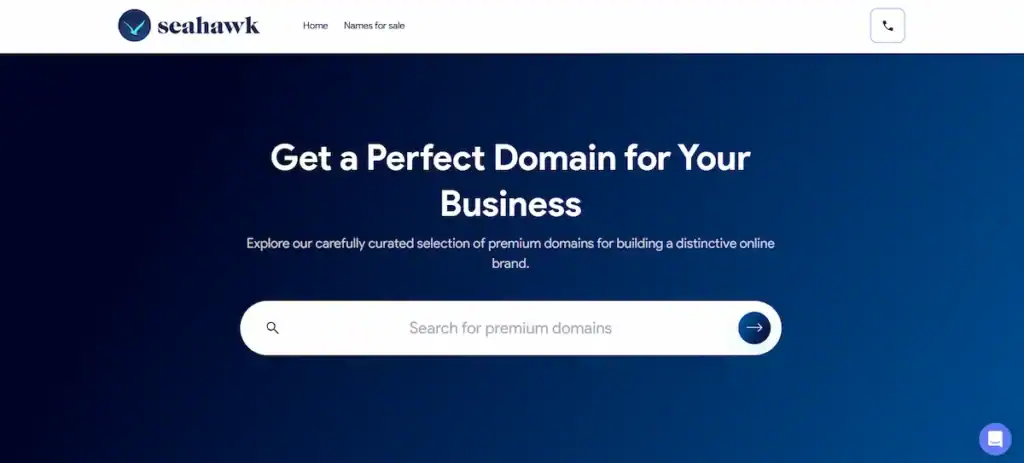
This site allow users to filter results by desirable extensions, including the highly coveted .com, as well as other global and country-code TLDs like .co.uk, .xyz, .nl, .org, and .co.
Furthermore, the domains are organized into “Featured Categories,” including Tech, Internet, Software, Agency & Consulting, Health & Wellness, E-Commerce & Retail, Fashion & Clothing, Finance, Beauty & Cosmetics, Food & Drink, and Education & Training.
This comprehensive organization streamlines the process for a business to find and instantly purchase a premium domain that is an exact fit for their sector.
Other domain buying places are:
- Domain Auctions: These are online platforms where individuals and companies list their owned domains for sale. They provide a safe environment for transfer and escrow services.
- Domain Registrars: Major registrars often list their own inventory of registry premium domains or aftermarket listings from their partners. You can usually find a premium domain during a standard domain search, frequently marked with a “Premium” tag and a higher price.
- Domain Brokers: For very high-value domains or if the owner’s contact details are private, a professional domain broker can be essential. A broker handles the negotiation and transfer process on your behalf, often providing access to private listings.
- Direct Negotiation: If you find that someone has already registered the perfect domain but is not actively using it, you can contact the owner directly, often using a WHOIS search to locate their contact details.
Steps to Purchase a Premium Domain
The process of buying a premium domain is more complex than simply registering a regular domain.
- Define Your Budget and Goals: Determine the maximum amount of dollars you are willing to spend and clearly define the expected potential ROI. A premium domain should be viewed as a capital investment.
- Find the Domain: Use registrars and marketplaces to search for your desired domain name. If it’s already registered, use a WHOIS search to find the owner’s contact details or identify the selling platform.
- Determine Ownership and Pricing: Identify whether you are buying a premium domain from a registry (with fixed premium prices) or from an individual/investor (with negotiable higher prices). Look for comparable sales to understand the fair market value.
- Negotiate the Price: If purchasing from an owner, be prepared to negotiate. Start with a reasonable offer below the asking price. A broker can facilitate this process if you are uncomfortable with the negotiation.
- Secure the Purchase and Transfer: Once a price is agreed upon, use a reputable escrow service to secure the funds. The escrow service holds your dollars until the domain ownership is successfully transferred to your registrar account. This secure step protects both buyer and seller.
- Complete the Transfer: Follow the instructions to transfer the ownership. This usually involves the seller providing an authorization code (EPP key) to your chosen registrar. Once completed, the domain is yours to renew and manage.
How to Determine the Value of a Premium Domain?
The premium prices associated with these domains are based on several quantifiable and subjective factors. When considering a premium domain, you must assess its actual value to justify the cost.
- Keyword Search Volume: High-value domains often match terms with significant global or local search volume. Tools can help you analyze the market’s demand for the term in the domain.
- Market Comparables: Research recent sales of similar domains (length, TLD, keyword category). This provides a benchmark for what comparable high-value domains are selling for.
- Brand Suitability: How well does the domain name align with your company’s long-term business and branding goals? A perfect fit is worth more.
- Length and Simplicity: The shorter and easier to spell, the higher the value. Single, dictionary words with a .com TLD command top dollars.
- Domain Authority: Has the domain been used before? A clean history and established backlink profile can increase its value for SEO. Conversely, a bad history can significantly decrease it.
- Monetization Potential: Assess the domain’s potential ROI. How many more customers could this specific name realistically bring in?
Professional domain appraisers or broker services can provide an accurate valuation, but always conduct your own due diligence.
Common Mistakes to Avoid When Buying a Premium Domain
To secure the best possible deal and avoid future complications when buying a premium domain, be aware of these pitfalls.

- Failing to Research Domain History: Before you purchase, check the domain’s history using tools like the Wayback Machine. Ensure it has no prior associations with spam, illegal content, or search engine penalties, which could hurt your SEO.
- Ignoring Renewal Fees: While aftermarket domains often revert to standard renewal fees, registry premium domains may require you to renew at a significantly higher price every year. Always confirm the long-term value and the cost of restoration.
- Overpaying Without Due Diligence: The price for most premium domains is often negotiable. Don’t pay the asking price immediately. Conduct thorough market research to understand the domain’s actual value.
- Neglecting Trademark Search: Ensure the domain name you are buying does not infringe upon an existing trademark. This oversight can lead to expensive legal disputes and the loss of your new asset.
- Not Using Escrow for Aftermarket Sales: Never send the full amount of dollars directly to a seller. Always use a reputable escrow service to secure the transaction and guarantee the safe transfer of ownership.
- Focusing Only on Keywords: While a keyword-rich name is beneficial, ensure the domain is also highly brandable. A memorable, unique name often offers greater long-term value than an overly generic one.
Conclusion: Is a Premium Domain Right for You?
The decision to purchase a premium domain name is a significant investment that requires careful consideration. You need to weigh the premium domains’ cost against the substantial potential ROI in branding, marketing efforts, and enhanced online success.
For a serious business aiming for market leadership, instant credibility, and superior branding, buying a premium domain is often a strategic necessity. It provides a unique competitive edge, a head start in SEO, and a tangible long-term value that a regular domain simply cannot match.
It’s an investment in your digital identity, ensuring your web address is as memorable and authoritative as your brand. By following the proper process and avoiding common mistakes, you can secure the perfect domain and leverage it for years of online growth and attracting more customers.
FAQs About Premium Domain Name
What makes premium domains more valuable than a regular domain?
Premium domains are highly sought after because they are short, memorable, keyword-rich, and brandable. Unlike a regular domain, a premium domain can enhance SEO, increase website traffic, and enhance online credibility.
Why do premium domains cost more and have a higher price?
Premium domains are more expensive due to their high demand, keyword relevance, brevity, and potential for long-term investment. Their higher price reflects their ability to attract visitors and generate business value.
What factors make premium domains considered premium?
A domain is considered premium if it is short, memorable, contains high-value keywords, or has a popular extension, such as .com. Availability and relevance to a specific industry also play a key role.
Can a regular domain be upgraded to a premium domain?
No, a regular domain remains standard unless it is resold or registered as a highly desirable name. In some instances, registries may reclassify domains, but generally, only specially selected domains are considered premium.
How does availability affect premium domains on the internet?
Availability is crucial because premium domains are often already owned or in high demand. Limited availability drives higher prices and competitive bidding, making a timely purchase essential for securing the right domain.