Secondary colors in web design are created by mixing two primary colors. In the RGB color model used for digital screens, these secondary colors are cyan, magenta, and yellow.
They expand the palette available to designers, offering more options to enhance visual appeal and create contrast. By incorporating secondary colors, web designers can develop more intricate and engaging color schemes.
TL;DR: Secondary Colors in Web Design at a Glance
- Secondary colors are created by mixing equal amounts of red, yellow, and blue in the RGB color model, producing cyan, magenta, and yellow that expand the color spectrum used in web design.
- Using the color wheel helps designers understand that complementary colors and analogous colors sit next to each other, making it easier to create color harmony and harmonious color combinations.
- Thoughtful use of secondary colors improves color contrast, draws attention to essential elements, and supports the dominant color while maintaining a balance between cool and warm colors.
- A solid understanding of color psychology, cultural context, and the target audience ensures secondary colors align with the brand message and work effectively across different shades and design elements.
How to Use Secondary Colors in Web Design?
Secondary colors, formed by blending primary hues, offer designers a versatile palette to create depth, contrast, and balance. By strategically using secondary colors, you can highlight essential elements, improve navigation, and ensure a cohesive and engaging user experience. Here are some ways to use them.
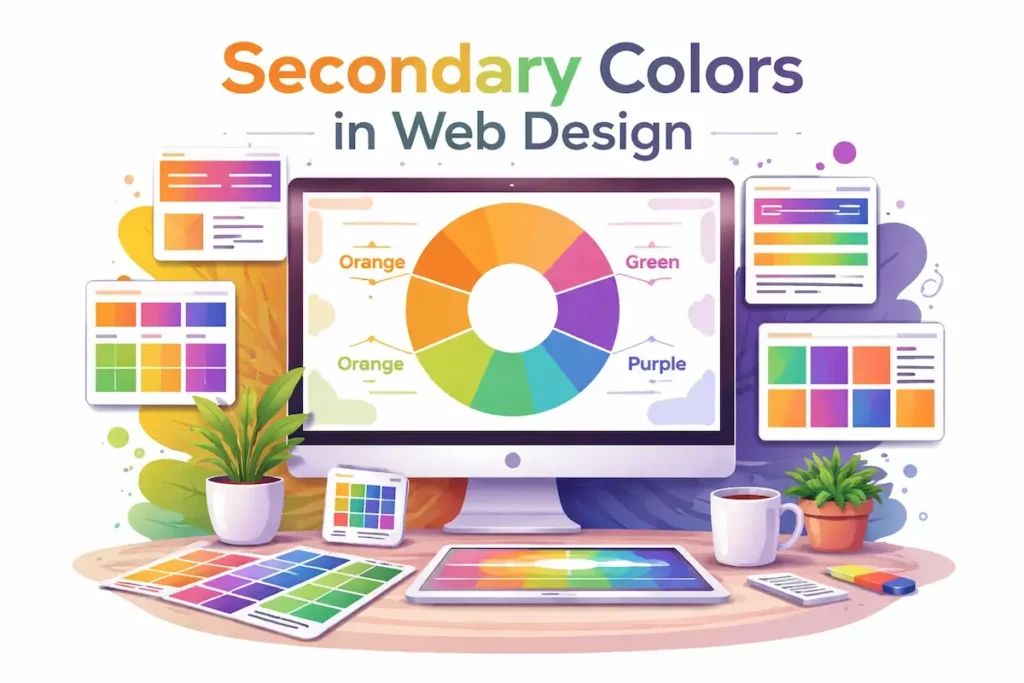
- Enhance Visual Interest: Use secondary colors to add depth and complexity. They can break uniformity, making a design more captivating.
- Differentiate Elements: Apply these colors to distinguish different sections or features. This will help users navigate your site more efficiently.
- Support Primary Colors: Use secondary colors to complement and highlight your primary color palette. They can accentuate key areas without overwhelming the main color scheme.
- Create Balance: Secondary colors help balance bright primary colors, ensuring a harmonious overall look. They also soften and refine the visual experience.
Read more: Design Psychology for Better UX
Web Wizardry: Designing Sites That Steal the Spotlight!
Experience the magic of web wizardry. Let us design a site that steals the spotlight and enchants your visitors.
Tips for Choosing the Right Secondary Colors in Web Design
Picking the right secondary colors in web design is crucial for creating an engaging and cohesive visual experience. These colors can differentiate elements and enhance the overall aesthetic.

By considering their emotional impact, brand alignment, and versatility, you can craft a color scheme that supports both functionality and brand messaging. The following tips will help you make informed choices.
Understand Color Theory
Understanding color theory is essential in selecting the right secondary colors. It starts with learning how primary, secondary, and tertiary colors interact on the color wheel.
By using this tool, you can create complementary color schemes, which are opposite each other on the wheel, or analogous schemes, which use colors next to each other. This knowledge helps craft balanced and visually pleasing designs that effectively incorporate secondary colors.
Consider Emotional Impact
Colors can evoke powerful emotions and set the tone of your website. For example, green is often associated with nature and tranquility, while purple can suggest luxury and creativity.
When choosing secondary colors, think about the mood you want to convey to your users. Ensure these colors align with your brand’s message and the emotional response you aim to elicit from your audience.
Check Branding Consistency
Your chosen colors should seamlessly integrate with your existing color palette and reflect your brand’s identity. Secondary colors must complement primary colors without clashing, ensuring your website maintains a unified, professional appearance. This helps to reinforce brand recognition and trust among your audience.
Related: Best Branding Ideas for Your Business
Test for Versatility
Secondary colors should be versatile enough to be used in various design elements, such as buttons, backgrounds, and text highlights.
They should enhance readability and usability while contributing to the aesthetic appeal. Test your chosen colors in different contexts to ensure they work well together and maintain their impact across multiple applications on your website.
Use Design Tools
Use design tools to help choose the perfect secondary color combinations. Consider using tools like Paletton or ColRD for generating harmonious color palettes tailored to your design needs.
These tools let you experiment with different shades and schemes, ensuring your selected colors are well-matched and enhance your website’s overall look.
Check out: Sustainable Web Design Trends
Final Thoughts
Secondary colors are vital in creating dynamic and engaging web designs. By selecting and using them wisely, designers can enhance the user experience and align with the brand’s identity. Balance, understanding of color theory, and practical usage can help incorporate these colors effectively.
FAQs About Web Design Secondary Colors
What are primary and secondary colors in web design?
The primary colors in the RGB model are red, green, and blue. When you mix red, green, and blue in different combinations, you produce secondary colors like blue-green, yellow, orange, and blue-purple. These basic colors form the foundation of the digital color system.
How does color mixing work in the web design process?
Color mixing in digital design relies on the RGB model. Mixing red with blue creates blue-violet or red-purple. Blending yellow with red produces red-orange. Mixing equal amounts can reach maximum saturation and make a bold color.
How do secondary colors help highlight essential elements?
Secondary colors often serve as accent colors. They create high contrast against a neutral color or low contrast for subtle emphasis. This helps draw attention to essential elements during the design process.
What role do color associations play for a target market?
Colors carry different meanings across Western cultures and beyond. Cool colors like blue light suggest trust, while orange feels energetic. Color associations should match the brand’s values and appeal to the target market.
Are secondary colors used differently in printed materials?
Yes. Printed materials often rely on black ink and a different color system than screens. Still, understanding red, green, and blue helps designers adapt different combinations and maintain color harmony across digital and print.