Rebranding mistakes happen when businesses skip strategy, ignore SEO, and rush execution, leading to traffic loss, ranking drops, and brand confusion. A poorly planned rebrand can undo years of growth if it breaks visibility, weakens positioning, or confuses your audience.
If you want your rebrand to succeed, you need a clear plan that protects your SEO, maintains brand consistency, and supports long-term growth. This guide breaks down what goes wrong during rebranding and how to avoid costly mistakes with a structured, results-driven approach.
TL;DR:
- Many brands fail during rebranding when they skip strategy, ignore SEO, and rush execution.
- Poor SEO migration can lead to traffic loss, ranking drops, and a broken site structure.
- Inconsistent branding confuses users, erodes trust, and reduces conversions.
- Weak planning leads to positioning issues and audience disconnect.
- A structured rebranding strategy helps prevent losses and protect long-term growth.
What is Rebranding and Why Does it Fail?
Rebranding is the process of changing how your business is presented to the market. This process directly impacts your brand identity and how your brand image is perceived in the market.
This can include your brand name, logo change, messaging, positioning, or overall identity. Businesses usually rebrand to attract a new audience, reposition in the market, or support growth.
Rebranding fails when there is no clear strategy behind these changes. Many rebranding failures stem from ignoring brand equity, failing to understand customer loyalty, and poor testing. Most businesses rush execution without understanding their audience, protecting their SEO, or aligning internal teams.
This leads to traffic loss, confused messaging, and a weaker brand instead of a stronger one. Over time, this damages both your brand identity and public brand image, making recovery harder.
Avoid Costly Rebranding Mistakes with Expert Branding Support
If your rebrand feels unclear, rushed, or disconnected, the right branding strategy can help you protect your identity and build stronger trust.
Top Rebranding Mistakes That Damage Brand Image and Growth
Rebranding can drive growth when done right, but most businesses lose traffic, rankings, and trust by overlooking critical steps. These mistakes don’t just affect branding; they directly impact SEO, conversions, and long-term performance.
Understanding what goes wrong helps you avoid costly errors and build a rebranding strategy that protects your visibility and strengthens your brand.

Rebranding Without Clear Branding Strategies
Rebranding without a clear idea is the most common mistake. Many businesses focus on design changes without clearly defining their target audience, positioning, or growth direction. This leads to a disconnect between what the brand says and what the audience expects.
Without a structured plan, you risk inconsistent messaging, weak positioning, and poor decision-making during execution. A strong rebranding strategy helps you stay aligned, protect your SEO, and guide every change with purpose.
Ignoring Your Target Audience and Loyal Customers
Your current audience already has a perception of your brand. These are your loyal customers, and losing their trust during a rebrand can hurt long-term growth.
Ignoring this during a rebrand can create confusion and disconnect, especially if the new identity feels unfamiliar or forced.
When users don’t recognize or trust the new brand, engagement drops and conversions suffer. Understanding audience expectations helps you evolve your brand without losing the trust and loyalty you have already built. When your target audience is not aligned with your new positioning, the rebrand fails to connect.
Losing SEO Rankings During Logo Change and Migration
One of the biggest rebranding problems is failing to protect your SEO during migration. Changes to URLs, site structure, or domain without proper planning can lead to broken links, lost traffic, and ranking drops.
Without redirects, sitemap updates, and indexing checks, search engines struggle to understand your new structure. A proper SEO migration plan helps preserve rankings, maintain traffic, and avoid long recovery periods.
Inconsistent Branding Across Channels
Inconsistent branding across your website, social media platforms, ads, and campaigns and marketing channels weakens your identity and confuses users. If your messaging, visuals, and tone don’t align, your brand loses clarity and credibility.
Consistency helps users recognize and trust your brand across every touchpoint. A unified approach ensures your rebranding efforts feel strong, clear, and reliable. This is especially important on social media, where brand perception spreads instantly.
Rushing the Rebranding Process
Rushing a rebrand often leads to mistakes that are hard to fix later. In extreme cases, this can turn into PR nightmares, with customers publicly rejecting the new brand. Skipping research, testing, or planning results in technical issues, poor user experience, and missed opportunities.
A rushed rollout increases the risk of SEO errors, broken pages, and inconsistent messaging. Taking time to plan, test, and execute properly helps prevent losses and ensures your rebrand delivers real results.
How to Avoid Rebranding Mistakes: Step-by-Step Strategy
Avoiding common rebranding failures requires a clear plan that protects your SEO, maintains brand clarity, and ensures a smooth transition.
A structured approach helps you prevent traffic loss, reduce risks, and keep your brand strong during the change. Strong branding strategies ensure your messaging, visuals, and positioning stay aligned during the transition.
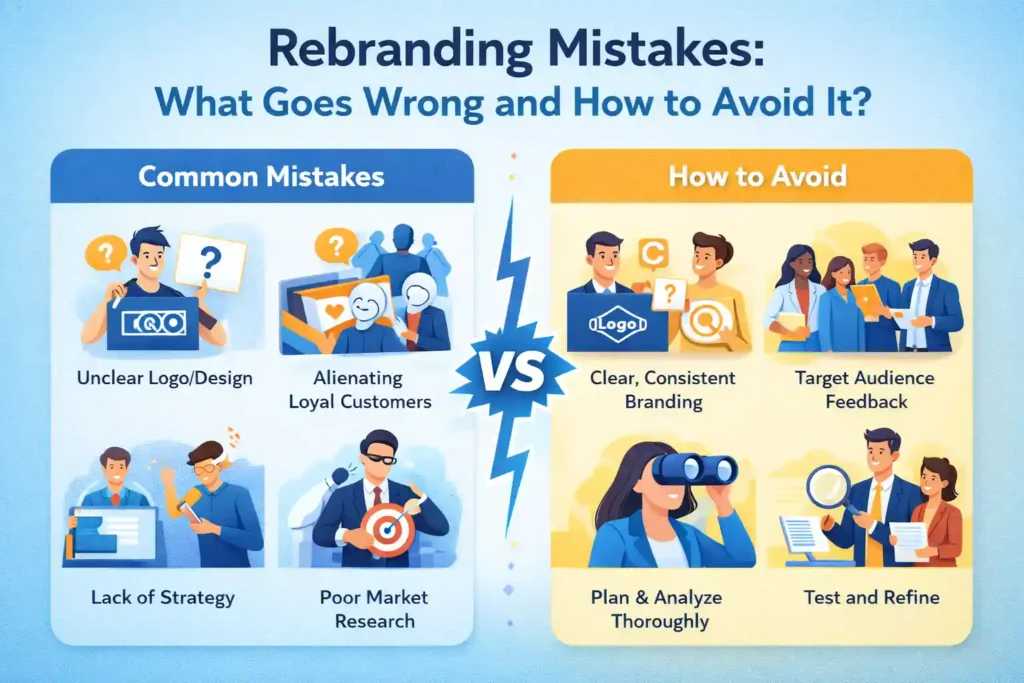
Well-known examples like the Gap logo change, the London Olympics branding controversy, and Royal Mail’s failed Consignia rebrand demonstrate how poor execution can quickly erode trust. Even sports brands like Leeds United faced backlash for ignoring fan sentiment during a rebrand.
Follow these steps to build a rebranding strategy that supports growth instead of causing setbacks.
Step 1: Define Clear Goals and Rebranding Purpose
Start by defining why you are rebranding and what you want to achieve. Whether your goal is repositioning, targeting a new audience, or scaling your business, clarity is critical before making any changes.
Without clear goals, decisions become inconsistent and disconnected from your business objectives. A defined purpose helps guide your strategy, align your team, and ensure every change supports long-term growth.
Step 2: Audit Existing Brand and SEO Performance
Before making changes, analyze your current brand performance and SEO strength. Identify what is working, what drives traffic, and which pages bring conversions.
This audit helps you protect valuable assets, such as high-ranking pages, backlinks, and brand elements that already perform well. Skipping this step can lead to unnecessary losses in traffic and visibility.
Step 3: Plan SEO Migration (301 Redirects, Sitemaps, URLs)
SEO migration is one of the most critical parts of a rebrand. Any changes to URLs, site structure, or domain must be handled carefully to avoid ranking drops.
Set up proper 301 redirects, update your sitemap, and ensure search engines can crawl and index your new structure. A well-planned migration helps preserve authority, maintain rankings, and prevent broken links.
Step 4: Maintain Brand Identity and Consistency Across Channels
Consistency across all platforms is essential during a rebrand. Your website, social media, ads, and content should reflect the same messaging, tone, and visual identity. Making careful, gradual changes to your brand design and respecting existing logos is crucial to avoid confusing your audience and undermining brand recognition.
Inconsistent branding confuses users and weakens trust. A unified approach helps maintain recognition, strengthen positioning, and improve user experience across every touchpoint.
Additionally, certain logo versions may be retained exclusively for corporate communications to ensure consistency and clarity in official materials.
Step 5: Test Before Launch and Monitor After Launch
Before launching your rebrand, test everything thoroughly. Check design, functionality, redirects, and performance to ensure there are no errors that could affect user experience or SEO.
Be cautious about changing too many brand elements at once, as this can confuse loyal customers and lead to a loss in sales.
For example, after launch, monitor traffic, rankings, and engagement closely. Early tracking helps you detect issues quickly and fix them before they impact performance or growth.
Quick Rebranding Checklist
Use this checklist to prevent critical rebranding errors and protect your SEO, traffic, and brand consistency during the transition.
- Define goals and target audience: Set a clear purpose for your rebrand and identify who you want to reach
- Conduct brand and SEO audit: Analyze current performance, rankings, and high-value pages before making changes
- Map old URLs to new URLs: Create a complete URL mapping to avoid broken links and traffic loss
- Set up 301 redirects and update sitemap: Ensure proper redirection and help search engines index your new structure
- Align messaging across all platforms: Keep branding, tone, and visuals consistent across website, social, and marketing channels
- Test UX, design, and performance: Check site functionality, speed, and user experience before launch
- Monitor traffic, rankings, and engagement: Track performance after launch to detect and fix issues early
When rebranding is done right, you can increase sales from new and existing customers, stand out from competitors, and enhance your product’s value.
Signs Your Rebrand is Failing Your Brand Image and Audience Trust
If your rebrand is not working, the impact shows quickly in your traffic, rankings, and user behavior.
Often, customers find branding changes confusing or alienating, which can damage your public image and erode trust. These signs indicate deeper issues in strategy, SEO migration, or brand clarity that need immediate attention.
Identifying these early helps you fix problems before they cause long-term damage to your visibility and growth.
Sudden Drop in Organic Traffic
A sharp drop in organic traffic is one of the first signs of a failed rebrand. This usually happens when SEO elements like redirects, URLs, or indexing are not handled properly during migration.
If search engines cannot find or understand your new pages, your visibility drops quickly. Monitoring traffic helps you detect these issues early and take corrective action.
Lower Engagement and Conversions
When users stop engaging with your site, or conversions drop, it often points to poor user experience or unclear messaging after the rebrand. Changes in design, navigation, or content can make it harder for users to trust or understand your brand.
If visitors are leaving faster or not completing actions, your rebrand is not connecting with your audience. Improving clarity and usability can help recover engagement.
Customer Confusion and Brand Disconnect
A rebrand should feel like a clear evolution, not a complete disconnect. If your audience does not recognize your new identity or struggles to relate to it, confusion increases.
A modern, user-friendly design can significantly enhance your brand’s credibility and overall appeal, helping to establish trust and professionalism with your audience.
This usually happens when messaging, visuals, or positioning change too drastically without proper alignment. Maintaining consistency helps protect trust and brand recognition.
Keyword Ranking Loss
Losing keyword rankings is a strong indicator of SEO issues during rebranding. This often results from broken redirects, missing content, or unoptimized site structure changes.
When rankings drop, your visibility and traffic decline. Regular monitoring and SEO adjustments are essential to recover lost positions and maintain performance.
A successful rebrand protects your brand identity, strengthens your brand image, aligns with your target audience, and uses the right branding strategies to avoid costly mistakes.
Conclusion
Rebranding works when it solves a real problem and fails when it is done without clarity. The biggest mistakes usually come from rushing decisions, ignoring your audience, and missing the technical side, like SEO and rollout planning.
Strong rebrands stay consistent, protect what already works, and improve what does not. When you align strategy, messaging, and execution, your rebrand builds trust rather than breaks it.
Focus on purpose, not just visuals. Plan every step, test before launch, and keep your audience at the center. That is what turns a risky rebrand into real growth.
FAQs About Rebranding Errors
How do you avoid losing SEO during a rebrand?
You need to plan your SEO migration before launch. Set up 301 redirects, update sitemaps, and maintain your URL structure wherever possible to protect rankings.
What is the biggest mistake companies make when rebranding?
The biggest mistake is rebranding without a clear strategy or purpose. This leads to confusion, poor messaging, and loss of audience trust.
Can rebranding hurt your Google rankings?
Yes, rebranding can impact rankings if technical SEO is not handled properly. Issues such as broken links, missing redirects, and indexing errors can cause traffic to drop.
How long does it take to recover SEO after a rebrand?
Recovery can take a few weeks to several months, depending on how well the migration is handled and how severe the SEO impact is.
Should you change your domain during rebranding?
Only change your domain if it is necessary. Domain changes carry SEO risks and require careful planning to avoid ranking loss.
How do you know if your rebrand is successful?
You will see stable or improved traffic, better engagement, and clearer brand recognition from your audience after the rebrand.