
Choosing between a subdomain vs subdirectory is not just a technical decision. It directly affects your SEO, rankings, and your website’s growth over time. The structure you choose determines how search engines understand your site and how authority flows across your pages.
If you get this wrong, you may split your SEO efforts and slow down your growth. If you get it right, you can improve rankings, strengthen internal linking, and build authority faster.
In this guide, you’ll learn the real difference, SEO impact, and exactly which option works best for your situation.
TL;DR
- Subdirectories are better for SEO because they share domain authority and help content rank faster.
- Subdomains are treated as separate entities and require independent SEO effort to build authority.
- Use subdirectories for blogs, content hubs, and SEO-driven pages.
- Use subdomains for apps, tools, or platforms that need separation.
- Internal linking and authority flow are stronger within subdirectories.
- Choosing the right structure depends on content goals, scalability, and technical needs.
What is a Subdomain in SEO?
A subdomain is a separate section of a website that appears before the main domain and is often treated by search engines as an independent entity.
It looks like blog.example.com or support.example.com. Because search engines may treat subdomains as separate sites, SEO authority, backlinks, and ranking signals do not fully transfer from the main domain.
Subdomains are useful when content needs clear separation. Common use cases include blogs, help centers, web apps, or region-specific content where structure and management need to stay independent.
When Should You Use a Subdomain?
Use a subdomain when content needs separation, independent management, or a different technical setup. Subdomains work best for platforms that operate like separate websites.
- Different Product or Platform: Use a subdomain for SaaS apps, dashboards, or tools that require separate infrastructure and user experience.
- Support or Help Center: Ideal for knowledge bases or documentation that need a distinct structure and navigation flow.
- International or Regional Sites: Helps manage language or country-specific content with separate targeting and localization strategies.
- Independent Teams or Systems: Useful when different teams manage different sections with separate CMS, hosting, or workflows.
- Testing or Staging Environments: Supports development, testing, or pre-launch environments without affecting the main domain.
What is a Subdirectory in SEO?
A subdirectory is a section within a domain that organizes content within the same website structure and shares the domain’s overall SEO authority.
It appears like example.com/blog or example.com/services. Search engines treat subdirectories as part of the main domain, so link equity, authority, and ranking signals flow across all pages.
Subdirectories work best for blogs, content hubs, and SEO-driven pages. This structure helps content rank faster, improves internal linking, and enhances the website’s overall visibility.
When Should You Use a Subdirectory?
Use a subdirectory when the content should strengthen the main domain’s SEO and benefit from shared authority. This structure works best for content-driven growth and organic traffic.
- Blog or Content Marketing: Keeps all articles under the main domain, helping content rank faster and build authority.
- Service or Landing Pages: Supports SEO-focused pages that need strong visibility and keyword targeting within the main site.
- Content Hubs or Resource Centers: Group related topics under a single structure to improve internal linking and topical relevance.
- SEO-Focused Growth Strategy: Helps consolidate backlinks, traffic, and ranking signals under one domain for better performance.
- Easier Site Management: Maintains a unified structure, simplifying content, URL, and internal linking management.
Subdomain vs Subdirectory: SEO Impact Breakdown
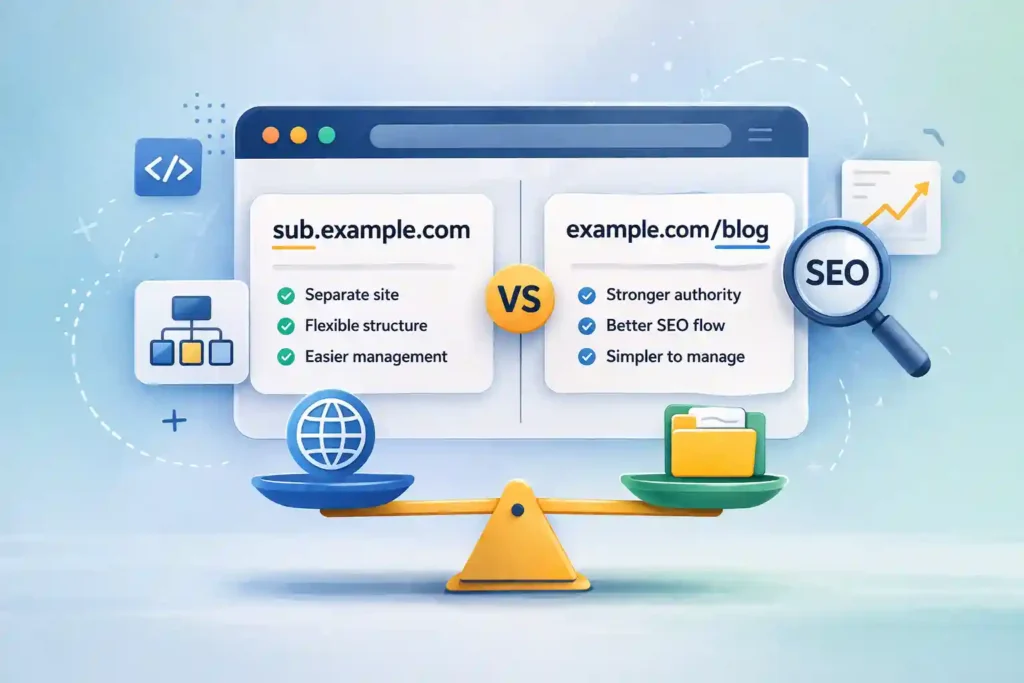
Subdirectories are better for SEO because they share domain authority, improve internal linking, and rank faster. Subdomains are often treated as separate sites, which means they require independent SEO efforts and authority-building.
How Authority Flows Across Subdomains vs Subdirectories?
Subdirectories inherit link equity directly from the main domain, so backlinks and authority strengthen the entire website. This creates a unified SEO structure where every page contributes to overall ranking performance.
Subdomains are often treated as separate properties by search engines, so authority does not fully transfer. Each subdomain needs its own backlinks, trust signals, and content strategy to build ranking strength over time.
How Does Google Crawl and Index Each Structure?
Search engines crawl subdirectories within a single domain, improving crawl efficiency and helping content get indexed faster. Strong internal linking also makes it easier for search engines to discover new pages.
Subdomains may be crawled separately depending on their structure and linking. This can split crawl signals and slow indexing unless the subdomain is well-connected to the main site.
Which Structure Ranks Faster in Search Results?
Subdirectories usually rank faster because they benefit from existing domain trust, authority, and backlink profile. New pages gain visibility quickly without requiring separate authority-building.
Subdomains take longer to rank since they operate like independent sites. Without strong backlinks and consistent SEO signals, ranking growth can be slower and less predictable.
Internal Linking and SEO Value Distribution
Subdirectories allow seamless internal linking within the same domain, which helps distribute link equity evenly across pages. This strengthens topical relevance and improves rankings across the site.
Subdomains require cross-domain linking, which may not pass the same level of SEO value. This makes it harder to consolidate authority and can weaken overall link distribution.
Choose the Right Site Structure Before it Hurts SEO
Get expert WordPress help to plan a cleaner site structure, improve search visibility, and build a website that is easier to scale.
Subdomain vs Subdirectory: Pros and Cons Explained
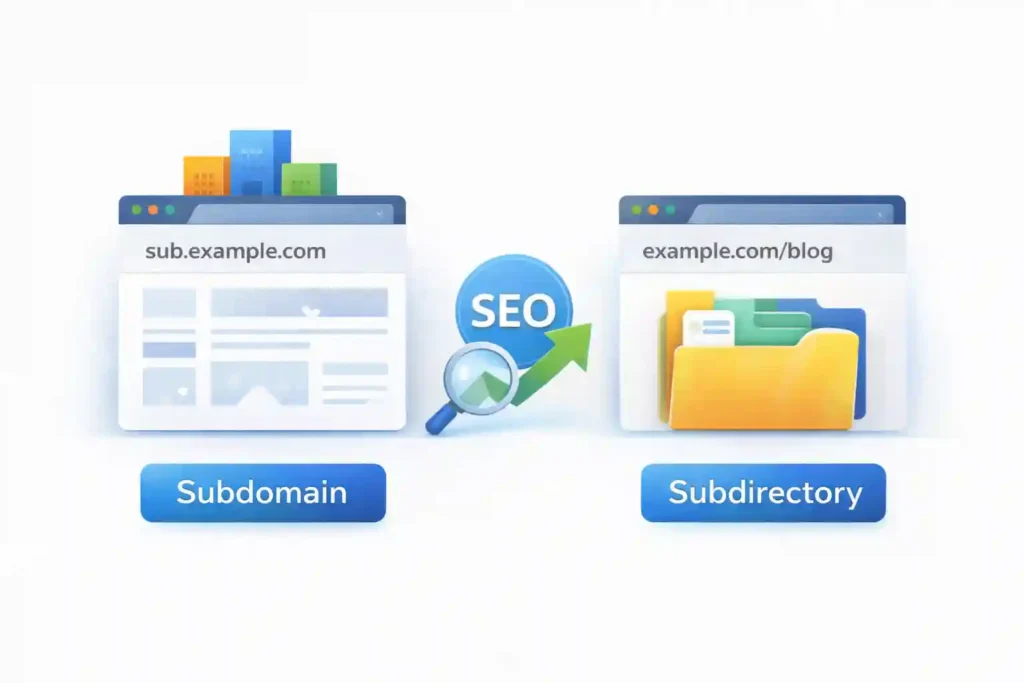
Subdomains provide flexibility and separation, while subdirectories offer stronger SEO performance through shared authority. Choosing the right structure depends on your content goals and growth strategy.
Advantages of Using a Subdomain for Website Structure
Subdomains help separate different sections of a website while allowing independent management and scalability. They are useful when content, platforms, or systems need to operate separately from the main domain.
- Clear Content Separation: Keeps blogs, apps, or support portals isolated from the main site, making it easier to manage structure, navigation, and content strategy at scale.
- Independent Hosting and Setup: Allows different servers, CMS platforms, or configurations, which is useful when different teams or technologies are involved.
- Scalable for Large Projects: Supports expansion into multiple products, regions, or services without affecting the core website structure or performance.
- Flexible Development Environment: Ideal for staging sites, testing environments, or product-specific sections where changes should not impact the main domain.
Limitations of Using a Subdomain for SEO
Subdomains often require separate SEO efforts because search engines may treat them as independent entities. This can slow down ranking performance and require more optimization work.
- Limited Authority Transfer: Link equity from the main domain does not fully pass, so each subdomain needs to build its own authority through backlinks and content.
- Separate SEO Strategy Required: Content optimization, keyword targeting, and link building must be handled independently for each subdomain.
- Slower Ranking Potential: New pages may take longer to rank since they do not benefit directly from the main domain’s existing trust and authority.
- Fragmented SEO Signals: Traffic, engagement, and relevance signals are fragmented, which can weaken a domain’s overall search performance.
Advantages of Using a Subdirectory for SEO Performance
Subdirectories keep all content within a single domain, allowing authority and ranking signals to flow across pages. This structure strengthens overall SEO performance and improves visibility.
- Shared Domain Authority: All pages benefit from the main domain’s backlinks and trust signals, which improve overall ranking potential across the site.
- Faster Ranking for New Content: New pages gain visibility quickly by leveraging existing authority, reducing the time to rank.
- Stronger Internal Linking: Internal links efficiently pass link equity, helping search engines understand content relationships and improve rankings.
- Better SEO Consolidation: Combines traffic, authority, and indexing signals into a single domain, strengthening domain-level performance in search engines.
Drawbacks of Using a Subdirectory Structure
Subdirectories offer strong SEO benefits but may limit flexibility when managing very different platforms or content types within one domain.
- Limited Content Separation: Difficult to fully isolate different systems, such as SaaS platforms, apps, or region-specific content, within the same structure.
- Complex Structure Management: Large websites require careful URL hierarchy, navigation, and organization to avoid confusion and maintain clarity.
- Less Flexibility for Technical Setup: Changes in hosting, CMS, or infrastructure can affect the entire domain, making updates more sensitive.
- Potential for Content Overlap: Without a clear structure, similar pages may compete with each other, potentially affecting keyword targeting and rankings.
Subdomain or Subdirectory: Which One is Better for SEO?
Subdirectories are generally better for SEO because they share domain authority and help content rank faster. Subdomains are treated as separate sites, so they require independent SEO efforts to build authority and visibility.
| SEO Factor | Subdirectory (example.com/blog) | Subdomain (blog.example.com) |
|---|---|---|
| Domain Authority | Treated as a separate entity | Treated as part of the same entity |
| Ranking Speed | Faster ranking due to existing trust | Slower, needs separate authority |
| Link Equity Flow | Strong internal link equity distribution | Limited authority transfer |
| Crawling & Indexing | Easier and faster indexing | May require separate crawling signals |
| SEO Effort Required | Lower, centralized SEO strategy | Higher, separate optimization needed |
| Best Use Case | Blogs, content, SEO-driven pages | Apps, tools, separate platforms |
Common SEO Mistakes to Avoid with Subdomains and Subdirectories
Choosing the wrong structure or mismanaging SEO signals can weaken rankings and slow down growth. Avoid common mistakes that split authority, reduce crawl efficiency, or limit visibility.
Using Subdomains When Subdirectories Are Better for SEO
Using subdomains for blogs or content without a clear need can split domain authority. Search engines may treat subdomains as separate entities, which reduces the impact of backlinks and overall SEO strength.
Keeping content in subdirectories allows authority to flow across the site. This helps pages rank faster and improves visibility by consolidating SEO signals under one domain.
Weak Internal Linking Between Sections
Poor internal linking limits how link equity flows across pages. This makes it harder for search engines to understand content relationships and reduces ranking potential.
Strong internal linking connects pages within the same structure, improving crawl paths. This helps distribute authority and boosts visibility across key pages.
Choosing Structure Without an SEO Strategy
Selecting a structure solely for technical convenience can hurt long-term SEO performance. Without a clear strategy, content may not align with authority-building or ranking goals.
A well-planned structure supports content growth, keyword targeting, and link building. Aligning structure with SEO goals improves consistency and long-term visibility.
Ignoring Crawl and Indexing Behavior
Improper structure can make it difficult for search engines to crawl and index content efficiently. This can delay indexing and reduce the likelihood that pages appear in search results. An optimized structure with a clear hierarchy and linking improves crawl efficiency. This ensures content is discovered quickly and indexed correctly.
Poor URL Structure and Hierarchy
Disorganized URLs can confuse search engines and weaken topical relevance. Long or inconsistent structures make it harder to understand content relationships. A clean and logical URL hierarchy improves clarity and strengthens SEO signals. This helps search engines interpret content better and improves ranking performance.
Not Aligning Structure with Business Goals
Using the wrong structure for content, products, or services can limit growth. A mismatch between structure and business needs can affect scalability and SEO performance. Aligning structure with business goals ensures better content organization and long-term growth. This supports both visibility in search results and overall site performance.
Conclusion
Subdirectories are the better choice for most SEO-focused websites because they share authority, improve internal linking, and help content rank faster. This structure consolidates all ranking signals under a single domain, strengthening visibility and long-term growth.
Subdomains work best when content needs separation or independent management, such as apps or platforms. The right choice depends on your goals, but for SEO-driven growth, keeping content within the main domain usually delivers stronger results.
Frequently Asked Questions
Which structure performs better for search rankings?
Subdirectories perform better because they share domain authority and link equity. This allows new content to rank faster and benefit from existing SEO strength.
Does Google treat subdomains as separate websites?
Search engines often treat subdomains as separate entities. This means authority, backlinks, and ranking signals may not fully transfer from the main domain.
When should a subdomain be used instead of a subdirectory?
A subdomain works best for apps, tools, or platforms that require separate hosting, structure, or management. It is useful when content needs clear separation.
Why do subdirectories rank faster?
Subdirectories rank faster because they leverage the main domain’s authority and trust. This helps search engines prioritize and index content more efficiently.
Does internal linking work better in subdirectories?
Internal linking is more effective within subdirectories because link equity flows across the same domain. This improves crawl efficiency and the strength of ranking signals.


