Google WebMCP is changing how AI agents interact with websites. It is a browser-native protocol that lets AI systems perform structured actions directly on web pages.
For anyone working in SEO, web development, or digital marketing, understanding this shift is no longer optional.
The web is entering a new era. AI agents are no longer just reading content. They navigate, click, and complete tasks on behalf of users. Google WebMCP is the infrastructure that enables this.
TL;DR: Google WebMCP at a Glance
- Google WebMCP is a browser-level API that enables AI agents to interact with websites via structured tool contracts.
- It extends the Model Context Protocol (MCP) into the browser using the
navigator.modelContextAPI.
- Websites that adopt WebMCP give AI agents defined, safe, and predictable ways to perform actions.
- This shift brings significant changes to SEO, enhances content discoverability, and influences how we build and structure websites going forward.
What is Google WebMCP, and How Does it Power AI Agent Interaction on Websites?
Understand how this protocol enables AI agents to interact with websites through structured and reliable actions.
Google WebMCP Definition and Meaning in Simple Terms
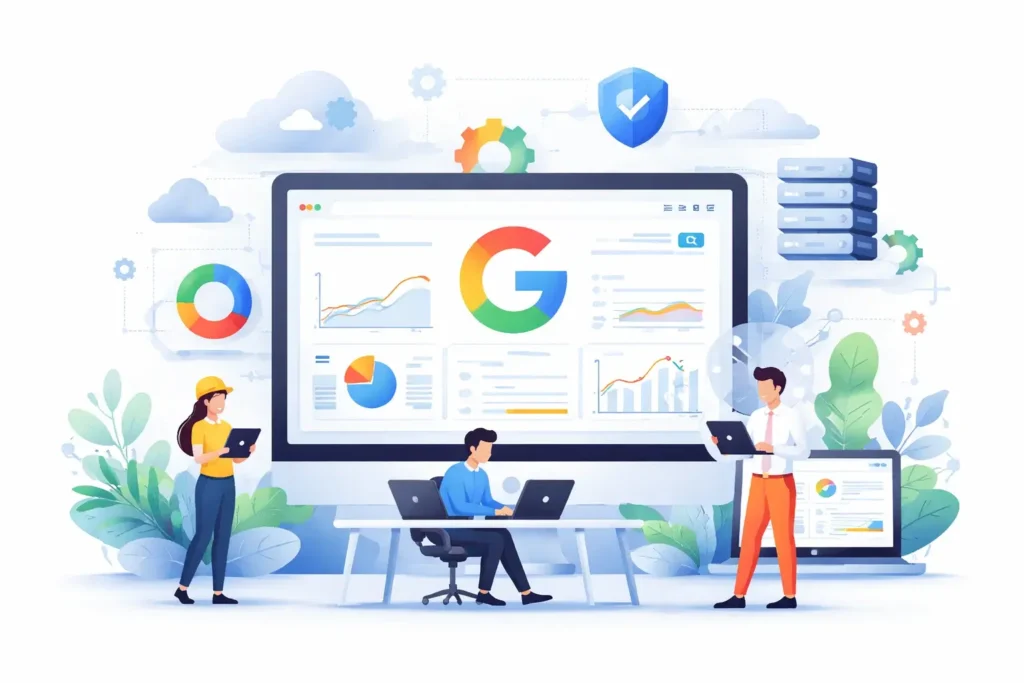
Google WebMCP stands for Web Model Context Protocol. The proposed browser-native standard empowers AI agents, including Google’s AI-powered search and assistant tools, to interact with websites in a structured, predictable, and safe manner.
Think of it as a universal language between AI systems and websites. Instead of an AI agent guessing how to use a site, WebMCP gives it a map. That map describes exactly what the site can do, what actions are allowed, and how to call them.
The protocol builds on the existing Model Context Protocol (MCP), originally developed to help AI models work with data and tools in backend environments. WebMCP brings that same idea to the browser, where most user interactions take place every day.
Why Google Introduced WebMCP for the Agentic Web Era?
The web was built for human users. People read content, click buttons, and fill out forms. But AI agents now browse websites too. They do it at scale and at speed.
Google introduced WebMCP because the current web is not built for agents. Traditional web pages are designed for visual consumption. AI agents must parse HTML, guess at functionality, and hope that what they find is accurate. This process is fragile and unreliable.
With WebMCP, websites can explicitly say: “Here are the things you can do here, and here is how to do them.” This creates a reliable channel for AI-driven interactions between agents and web services.
This matters because Google AI Mode and other agentic features increasingly perform multi-step tasks on users’ behalf. Booking a reservation, checking product availability, or submitting a support request are all tasks AI agents will handle. WebMCP is the standard that enables them.
Key Concepts Behind WebMCP Tool Contracts and Structured Actions
WebMCP revolves around two core ideas: tool contracts and structured actions.
- A tool contract is a machine-readable description of something a website can do. It is written in a structured schema format and lists the action name, required inputs, expected outputs, and any constraints. Think of it like an API specification, but exposed directly inside the browser.
- A structured action is a specific task defined within a tool contract. For example, a travel site might expose a tool contract for “search flights” with structured actions for entering origin, destination, and date.
This approach is closely related to structured data and schema markup, which already helps search engines understand content. WebMCP extends this logic to interactive functionality.
WebMCP vs Traditional Web Interaction Models
Traditional web interactions work in a simple loop: a user visits a page, the browser renders HTML, and the user interacts visually. Search engines crawl and index these pages using web crawlers.
WebMCP breaks from this model in a fundamental way. Instead of crawling visible content, AI agents query a site’s tool contracts. They skip the rendered interface and go straight to the action layer.
This is different from traditional web crawling and indexing. Web crawlers read content to build search indexes. WebMCP-enabled agents read tool schemas to perform actions. The shift is from passive reading to active doing.
Future Proof Your SEO for the AI Driven Web
Stay ahead of AI-driven search and turn your website into a high-performing growth engine with expert managed SEO.
How Google WebMCP Works: Architecture, APIs, and Core Components
Explore the underlying architecture, APIs, and components that enable seamless AI-driven interactions.
WebMCP Architecture Explained for Beginners
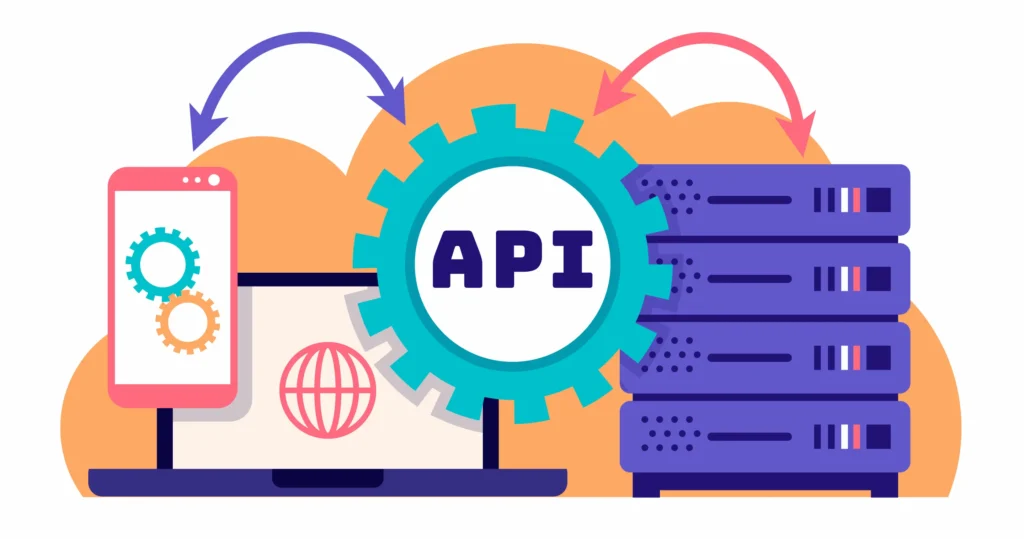
WebMCP sits inside the browser layer. It does not require a separate server connection or external middleware. Websites expose their capabilities via a standardized object in the browser’s JavaScript environment.
Here is how the flow works:
- A website registers its tool contracts in a dedicated WebMCP configuration.
- The browser makes these contracts accessible to authorized AI agents.
- An AI agent queries the available tools and selects the right one for its task.
- The agent calls the tool with the required inputs.
- The website’s execution handler processes the request and returns a result.
This architecture keeps the browser as the trusted intermediary. It controls which agents can access, protecting user privacy and preventing unauthorized actions.
Understanding navigator.modelContext API in WebMCP
The navigator.modelContext API is the browser-level interface through which AI agents discover and use tool contracts. It is part of the JavaScript Web API surface, similar to navigator.geolocation or navigator.clipboard.
When an AI agent encounters a WebMCP-enabled website, it calls navigator.modelContext to retrieve the list of available tools. This returns a structured object that describes every action the site has exposed.
This approach is significant for technical SEO because it introduces a new layer of discoverability. Websites that properly expose their capabilities through this API become accessible to AI agents in ways that go far beyond traditional crawlability.
Key WebMCP Components: Tools, Schemas, and Execution Handlers
WebMCP has three core components that work together.
- Tools are the named capabilities a website offers to AI agents. Each tool is a distinct, well-defined action, like “add to cart,” “find a doctor,” or “check account balance.”
- Schemas describe each tool in detail. They define input parameters (what the agent must provide), output formats (what the site will return), and validation rules (what values are acceptable). These schemas use JSON Schema syntax, making them machine-readable and language-agnostic. This connects closely with the role of structured data in SEO and how metadata helps machines understand page intent.
- Execution handlers are the JavaScript functions that run when a tool is called. They process the input, interact with the website’s backend if needed, and return the result to the agent. Handlers must be secure, efficient, and idempotent where possible.
Declarative vs Imperative APIs in WebMCP
WebMCP supports two modes of defining tool behavior: declarative and imperative.
- Declarative APIs describe what a tool does without specifying how it does so. The browser infers the interaction from the schema alone. This is simpler to implement and works well for standard patterns, such as form submissions or data lookups.
- Imperative APIs give developers explicit control over tool behavior. Developers write custom execution handlers that define exactly how each action is performed. This is more flexible and supports complex workflows, but requires more development effort.
Most production implementations will use a mix of both. Simple tools benefit from declarative definitions, while complex or sensitive workflows require imperative control.
WebMCP vs MCP: Browser vs Backend Protocol Differences
The original MCP (Model Context Protocol) was designed for server-side AI integration. It allows AI models to connect to tools, databases, and APIs through a standardized backend interface.
WebMCP adapts this concept for the browser environment. The key differences are:
- Scope: MCP operates in backend and developer environments. WebMCP operates in the browser, where end users and AI agents interact with live websites.
- Security: WebMCP must enforce strict browser-level security policies. This includes same-origin restrictions, permission prompts, and user consent flows. MCP backend integrations typically rely on server-side authentication instead.
- Discovery: MCP tools are configured by developers during setup. WebMCP tools are dynamically discovered at runtime via
navigator.modelContext.
- Audience: MCP targets developers building AI pipelines. WebMCP targets website owners who want their sites to be agent-ready.
Why Google WebMCP Matters for SEO, AI Search, and Digital Marketing?
The SEO implications of WebMCP are substantial. The protocol changes how websites are structured, how content is discovered, and how actions are performed.
In the current model, Google Search Console tracks clicks and impressions from traditional search results. In an agent-driven model, users may never click a traditional link. An AI agent completes the task on their behalf. This changes what metrics matter and how websites should optimize for visibility.
For Google’s SGE and generative AI search experiences, WebMCP creates a new layer of optimization. Sites that expose clear, accurate tool contracts become preferred sources for AI agents. Sites that do not may be bypassed entirely.
Content strategy must adapt too. The helpful content framework Google has pushed in recent years emphasizes substance and user value.
WebMCP extends this logic to functionality. Sites must not only have useful content but also have useful, actionable capabilities that agents can reliably invoke.
For digital marketers, this means rethinking conversion funnels. If an AI agent completes a purchase on behalf of a user, the traditional click-to-conversion path changes.
Keyword research tools will need to evolve to track agent-driven behavior alongside human search queries.
Top Benefits of WebMCP for Websites and Developers
Discover how WebMCP improves performance, reliability, and automation for modern websites and applications.
- Structured discoverability. WebMCP-enabled sites expose their capabilities in a machine-readable format. This makes them easier for AI agents to use, just as adding schema markup makes content easier for search engines to understand.
- Reduced scraping and hallucination. Without WebMCP, AI agents often scrape pages and infer actions from HTML structure. This is error-prone. WebMCP eliminates guesswork by providing explicit action definitions.
- Improved user experience. When AI agents complete tasks accurately for users, satisfaction improves. Users get results faster without having to navigate complex interfaces.
- Developer control. Execution handlers let developers define exactly what agents can do. Sensitive operations can be protected, rate-limited, or require authentication before an agent can invoke them.
- Competitive advantage. Early adopters of WebMCP position their websites ahead of the curve. Agents will naturally prefer sites that speak their language over sites that force them to guess.
- Better technical SEO foundation. WebMCP integrates cleanly with existing technical SEO infrastructure. It complements sitemaps, structured data, and robots.txt directives without replacing them.
Use Cases and Real World Applications of Google WebMCP
Learn how different industries are using WebMCP to streamline workflows and enhance user experiences.

- E-commerce. An AI agent helping a user shop can call a site’s “search products,” “check stock,” and “add to cart” tools in a single session. The user simply states what they want. The agent handles the rest.
- Travel and hospitality. Flight search, hotel booking, and itinerary building are perfect WebMCP use cases. Agents can query availability in real time and complete bookings through structured tool calls.
- Healthcare. A patient’s AI assistant could use WebMCP to search for available appointments, verify insurance coverage, and schedule a consultation, all without the patient having to navigate a confusing portal.
- Financial services. Account queries, fund transfers, and portfolio lookups can be exposed as WebMCP tools. This lets AI assistants serve users without requiring them to log in and navigate manually.
- Customer support. Instead of building standalone chatbots, companies can expose support workflows as WebMCP tools. AI agents call these tools to resolve issues, check order status, or process refunds. This connects naturally with the growing use of AI chatbots on WordPress sites.
- Content-driven websites. Publishers can expose tools for searching articles, filtering by topic, and subscribing to newsletters. This makes their content accessible to AI agents that curate information for users.
Current Limitations and Challenges of Google WebMCP
Get insights into the current constraints, adoption challenges, and considerations for implementing WebMCP.
- Adoption curve. WebMCP is an emerging standard. Browser support and developer tooling are still maturing. Widespread adoption will take time, just as it did for Core Web Vitals and other technical benchmarks.
- Security risks. Exposing actions through a browser API introduces attack vectors. Malicious agents could attempt to abuse exposed tools. Rate limiting, authentication, and permission scoping are essential, but they add implementation complexity.
- Privacy concerns. AI agents interacting with websites on behalf of users raise significant privacy questions. Who sees the data? How is it stored? What happens when an agent calls a tool with sensitive user information?
- Fragmented implementation. Without a fully ratified W3C standard, different implementations may diverge. Websites could end up building for Google’s version of WebMCP that is incompatible with other browsers or AI systems.
- Discoverability gap. Even if a site implements WebMCP, agents need to know it exists. Discovery mechanisms are still being defined. This parallels challenges with XML sitemaps early in the SEO era, a powerful standard that only works when properly exposed and indexed.
- Maintenance overhead. Tool contracts must stay in sync with site functionality. When a site redesigns its checkout or changes its search logic, corresponding WebMCP definitions must be updated. This adds to ongoing website management responsibilities.
Future of WebMCP and the Agent-Driven Internet
WebMCP is part of a much larger shift: moving from a web designed for humans to one designed for both humans and AI agents.
In the near term, expect more browsers to add experimental WebMCP support. Developers will begin building WebMCP configurations alongside their on-page SEO and content work.
Early tooling will emerge from the WordPress ecosystem, given how deeply AI is already embedded in WordPress development.
In the medium term, WebMCP will likely influence how web crawlers evolve. Googlebot and other crawlers may begin evaluating WebMCP tool contracts alongside HTML content when assessing site quality and relevance. This would fundamentally change what it means to optimize for search.
In the long term, the web may bifurcate. Sites with rich WebMCP implementations will serve both human users and AI agents seamlessly. Sites without them will struggle to remain relevant as agents increasingly mediate how people discover and interact with online services.
AI content creation tools will also need to evolve. Today, they produce content for human readers. Tomorrow, they will need to produce tool schemas, action definitions, and agent-ready specifications alongside blog posts and landing pages.
The sites that thrive will be those that treat agent-readiness as a core part of their overall SEO services, not an afterthought.
Conclusion: Why Google WebMCP Is the Next Big Shift in Web and SEO?
Google WebMCP is not just a new API. It is a signal that the web is being rebuilt for an agentic future. The protocol enables AI systems to interact with websites through structured, reliable, and permission-controlled mechanisms.
This changes how content is discovered, how tasks are completed, and how businesses need to optimize their online presence.
For SEO professionals and developers, WebMCP introduces a new layer of optimization work. Structured tool contracts, accurate schemas, and agent-friendly site architecture will become as important as meta tags and page speed. The sites that invest early in this infrastructure will gain a significant advantage.
The broader lesson is clear. Every major shift in how search and AI work has rewarded those who adapted early, from the rise of helpful content standards to the emergence of AI-driven search experiences.
Google WebMCP is the next shift. Understanding it now is the first step toward staying ahead.
FAQs About Google WebMCP
What is Google WebMCP in simple terms?
Google WebMCP is a protocol that enables AI agents to interact with websites via structured actions. It allows AI to complete tasks such as filling out forms or booking services without relying on page layouts.
How is WebMCP different from traditional web browsing?
Traditional browsing depends on user interfaces and manual clicks. WebMCP enables AI to perform actions directly through defined tools. This makes interactions faster and more reliable.
Why is WebMCP important for SEO?
WebMCP shifts SEO from ranking pages to enabling actions. Websites that allow AI agents to complete tasks may gain better visibility in AI-driven search results.
Can WebMCP be used with WordPress websites?
Yes, WebMCP can work with WordPress through APIs and custom integrations. Developers can create structured actions alongside existing plugins and features.
Is Google WebMCP widely available now?
WebMCP is still evolving and not fully adopted across all browsers. However, it is expected to grow as AI technologies and standards continue to develop.