A WordPress web development contract is more than a formality. It drives every successful project by setting the rules for delivery, communication, and decision-making.
When contracts are vague, expectations drift and assumptions fill the gaps. Clients assume certain features are included, while agencies assume boundaries are obvious.
If you run a WordPress agency or offer development services, your contract determines how smooth your projects run and how predictable your revenue becomes.
This guide walks through the most important clauses a WordPress development contract should include and explains how each one prevents common disputes before they happen.
TL;DR: WordPress Development Contract
- A WordPress development contract sets clear expectations for scope, pricing, timelines, and responsibilities.
- Well written contracts prevent scope creep, payment disputes, and endless revision cycles.
- Every contract should clearly define payment structure, deliverables, ownership rights, revision limits, and client responsibilities.
- Third party plugins and open source tools should be acknowledged so agencies are not blamed for external issues.
- Content migration and formatting limits must be documented to avoid unpaid labor.
- Security, updates, and maintenance should live in a separate agreement.
- Strong contracts protect your revenue, your team, and your client relationships.
- If your contract is vague, your projects will be too.
Why WordPress Projects Break Down Without a Clear Contract?
Most WordPress project problems do not start with bad intentions. They start with assumptions and unspoken expectations on both sides.
Clients often believe a website includes everything they imagine. Agencies often believe clients understand what is technically complex, time consuming, or out of scope.
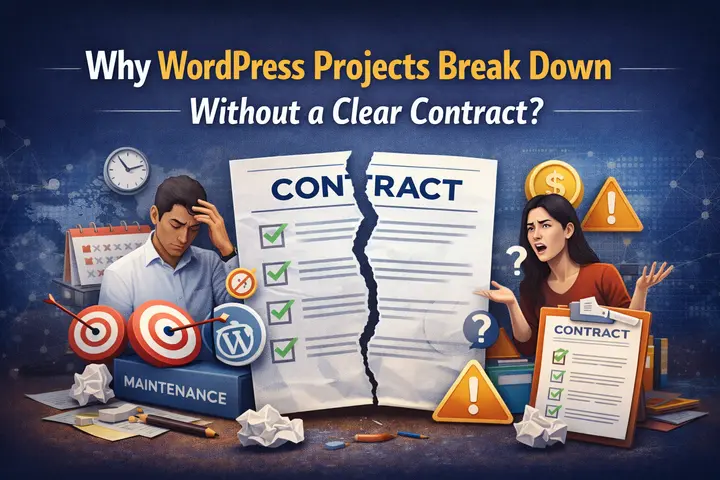
Without written clarity, small misunderstandings turn into big disagreements that slow projects down and strain relationships. A strong contract does not create friction. It removes it by replacing assumptions with documented agreements.
Launch a WordPress Site Without Guesswork
A clear contract matters. So does a WordPress partner who delivers. Seahawk Media builds fast, scalable WordPress websites with defined scope and zero guesswork.
What Agencies Expect vs What Clients Assume?
Agencies expect clients to provide content on time and approve designs quickly. They also expect clients to understand that changes affect timelines and cost.
Clients often assume unlimited revisions, instant changes, and full ownership of everything produced during the project. Neither side is wrong in how they think.
They are simply operating from different perspectives. Your contract is where those perspectives meet and align.
How a Strong Contract Prevents Awkward Conversations?
When expectations are documented, discussions stay objective instead of emotional. You reference agreed terms instead of personal opinions.
Instead of negotiating under pressure, you follow predefined rules and processes. This protects relationships and keeps projects moving forward.
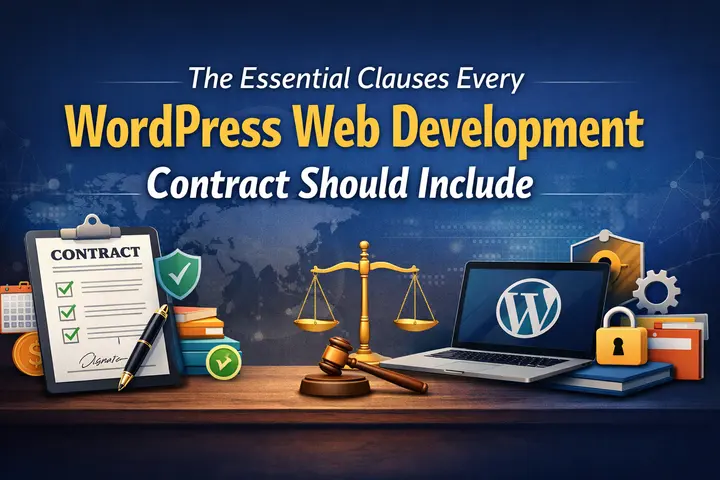
The Essential Clauses Every WordPress Web Development Contract Should Include
A professional web development contract should not read like a legal puzzle filled with confusing terminology. It should read like a clear explanation of how the project will run and how change is handled.
The following clauses form the backbone of contracts that scale agencies instead of slowing them down.
Payment Structure and Milestones
Money conversations become uncomfortable when expectations are unclear or undocumented. A strong contract explains exactly how and when you get paid.
Your agreement should outline deposits, milestone payments, and final payment requirements before launch. This ensures clients understand the financial flow from the start.
Most agencies use a structure where work begins after a deposit and the site launches only after final payment is received. This protects your cash flow and sets a professional tone for the engagement.
Your contract should also define what happens if payments are late, such as work pauses or late fees. Clear payment terms remove guesswork and reduce the risk of chasing invoices.
Scope of Work and Deliverables
Scope is the most important section of your contract because it defines what you are building. It also defines what you are not building.
Your scope should list the number of pages, templates, features, integrations, and functionality included in the quoted price.
If something is not listed, it is not included in the project. This protects you from endless add on requests disguised as small changes.
A strong scope section keeps projects predictable and profitable.
Ownership and Intellectual Property Rights
Clients often assume they own everything by default, including raw design files and source code. Agencies often assume they retain reusable code and internal frameworks.
Your contract must clarify who owns the final website and who owns raw design files. It should also state whether your agency can reuse code or components for future projects. Clear ownership terms prevent disputes long after launch.
Use of Third Party Plugins Themes and Open Source Tools
WordPress projects rely heavily on third party software. Plugins, themes, and open source libraries are created and maintained by external developers.
Your contract should explain that you are assembling and configuring existing software rather than building every line of code from scratch.
It should also state that third party updates can occasionally break functionality. You can further clarify that ongoing site maintenance is a separate service.
This protects you from being blamed for issues outside your control.
Content Responsibility and Migration Limits
Content work takes more time than most clients realize. Uploading pages, formatting text, resizing images, creating product listings, and embedding videos all require careful setup.
Your contract should specify how much content you will upload and format as part of the project. Define the number of pages, posts, products, and images included.
Clarify whether clients provide final content or if copywriting is included. Without this clause, content quickly becomes unlimited unpaid labor.
Revision Policy and Change Requests
Unlimited revisions destroy timelines and margins. Your contract should define how many rounds of revisions are included in the project price.
It should also define what qualifies as a revision versus a new request. For example, adjusting spacing is a revision. Adding a new section is new scope.
You should also define how revision requests must be submitted and within what timeframe. This keeps feedback organized and projects moving forward.
Project Timeline and Client Dependencies
Agencies can only move as fast as clients respond. Your contract should outline client responsibilities such as providing content, approvals, and feedback within a defined timeframe.
You should also include a clause stating that prolonged client delays can shift timelines or require rescheduling. This protects you from unrealistic deadlines caused by client inaction.
Cross Browser and Device Support Boundaries
It is unrealistic to support every browser and device ever created. Your contract should specify which browsers and devices you test on.
Typically this includes modern versions of Chrome, Safari, Firefox, Edge, and current mobile operating systems.
You can also state that obsolete or unsupported browsers are excluded. This prevents endless debugging on outdated technology.
Hosting Environment Requirements
WordPress performance and security depend heavily on the hosting environment. Not all hosting providers are built to handle modern WordPress websites properly.
Your contract should outline minimum hosting requirements needed for the site to function correctly. This can include PHP versions, database versions, memory limits, and SSL support.
You should also clarify that problems caused by inadequate hosting are outside your responsibility. If a client chooses a low quality host against your recommendation, you cannot guarantee performance or stability.
This clause protects you from being blamed for issues rooted in server limitations.
Website Launch and Migration Risks
Launching or migrating a website is one of the most sensitive phases of any project. Even when everything is planned carefully, small issues can still occur.
Your contract should explain that DNS changes, server propagation, and email configuration updates may cause temporary downtime. Clients should acknowledge this possibility before launch.
You should also state that minor bugs or display issues may appear after launch and require post launch testing. These are normal parts of moving a website into a live environment.
This clause sets realistic expectations and prevents panic when small hiccups happen.
Security Responsibilities After Launch
Once a website goes live, security becomes an ongoing responsibility. It is not a one time task completed during development.
Your contract should clarify whether you are responsible for backups, updates, malware scans, and monitoring after launch. If not, this should be stated clearly.
You should also explain that hacked websites, compromised passwords, or outdated plugins fall outside the original build scope.
This naturally opens the door to offering separate WordPress maintenance or care plans.
Warranty Period and Bug Fix Window
Most agencies provide a short warranty period after launch. This covers bugs related to the original scope of work. Your contract should define how long this warranty lasts, such as fourteen or thirty days.
It should also clarify that the warranty does not apply to new feature requests or third party plugin changes. This prevents ongoing free support disguised as bug fixes.
Early Termination and Project Abandonment
Not every project reaches the finish line. Sometimes clients change direction, pause their business, or disappear entirely.
Your contract should outline what happens if either party terminates the project early. This includes how much payment is owed and what files are delivered.
You should also define what happens if a client becomes unresponsive for an extended period. This protects you from holding unfinished projects indefinitely. Clear termination terms protect your time and revenue.
Legal Jurisdiction and Liability Limits
Disputes are rare, but contracts should prepare for worst case scenarios. Hoping for the best does not replace planning.
Your contract should specify which jurisdiction governs the agreement and where legal action must take place.
You should also limit your liability to the amount paid for the project. This prevents massive claims tied to perceived business losses. This clause protects your agency from disproportionate risk.
Confidentiality and NDA Protection
During a project, clients often share sensitive business information. This can include credentials, strategies, and proprietary data.
Your contract should state that both parties agree to keep shared information confidential. You can also clarify how long confidentiality obligations last after the project ends. This builds trust and protects both sides.
Why WordPress Maintenance Should Have a Separate Agreement?
A website build and website maintenance are two different services. Combining them inside one contract creates confusion.
Your build contract should focus on creating and launching the website. Maintenance agreements should cover updates, backups, security, and performance monitoring.
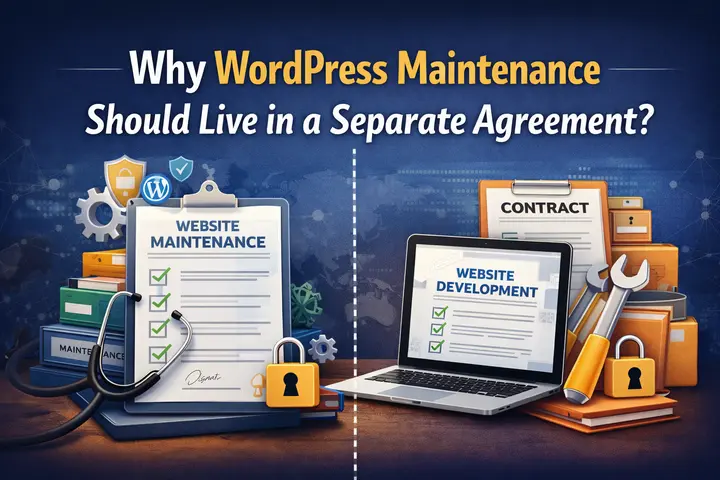
Separating these agreements makes pricing clearer and prevents unlimited support expectations. It also creates predictable recurring revenue for your agency.
Final Thoughts: Web Development Contract
A web development contract is not about being overly strict or difficult. It is about creating clarity, alignment, and confidence for both sides before work begins.
When your contract clearly explains scope, responsibilities, boundaries, and processes, projects run smoother. Clients know what to expect. Your team knows what to deliver. That shared understanding eliminates most conflicts before they ever surface.
If you are serious about growing a sustainable WordPress business, treat your contract as a strategic asset, not a template you downloaded years ago. Revisit it regularly. Improve it as your services evolve.
Strong contracts lead to stronger projects, healthier client relationships, and a more stable agency. And that foundation makes everything else easier to scale.
Frequently Asked Questions
What should a WordPress web development contract include?
A WordPress web development contract should include payment terms, scope of work, ownership rights, revision limits, timelines, security responsibilities, and termination clauses. These sections define how the project runs and who is responsible for what.
Who owns the website after completion?
Ownership depends on what your contract states. Many agencies transfer ownership of the final website while retaining rights to internal frameworks or reusable code.
How many revisions are reasonable?
Most agencies include one to three rounds of revisions and bill any additional revisions separately.
Do agencies need separate maintenance contracts?
Yes. Agencies should handle maintenance through a separate agreement so they clearly scope ongoing support, updates, and security and charge for them accordingly.