

Regulatory compliance is often discussed in boardrooms, legal documents, and audit reports. But for most businesses today, compliance lives somew]ere far more practical and visible. It lives on your website.
Your website collects personal data, processes payments, stores user information, and connects to third party tools. That makes it part of your compliance surface whether you realize it or not. Privacy laws, security regulations, and industry standards all intersect at the website level.
What many businesses overlook is that compliance does not break because of intent. It breaks because systems are outdated, unsecured, or poorly maintained. A missed update, an expired certificate, or an unsecured form can quietly put your business at risk.
This is where website maintenance and care become essential. Ongoing maintenance is not just about speed or aesthetics. It plays a direct role in meeting regulatory expectations, reducing legal exposure, and protecting user trust. A well maintained website becomes one of your strongest compliance safeguards.
What Regulatory Compliance Means for Modern Websites
Regulatory compliance means organizations follow laws and standards that govern how data is collected, stored, processed, and protected. For websites, this goes far beyond a privacy policy page.
Websites are operational systems. They handle user inputs, authentication, transactions, cookies, analytics, and integrations. Each of these touchpoints can fall under privacy, security, or industry specific regulations.
Website compliance ensures organizations handle data responsibly, keep systems secure, control access, and protect users. This responsibility continues beyond launch and requires ongoing attention as regulations evolve and threats change.
How Websites Create Compliance Exposure
Every plugin, form, and integration added to a website increases its compliance footprint. Outdated plugins may introduce vulnerabilities that expose personal data. Improperly configured forms can collect more information than allowed. Third party scripts can track users without proper consent.
These risks often develop silently. A website may appear functional while quietly violating regulatory expectations. Without maintenance, businesses may not detect issues until a breach, complaint, or audit forces the problem into the open.
Keep Your Website Compliant, Secure, and Always Ready
Stay ahead of compliance risks with regular updates, security monitoring, backups, and expert WordPress care. Seahawk helps keep your website stable, protected, and audit ready at all times.
Why Website Maintenance Plays a Direct Role in Compliance
Website maintenance is the operational layer that keeps compliance intact. Regulations expect organizations to take reasonable steps to protect data and systems. Maintenance is how those steps are applied in practice.
Regular updates, monitoring, backups, and security checks ensure that known vulnerabilities are addressed promptly. Maintenance also ensures that compliance controls remain effective as websites evolve.
When maintenance is neglected, compliance gaps widen over time. When it is consistent, compliance becomes far easier to sustain.
Compliance Is Ongoing Not One Time
Compliance is not achieved once and then forgotten. Laws change, threats evolve, and websites grow more complex. A website that was compliant last year may no longer meet expectations today.
Ongoing maintenance tracks changes, resolves issues, and keeps compliance efforts current. This continuous approach aligns far better with regulatory expectations than one time fixes.
Common Regulations That Website Owners Must Account For
Many regulations apply directly to how websites operate. Understanding their impact helps clarify why maintenance is essential.
GDPR and Website Data Handling
GDPR affects how websites collect and process personal data from EU residents. Consent management, cookie controls, data access rights, and secure storage are all website level responsibilities.
Without maintenance, consent tools can break, data retention rules can be violated, and vulnerabilities can expose user data. Regular updates and monitoring help ensure GDPR requirements are continuously met.
CCPA and Consumer Privacy Controls
CCPA requires transparency around data collection and gives users the right to opt out. Websites must provide clear disclosures and functional opt out mechanisms.
Maintenance ensures these controls continue working as intended. Broken links, outdated scripts, or misconfigured tools can unintentionally violate CCPA requirements.
PCI DSS and Payment Security
Any website processing payments must meet PCI DSS standards. This includes secure connections, vulnerability management, and restricted access.
Regular maintenance helps keep payment systems secure by applying updates, monitoring for threats, and ensuring encryption remains properly configured.
HIPAA and Protected Health Information Online
Healthcare websites that handle patient data must protect sensitive information. Access controls, secure hosting, backups, and audit readiness all matter.
Maintenance ensures systems remain secure, permissions stay appropriate, and recovery plans are in place if something goes wrong.
Other Industry and Regional Requirements
Education, finance, government, and global businesses face additional regulations. While requirements differ, the common thread is system reliability, data protection, and accountability.
Websites play a role in each of these areas, making maintenance a shared compliance necessity across industries.
The Compliance Risks of Neglecting Website Care
Neglected websites create risk even when businesses believe they are compliant. These risks compound quietly until they become costly problems.
Security Breaches and Data Exposure
Outdated software is one of the most common entry points for attackers. Once breached, sensitive data can be exposed, triggering regulatory penalties and mandatory disclosures.
Maintenance reduces this risk by closing known vulnerabilities before they can be exploited.
Operational Disruptions and Downtime
Many regulations expect systems to remain available and reliable. Downtime caused by neglected maintenance can disrupt services and violate contractual or regulatory obligations.
Regular performance checks and proactive fixes help prevent these disruptions.
Reputational and Legal Fallout
When compliance failures become public, trust erodes quickly. Customers lose confidence and regulators take notice.
Strong maintenance practices reduce the likelihood of incidents that lead to reputational damage and legal scrutiny.
Core Website Maintenance Tasks That Support Compliance
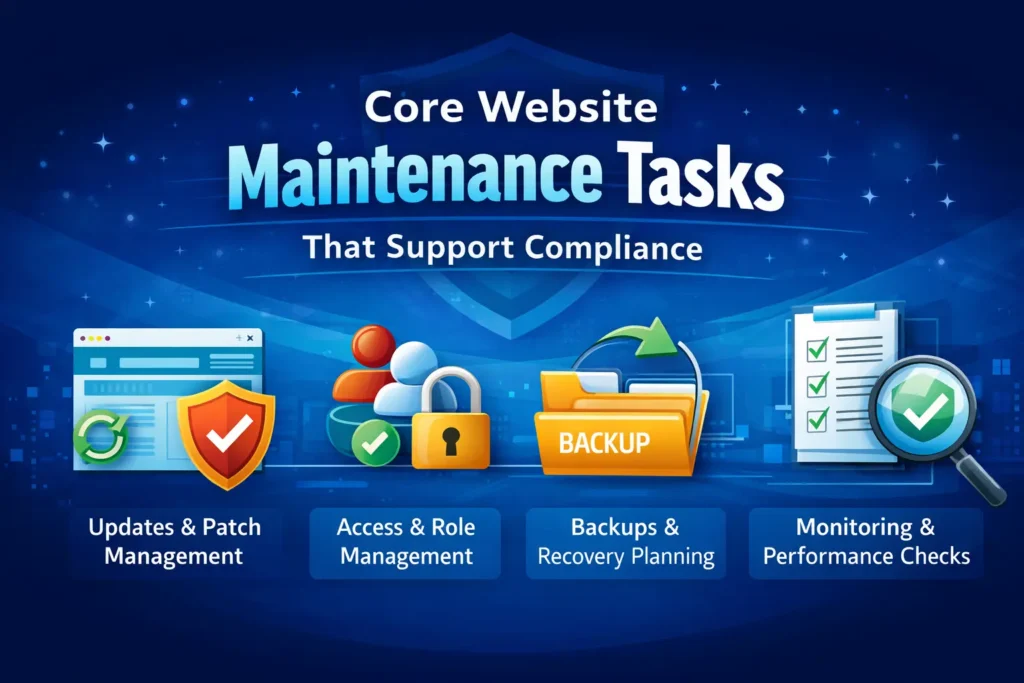
Compliance becomes far more manageable when maintenance tasks are aligned with regulatory expectations.
Regular Updates and Patch Management
Updates address security vulnerabilities and compatibility issues. Applying them promptly reduces exposure to known threats.
Consistent updates demonstrate responsible system management, which regulators expect as a baseline practice.
Access Control and User Role Management
Limiting access reduces the risk of misuse or accidental data exposure. User roles should reflect actual responsibilities.
Maintenance ensures access remains accurate as teams change and systems evolve.
Secure Backups and Recovery Planning
Backups protect data integrity and availability. Recovery plans ensure systems can be restored quickly after incidents.
These capabilities support compliance by minimizing data loss and operational disruption.
Monitoring and Incident Detection
Monitoring tools help detect unusual activity early. Faster detection leads to faster response.
This reduces the impact of incidents and supports documentation requirements during audits or investigations.
Performance and Stability Checks
Slow or unstable websites can disrupt user access and data processing. Performance issues may also signal deeper system problems.
Routine checks help maintain reliability and compliance readiness.
How Website Maintenance Helps During Audits and Reviews
Audits and compliance reviews are designed to verify whether systems are being managed responsibly over time. A well maintained website makes this process smoother by showing that controls are not only in place but actively monitored. Maintenance creates a trail of evidence that auditors look for when assessing risk, governance, and accountability.
Clear Technical Documentation and Change History
Website maintenance generates records such as update logs, version histories, and configuration changes. These records show when plugins, themes, and core files were updated and why changes were made. Auditors rely on this documentation to confirm that systems are reviewed regularly and not left unattended.
Backup Records and Recovery Readiness
Audit reviews often include questions about data protection and recovery. Regular backups with documented schedules demonstrate preparedness for data loss or incidents. Maintenance ensures backups are tested and recoverable, which reassures auditors that business continuity has been considered.
Security Monitoring and Incident Visibility
Security reports, uptime logs, and monitoring alerts provide evidence of active oversight. Auditors expect organizations to detect and respond to issues in a timely manner. Ongoing maintenance shows that security is continuously monitored rather than addressed only after problems occur.
Stable and Functional Audit Environment
Auditors assess systems directly, not just documentation. A maintained website loads correctly, functions as expected, and avoids visible errors. This creates confidence during reviews and prevents technical issues from distracting auditors or raising unnecessary concerns.
Why Small and Growing Businesses Are Most at Risk
Smaller and scaling businesses often face the highest compliance risk because they rely heavily on digital systems without having formal governance teams. Websites become critical operational assets, yet they may not receive the consistent attention required to remain compliant.
Limited In House Compliance Expertise
Many small businesses do not have dedicated compliance or security specialists. Website issues such as outdated plugins or misconfigured access controls can go unnoticed. Over time, these gaps can lead to violations even when the business intends to operate responsibly.
Increased Dependence on Website Functionality
As businesses grow, websites handle more data, transactions, and integrations. This increases compliance exposure while internal processes may still be informal. Without structured maintenance, risks grow faster than oversight capabilities.
Reactive Problem Solving Instead of Prevention
Smaller teams often respond only after issues become visible. This reactive approach increases the impact of incidents and regulatory consequences. Maintenance services shift the focus toward prevention and early detection, which regulators expect.
Scaling Compliance Alongside Business Growth
Maintenance helps businesses mature their compliance posture gradually. As traffic, data, and complexity increase, ongoing care ensures systems remain aligned with regulatory expectations instead of requiring disruptive fixes later.
How Seahawk Website Care Supports Compliance Ready Websites

Seahawk website care is built around consistency, reliability, and proactive oversight. These principles align closely with what regulators and auditors expect from organizations managing digital systems responsibly.
Ongoing Updates That Reduce Compliance Exposure
Regular updates close security gaps and ensure compatibility with evolving technologies. This reduces the likelihood of vulnerabilities that could expose sensitive data. Consistent updates demonstrate responsible system management during audits.
Continuous Monitoring and Performance Oversight
Seahawk monitors website performance and stability to identify issues early. This proactive approach helps prevent downtime and security incidents. Monitoring also creates records that support audit and review processes.
Secure Backups and Recovery Support
Reliable backup systems protect data integrity and availability. Seahawk ensures backups are performed regularly and can be restored when needed. This supports compliance requirements related to data protection and continuity.
Technical Oversight Without Internal Burden
By managing technical maintenance consistently, Seahawk allows businesses to focus on operations and growth. Website care provides confidence that compliance related technical responsibilities are being handled properly and predictably.
Conclusion
Regulatory compliance is not just about policies and paperwork. It depends heavily on how systems operate every day.
Websites sit at the center of data collection, user interaction, and digital trust. Without proper maintenance, even well intentioned businesses can fall out of compliance.
Consistent website care reduces risk, supports regulatory requirements, and protects both users and brands. It transforms compliance from a reactive burden into a manageable, ongoing practice.
For businesses relying on WordPress, website maintenance is not optional. It is one of the most practical foundations for staying compliant in a changing digital landscape.
Frequently Asked Questions
How does website maintenance support regulatory compliance?
Website maintenance helps ensure that security updates, data protection measures, and access controls remain active and effective. Regulations expect businesses to take reasonable steps to protect user data. Regular maintenance reduces vulnerabilities, keeps systems current, and shows ongoing oversight, which is essential for compliance.
Can a website fail an audit due to poor maintenance?
Yes. Auditors often review system stability, security practices, and documentation. Outdated plugins, missing backups, broken pages, or security gaps can raise red flags. Poor maintenance may suggest weak controls, even if policies exist on paper.
Is website maintenance enough to guarantee compliance?
Maintenance alone does not guarantee compliance, but it plays a critical supporting role. Legal, operational, and policy requirements still apply. However, without proper maintenance, even well designed compliance programs can fail at the technical level.
How often should a website be maintained for compliance purposes?
Maintenance should be ongoing rather than occasional. Regular updates, monitoring, backups, and performance checks help ensure compliance efforts remain effective as regulations, threats, and website functionality evolve over time.


