Managing a WordPress blog or website takes a lot of time. Writing, researching, optimizing, and publishing content is a never-ending cycle. That is where WordPress AI-assisted content workflows come in.
These workflows combine the power of artificial intelligence with the flexibility of WordPress. The result is a faster, smarter, and more scalable content operation. Whether you run a solo blog, an agency, or a business site, this guide shows you exactly how to set one up from scratch.
A WordPress AI assisted content workflow combines AI tools with WordPress processes to support content research, drafting, optimization, editing, and publishing. It typically involves selecting AI tools, connecting them with WordPress, creating content guidelines, reviewing AI generated drafts, and monitoring content performance to improve future workflows.
Understanding WordPress AI-Assisted Content Workflows
Learn how AI tools integrate with WordPress to support content planning, creation, optimization, editing, and publishing processes.

What Are WordPress AI-Assisted Content Workflows and How Do They Work?
AI-assisted content workflows integrate artificial intelligence tools directly into the content creation lifecycle on a WordPress website. They do not replace humans. Instead, they handle the time-consuming, repetitive tasks that slow teams down.
These workflows connect AI models to your content pipeline. They help at every stage, from idea generation to final publishing. The AI processes data, generates text, checks SEO, and suggests improvements. A human then reviews and approves before anything goes live.
Think of it as a system where workflow automation handles the mechanical side of content production while your team focuses on strategy and creativity.
Difference Between AI-Generated Content and AI-Assisted Content Creation
These two terms are often confused. The difference is critical.
- AI-generated content is content created entirely by AI, with little or no human involvement. The AI writes from start to finish. The result may be fast, but it often lacks originality, depth, and brand voice.
- AI-assisted content creation keeps humans at the center. AI handles research, outlines, first drafts, and SEO suggestions. A human editor then refines, fact-checks, and publishes. This approach combines the speed of automation with the judgment of human creativity.
According to industry data, 95% of AI-generated content is technically unique and original. But originality alone does not guarantee quality. Human input is what transforms a raw AI draft into a trustworthy, engaging piece.
How AI Supports Content Research, Writing, SEO Optimization, and Publishing?
AI tools contribute to multiple stages of the content pipeline:
- Research: AI tools can generate targeted topic ideas, compile data summaries, and identify competitor content, significantly reducing research time.
- Writing: AI can generate initial drafts for blog posts, product descriptions, marketing materials, and more with minimal effort.
- SEO: AI can optimize meta descriptions, suggest keywords, and analyze content structure to improve search visibility. In fact, 40% of users leverage AI for SEO tasks.
- Publishing: Automated workflows can schedule posts, update existing pages, and distribute content across channels. Research shows that 59% of users rely on AI for updating existing pages.
Streamline Your WordPress AI Content Workflow
Set up efficient AI assisted content workflows with expert WordPress development support for better content management and automation.
Why Use WordPress AI-Assisted Content Workflows for Content Creation?
The business case for adopting AI-assisted content workflows is strong.
First, speed. AI dramatically reduces content production time by up to 80%. What used to take a writer a full day can now be done in a few hours with AI handling the first draft and research.
Second, scale. AI-driven workflows enable scalable content production across multiple channels without adding headcount. You can produce more blog posts, landing pages, and product descriptions at the same quality level.
Third, consistency. AI workflows support tracking and governing content for brand alignment and compliance. Every piece follows the same tone, structure, and SEO guidelines.
Fourth, intelligence. AI provides insights on competitors and industries that sharpen your content strategy. It is not just a writing tool; it is a research and decision-support system.
Fifth, adoption is accelerating. According to recent data, 76% of developers now use AI tools in their work. Among them, 25% have used AI to build entire websites. The shift is already happening. Getting your WordPress AI workflow set up now gives you a clear competitive advantage.
Agencies benefit especially. White-label services allow agencies to resell WordPress solutions, and AI-powered content workflows make high-volume delivery much more manageable without proportional cost increases.
Key Components of a WordPress AI Content Workflow
Before you set anything up, you need to understand the four core components of a well-built WordPress AI content workflow.

AI Content Research and Topic Discovery for WordPress Blogs
Every piece of great content starts with solid research. AI tools speed this up dramatically.
AI-powered research tools scan search data, social media, competitor blogs, and industry publications. They identify trending topics, content gaps, and user questions. They also compile data summaries that would otherwise take hours to gather manually.
For a WordPress site, this means you always have a steady stream of well-researched topic ideas. You are not guessing what your audience wants. The data drives the decisions.
Tools like Semrush, Clearscope, and Frase work alongside LSI keywords and semantic analysis to make your research even more thorough.
AI-Assisted Content Writing and Draft Generation in WordPress
Once a topic is approved, AI handles the first draft. This is the biggest time-saver in the entire workflow.
AI models can generate blog posts, landing page copy, social captions, email newsletters, and more. The drafts are not final. They are starting points. But they significantly reduce the blank-page problem for writers.
Modern AI content writing tools like Jasper, Writesonic, and Copy.ai integrate directly with WordPress or can be pasted into the editor. Some tools even work inside the Gutenberg block editor via plugins.
53% of developers now use AI to generate website visuals. This means your AI workflow can extend beyond text to include AI-generated visuals and layout mockups, too.
AI SEO Optimization for WordPress Content and Search Visibility
Writing the draft is only half the battle. Ranking on Google requires strong SEO. AI tools make this much faster and more accurate.
AI-powered SEO tools analyze your content against top-ranking pages for your target keyword. They suggest improvements to heading structure, keyword density, readability, internal links, and meta descriptions. Some tools even score your content in real time as you write.
Rank Math offers AI-powered suggestions directly in the WordPress editor. These tools remove the guesswork from on-page SEO.
AI Content Editing, Fact Checking, and Quality Review Process
AI is fast, but it is not infallible. AI-generated content must be reviewed to avoid misinformation. This is a non-negotiable step.
AI tools like Grammarly, ProWritingAid, and Hemingway Editor review grammar, tone, and readability. Some tools also flag factual inconsistencies or vague claims. However, a human editor must always make the final judgment on accuracy, brand voice, and editorial quality.
The industry agrees: AI should augment human judgment rather than replace it. Your quality review process is what separates trustworthy content from generic noise.
Steps to Set Up WordPress AI-Assisted Content Workflows
Here is a practical, step-by-step process for building your own WordPress AI-assisted content workflow from the ground up.
Step 1: Define WordPress Content Goals and Workflow Requirements
Start with clarity. What do you want your AI content workflow to achieve?
Define your content volume targets. Decide how many blog posts, pages, or product descriptions you want to produce each week or month. Identify which content types need automation and which require full manual effort.
Also, map your existing workflow. Where do bottlenecks happen? Is it at the research stage, the writing stage, or the editing stage? Your AI workflow should solve real problems, not just add new tools for their own sake.
Document your brand voice, tone, and SEO guidelines at this stage. These become the guardrails for all AI output. Clear goals make WordPress development strategies more targeted and measurable from day one.
Step 2: Choose the Right AI Tools and WordPress AI Plugins
Not all AI tools are created equal. Choose based on your specific workflow needs.
For writing: Jasper, Writesonic, and Copy.ai are industry leaders. For SEO optimization: Surfer SEO, Clearscope, and Frase are reliable choices. For editing, Grammarly and Hemingway Editor improve readability. For visual content: tools like Midjourney and DALL-E handle AI-generated visuals.
On the WordPress plugin side, look for tools that integrate directly with your editor. AI Engine, Bertha AI, and WriterX all work inside Gutenberg. Some platforms allow you to bring your own API keys, giving you more control over costs and model selection.
For teams managing multiple clients or sites, platforms that offer white-label WordPress hosting and workflow automation combine particularly well with AI tools, letting you scale content operations across many clients from a single dashboard.
When choosing automation tools, also evaluate whether they support conditional logic, the ability to route content through different steps based on rules. This is essential for complex workflows.
Step 3: Connect AI Tools with Your WordPress Website
Once you have selected your tools, integration is the next step.
Most AI writing tools connect to WordPress via API keys or native plugins. Install the relevant plugins from the WordPress repository or the tool’s official website. Enter your API keys in the plugin settings. Test the connection before moving on.
For automation platforms like Zapier, Make (formerly Integromat), or Gumloop, which recently raised $50M for its AI workflow automation platform, you can connect AI tools to WordPress, Google Sheets, Slack, email, and more. These platforms support building automated workflows that trigger based on events, schedules, or user actions.
Gumloop’s platform, for instance, integrates over 300 AI models for automation and allows teams to create unlimited workflows in its Lite version. This powerful automation enables complex tasks spanning multiple tools and platforms.
Step 4: Create AI Content Briefs Before Writing WordPress Articles
A content brief is the blueprint for every article. Do not skip this step.
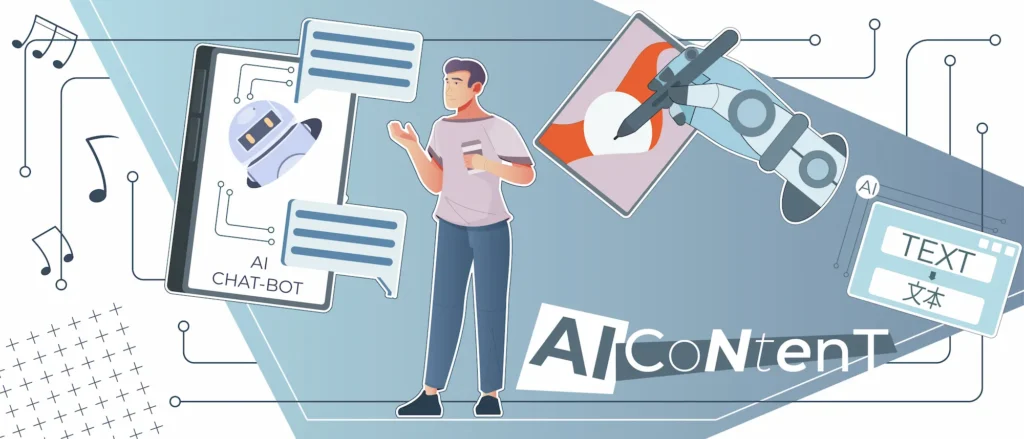
Before generating any AI draft, build a detailed brief. Include the target keyword, secondary keywords, intended audience, word count, headings structure, and key points to cover. Add competitor URLs you want to outperform.
AI tools produce far better output when given a clear brief. Vague prompts produce generic drafts. Specific, detailed prompts, with strong prompt engineering, produce structured, on-topic content that needs less editing.
Use tools like Frase or Surfer SEO to automatically build data-backed briefs. These tools analyze top-ranking pages and tell you exactly what your content needs to cover to compete.
Step 5: Generate AI-Assisted Drafts Inside WordPress Editor
With your brief ready, you can now generate the first draft.
If you are using a plugin like AI Engine or Bertha, you can generate content directly inside the WordPress block editor. Simply enter your brief or prompt, and let the AI generate the draft. If your tool works outside WordPress, generate the draft there and paste it into the editor.
Do not try to generate a perfect final draft in a single step. Generate section by section. This gives you more control and produces higher-quality output. For long-form content, break the generation into: introduction, each H2 section, and conclusion.
Natural language prompts work best. Tell the AI exactly what each section should accomplish, what tone to use, and what user question it should answer.
Step 6: Optimize AI-Generated Content for WordPress SEO
After the draft is ready, run it through your SEO tools before editing.
In Rank Math or Yoast, enter your target keyword and review the suggestions. Check that your primary keyword appears in the H1, first paragraph, at least one H2, the meta title, and the meta description. Aim for a keyword density of 1–1.5%.
Use Surfer SEO or Clearscope to compare your draft against top-ranking competitors. Identify missing terms, weak sections, and structural gaps. Add meta keywords thoughtfully, without keyword stuffing.
Check readability scores. Aim for a Flesch Reading Ease score above 50. Short sentences and short paragraphs improve both readability and SEO performance.
Also, add internal links at this stage. Linking to relevant pages on your WordPress site improves crawlability, distributes link equity, and keeps readers engaged longer.
Step 7: Add Human Editing and Content Quality Checks
This is where human creativity and editorial judgment take over.
Review the AI-generated draft for factual accuracy. Check every statistic, claim, and reference against reliable sources. Remove anything vague, generic, or potentially misleading. Rewrite sections that don’t align with your brand voice.
Strengthen the introduction to hook readers immediately. Sharpen the conclusion to leave a clear takeaway. Add real-world examples, personal insights, or original data where possible.
Also, review the structure. Ensure headings follow a logical hierarchy. Make sure each section answers a clear user question. Delete any repeated or overlapping content.
A human editor is your quality control layer. AI handles speed. Humans handle truth, trust, and tone. This balance is the core of effective AI-assisted content creation.
Step 8: Automate WordPress Content Publishing and Scheduling
Once content is approved, use WordPress’s built-in scheduler or a publishing plugin to automate distribution.
Set publish dates and times based on your audience’s peak engagement windows. Use plugins like CoSchedule or PublishPress to visually manage your editorial calendar. If you run a WordPress multisite network, automation tools can push content to multiple sites simultaneously, a significant time saver for agencies.
For social media distribution, tools like Buffer or Hootsuite connect to WordPress and automatically share new posts. You can also use Make or Zapier to trigger email newsletters when a post goes live. Platforms that support social media content scheduling make this process seamless.
Automating routine production tasks significantly increases content delivery speed. The goal is to publish consistently without manual effort at every step.
Step 9: Track WordPress Content Performance and Improve AI Workflows
Building the workflow is only the beginning. You must measure, analyze, and improve.
Connect Google Analytics and Google Search Console to your WordPress site. Track organic traffic, keyword rankings, time on page, bounce rate, and conversions for every AI-assisted article. Identify what is working and what is not.
Review your AI workflows monthly. Are certain prompt templates producing better content? Are some AI tools more accurate than others? Is your editing time decreasing over time?
Use the data to refine your content briefs, improve your prompt engineering, and adjust your AI tool selection. Strong SEO optimization practices compound over time; small improvements each month add up to significant ranking gains over the course of a year.
Also, keep up with Google News updates and algorithm changes. AI content workflows should adapt as search quality standards evolve.
Best Practices for WordPress AI-Assisted Content Workflows
Follow practical guidelines to maintain content quality, SEO standards, and human oversight when using AI in WordPress workflows.

Use AI as a Content Assistant Instead of a Complete Replacement
The biggest mistake teams make is treating AI as a set-and-forget replacement for writers. That approach produces low-quality, undifferentiated content that fails to build authority or trust.
AI should handle speed and scale. Humans should handle strategy and judgment. This division is the foundation of every effective AI content workflow.
The industry consensus is clear: AI adoption works best when it augments human capability. Every workflow you build should have a defined human touchpoint, especially at the review and approval stages.
Create Reusable AI Prompts and WordPress Content Templates
Consistency comes from standardization. Build a library of reusable prompts for blog posts, landing pages, FAQs, product descriptions, and meta descriptions.
Good prompt engineering dramatically improves output quality. Test different prompt structures for each content type. Document what works. Share templates across your team so everyone produces content at the same high quality.
Similarly, create WordPress content templates for different article formats. A how-to guide template, a listicle template, and a comparison article template each have different structures. Codifying these reduces decision fatigue and speeds up production.
Non-developers can benefit just as much as technical teams from well-structured templates. Clear prompts with simple instructions mean you do not need a single line of code to get great output from AI tools.
Maintain SEO Guidelines and Content Quality Standards
AI tools can drift. Without clear guardrails, your content can gradually diverge from your SEO goals or brand standards.
Maintain a written SEO style guide. Define your target keyword density, heading structure rules, internal linking strategy, image alt text standards, and readability targets. Share this guide with every team member and build it into your AI prompt templates.
Run quarterly content audits to identify pages that have drifted from your standards. Update and repurpose underperforming content using AI tools, and adapting existing articles into new formats is one area where AI truly shines.
Content can be quickly adapted into formats such as video scripts, social media snippets, email sequences, and podcast outlines.
This approach also supports online reputation management, because consistently high-quality content builds brand authority over time.
Common Mistakes to Avoid in WordPress AI Content Workflows
Even well-intentioned workflows fail when teams make avoidable mistakes. Here are the most common ones:
- Publishing AI drafts without editing. Never publish AI-generated content without human review. AI can hallucinate facts, produce generic text, and misunderstand your brand voice. Always edit, always fact-check.
- Ignoring prompt quality. Weak prompts produce weak drafts. Invest time in building strong, specific prompts for every content type. Treat prompt engineering as a core skill.
- Using too many disconnected tools. A workflow with too many tools creates friction and errors. Choose a streamlined stack and integrate it properly. Fewer, well-connected tools outperform many poorly connected ones.
- Skipping the content brief. Generating drafts without a brief is like building a house without blueprints. The brief is what keeps AI output focused and relevant.
- Over-reliance on AI for technical accuracy. AI models are language models, not fact databases. For health, legal, financial, or technical content, always verify claims against authoritative sources. AI-generated content must be reviewed carefully to avoid misinformation that could damage trust or violate website security and compliance standards.
- Neglecting performance tracking. If you are not measuring content performance, you are flying blind. Set up tracking from day one and review it regularly.
- Failing to update workflows as AI tools evolve. The AI space moves fast. New features, new models, and better integrations are constantly being added. Build review cycles into your workflow to stay current.
Conclusion: Building an Effective WordPress AI-Assisted Content Workflow
WordPress AI-assisted content workflows are no longer a future concept. They are a practical, proven approach to scaling content production without sacrificing quality.
The key is to build your workflow systematically. Start with clear goals. Choose the right tools. Integrate them properly with your WordPress website. Build strong content briefs. Generate AI drafts. Optimize for SEO. Edit with human judgment. Automate publishing. And track performance relentlessly.
AI is a powerful tool. But it is most effective when it sits inside a well-designed workflow that keeps humans in control at every critical decision point. The teams and agencies that understand this will consistently out-produce and outrank those that do not.
Start with one content type. Build a simple workflow. Measure the results. Then expand. That is the fastest, most reliable path to a fully automated, high-performing WordPress content operation.
The future of content creation is not AI or humans. It is AI and humans, working together, at scale.
FAQs About WordPress AI-Assisted Content Workflows
What is a WordPress AI-assisted content workflow?
A WordPress AI-assisted content workflow is a process in which AI tools support tasks such as research, writing, SEO optimization, editing, and publishing. It combines AI automation with human review to efficiently create and manage website content.
How can AI help with WordPress content creation?
AI can help generate content ideas, create outlines, draft articles, suggest keywords, improve readability, optimize SEO elements, and assist with content updates. It helps reduce manual work while keeping the publishing process organized.
Which AI tools can be used with WordPress?
WordPress users can integrate AI writing assistants, SEO tools, content optimization plugins, and automation tools. Popular options include AI plugins for the WordPress editor and tools that connect via APIs.
Can AI-generated content rank on Google?
AI-generated content can rank if it provides useful, accurate, and original information that meets search intent. Content quality, expertise, SEO optimization, and human editing remain important factors for search performance.
What are the best practices for using AI in WordPress content workflows?
Best practices include creating detailed prompts, reviewing AI-generated drafts, adding original insights, optimizing content for SEO, checking facts, and regularly updating published articles based on performance data.