The way people watch television has changed permanently. Cable boxes, satellite dishes, and rigid broadcast schedules are being replaced by something far more flexible. That shift is called IPTV, or Internet Protocol Television, and it is the technology powering modern streaming in 2026.
Whether you are a viewer tired of overpaying for channels you never watch or a business exploring content delivery, this guide explains what IPTV is, how it works, what types exist, and what the legal landscape looks like.
TLDR: What You Need to Know About IPTV
- IPTV means Internet Protocol Television: It delivers TV content through your internet connection instead of a cable wire or satellite dish
- It runs on a managed network: Unlike Netflix or YouTube, true IPTV reserves dedicated bandwidth so your stream stays stable and high quality
- Three formats cover every viewing habit: Video on Demand for library browsing, Live IPTV for real-time events, and Catch-Up TV for shows you missed
- It beats cable on flexibility and cost: No long contracts, no bloated bundles, and your subscription works across every device you own
- Legality depends on the provider: Licensed services like Sling TV and YouTube TV are fully legal, while cheap services offering thousands of channels are almost always pirating content
- The risks of illegal IPTV are real: Malware, unreliable streams, zero customer support, and growing legal enforcement against end users
- Businesses can build on IPTV too: Seahawk Media helps content creators and brands launch professional streaming platforms on WordPress and WooCommerce
What is IPTV?
IPTV stands for Internet Protocol Television. Instead of receiving a signal through a coaxial cable or satellite dish, your device receives video content as data packets delivered over an internet connection, the same way emails and web pages travel to your screen.
What separates IPTV from simply watching a YouTube video is the level of control built into the delivery system.
A properly deployed IPTV service runs on a managed network where bandwidth is reserved specifically for video traffic. That means consistent quality, minimal buffering, and interactive features that passive streaming cannot match.
Here is what that looks like in practice:
- Content arrives on demand: the server sends only the stream you requested, directly to your device
- Traffic is actively managed: reserved bandwidth keeps your stream stable even during peak internet hours
- Quality is monitored in real time: IPTV systems adjust the stream automatically to prevent drops or freezing
- Interactivity flows both ways: you can pause live TV, search content, rewind, and receive personalized recommendations
How Does IPTV Actually Work?
Traditional television broadcasts the same signal to every viewer simultaneously. IPTV works differently.
When you select a program, a request goes from your device to the provider’s server, and only that content is streamed back to you as a series of data packets reassembled in the correct order at your end.
Streaming Protocols That Power the Delivery
Three main protocols govern how video packets travel across the network:
- RTSP: Real-Time Streaming Protocol, used primarily for live IPTV feeds that need tight timing control
- HTTP: HyperText Transfer Protocol, used for on-demand content with adaptive formats like HLS and DASH
- RTP: Real-time Transport Protocol, handles audio and video delivery with precision timing over IP networks
Managed Network vs the Open Internet
This is the key difference between true IPTV services and common streaming platforms.
A legitimate IPTV provider usually operates on a managed network, where the service provider allocates dedicated bandwidth for video traffic. This helps maintain stable IPTV service quality, especially when delivering live TV channels.
Unlike traditional TV systems that rely on cable or satellite signals, IPTV uses internet protocol and internet access to deliver television content.
However, many streaming services such as Netflix, YouTube, or Sling TV operate on the open public internet, where video streams compete with other network traffic.
Because IPTV works as a comprehensive content distribution system, it relies on sophisticated content distribution technologies to deliver TV networks, live channels, and on demand content more consistently.
What Decodes the Stream at Your End?
IPTV content is delivered as data packets that must be decoded by the device used to watch it. These devices receive the stream and display the video smoothly on your TV screen or digital device.
Common devices used to access IPTV include:
- Smart TVs with built in IPTV apps
- Streaming devices such as Apple TV or Amazon Fire Stick
- Mobile devices and tablets with internet access
- Laptops or desktop computers
- Dedicated set top boxes from an IPTV provider
Each device performs the same task: receiving the IP network stream, decoding it, and displaying television content on the screen.
How Seahawk Media Helps Businesses Tap into the IPTV Opportunity?
The growth of IPTV is not just a story about changing how people watch television.
It is also an enormous business opportunity for content creators, niche broadcasters, educational institutions, fitness brands, and media companies that want to build their own streaming presence.

Launching a streaming service or video membership portal requires more than just the right content.
It requires a professional web infrastructure that can handle subscriptions, video delivery, user authentication, and brand presentation at a level that builds trust and encourages conversions. This is where Seahawk Media brings genuine expertise.
Here is what we can help you build and launch:
- Streaming website design and development: A high-performance WordPress site built around your content brand, optimized for speed, mobile, and conversion
- WooCommerce subscription integration: Membership tiers, subscriber management, and secure payment processing built directly into your platform
- Video player and delivery integration: Seamless embedding of your live stream or VOD library with a professional, branded viewing interface
- SEO and content strategy: Ensure your streaming platform ranks for the right terms and attracts the audience you are building for
- Ongoing performance and support: Implement technical maintenance and growth strategy from a team that understands both web development and digital media
Whether you are building a sports-focused channel, a professional training library, or a full-scale content platform, the technical foundation matters enormously.
We at Seahawk Media have delivered that foundation for clients across industries, and the experience translates directly into the IPTV and streaming space.
Launch a High-Performance IPTV Website
Whether you’re building an IPTV platform, streaming service, or media portal, Seahawk Media creates fast, scalable WordPress websites designed for modern streaming businesses.
The Three Main Types of IPTV
IPTV is not a single viewing format. Instead, internet protocol television (IPTV) delivers television content through multiple models designed to support different viewing habits.
Unlike traditional cable TV or satellite TV systems that rely on broadcast signals, an IPTV service uses an internet connection and IP network to stream multimedia content directly to devices such as smart TVs, mobile devices, or streaming boxes.
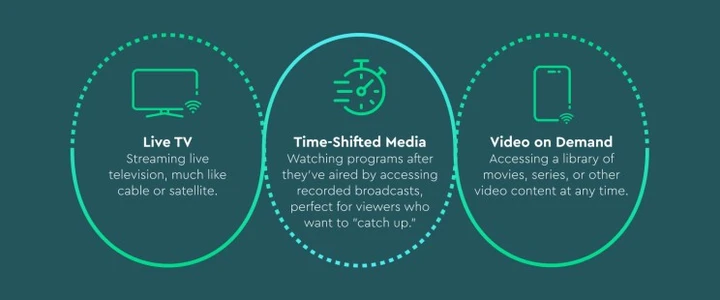
Most IPTV providers organize their content through three primary delivery formats: video on demand, live IPTV streaming, and time-shifted television.
Each format serves a different purpose and together they form a complete digital television experience.
Video on Demand (VOD)
Video on demand (VOD) is one of the most popular IPTV features and is widely used by modern streaming services such as Netflix and Amazon Prime Video.
Instead of following a scheduled broadcast like traditional TV services, VOD allows users to choose what they want to watch and when they want to watch it.
With VOD services, television content and digital video libraries are stored on streaming servers and delivered through an internet connection whenever a viewer selects a program.
Key features of VOD IPTV services include:
- An always available library: thousands of movies and television shows available instantly through the IPTV platform
- Full playback control: pause, rewind, fast forward, or resume content across devices such as smart TVs, mobile devices, and streaming apps
- Personalized viewing: user profiles, watch history, and recommendations tailored for different household members
Because the content is delivered through a broadband or high speed internet connection, viewers can access VOD content from multiple devices without relying on traditional cable or satellite TV infrastructure.
Live IPTV Streaming
Live IPTV streaming delivers television broadcasts in real time over an IP network. It functions similarly to traditional broadcast TV but uses the internet instead of cable television formats or satellite signals.
Through a reliable IPTV provider, viewers can stream live TV channels, including sports, news, entertainment programs, and special events. These live channels are transmitted through a managed delivery network to ensure stable streaming quality.
Important aspects of live IPTV include:
- Access to live television channels: news networks, sports broadcasts, and entertainment programs streamed in real time
- High quality streaming: delivery through optimized IP networks that minimize buffering and delays
- Compatibility across devices: live IPTV channels can be viewed on smart TVs, IPTV boxes, mobile devices, and streaming platforms
Because live IPTV relies on a stable internet connection and efficient bandwidth management, service providers must maintain strong network infrastructure to deliver smooth viewing experiences.
Time Shifted TV and Catch Up
Time shifted television, often called catch up TV, allows viewers to watch previously broadcast television content after it has aired.
Instead of needing to tune in at a specific broadcast time, users can access programs within a defined window after their original transmission.
For example, services like BBC iPlayer allow audiences to revisit television shows days or weeks after the initial broadcast. This format combines the convenience of video on demand with the structure of traditional broadcast programming.
Common features of catch up IPTV services include:
- Access to previously aired programs: viewers can watch shows they missed without recording them
- Flexible viewing windows: programs are available for several days or weeks after broadcast
- On demand access to television content: viewers control when they start watching rather than following fixed broadcast schedules
Time shifted IPTV content is particularly useful for viewers who want the flexibility of streaming services while still following traditional TV programming.plete permanent library.
IPTV vs Traditional Cable and Satellite: Key Differences
Cable and satellite television were built for a world where one signal went out to everyone and viewers arranged their lives around the schedule.
IPTV was built around the opposite idea: the viewer is in control, and the content adjusts to fit their life. The differences go well beyond delivery method.
Here is how they stack up on the things that matter most:
- Pricing: IPTV lets you pay for content categories you actually use rather than fixed bundles packed with channels you ignore
- Contracts: most IPTV services run month to month with no penalty for cancelling, while cable regularly locks you into twelve to twenty-four month agreements
- Hardware: IPTV works on devices you already own, while cable typically charges a monthly rental fee for a set-top box
- Multi-device access: a single IPTV subscription usually supports simultaneous streams across several devices without extra hardware
- Interactivity: IPTV program guides are searchable by actor, genre, and keyword, while cable guides are static grids
Is IPTV Legal: What You Need to Know
IPTV as a technology is completely legal. Whether a specific service is legal depends entirely on whether it holds valid licenses for the content it distributes. This distinction matters more than most people realize before they subscribe.
What a Legitimate Service Looks Like
A licensed IPTV provider has formal agreements with television networks, sports leagues, and studios. They pay substantial fees for the right to distribute that content.
In return, they offer professional customer support, official app store listings, secure payment options, and transparent terms of service.
Well-known legal services include Sling TV, YouTube TV, Hulu with Live TV, Philo, and DirecTV Stream.
The Real Risks of Illegal IPTV
Unlicensed services advertise thousands of channels at suspiciously low prices because they are pirating content without paying anyone for it. Using them exposes you to serious risks:
- Malware and spyware: unverified third-party apps required by illegal services frequently carry malicious code targeting your personal and financial data
- Unreliable streams: these services go dark without warning, especially during high-demand live events
- No recourse: there is no customer support and no accountability when the service fails
- Legal consequences: using a pirated IPTV service is copyright infringement, and enforcement against end users is growing across Europe and North America
The simplest red flag is price. If a service offers thousands of premium channels for ten to twenty dollars a month, it is almost certainly operating illegally. Legitimate services cannot license premium content at those rates.
Why Viewers Are Making the Switch in 2026?
The shift from cable to IPTV is driven by practical advantages that address genuine frustrations. Here is what viewers consistently value most after making the switch:
- Freedom from schedules: VOD libraries, catch-up archives, and cloud DVR mean you never have to plan your evening around a broadcast time
- Watch on any device: Your subscription works on your TV, phone, tablet, and laptop, at home or traveling
- Personalized recommendations: Algorithm-driven guides surface content you actually want rather than forcing you to browse a static channel list
- Lower costs: Pay only for the content categories you use, not a bundled package built around someone else’s viewing habits
- Multiple streams at once: Most IPTV subscriptions support several simultaneous streams so everyone in the household watches what they want
The Bottom Line
IPTV represents a fundamental shift in how television content is delivered, experienced, and consumed.
It moves the entire ecosystem from a rigid, broadcaster-controlled model to a flexible, viewer-centered one, enabled by the same internet infrastructure we already depend on for everything else in our digital lives.
Understanding what IPTV is, how it works, and what separates legitimate services from unlicensed ones gives you a much stronger foundation for making smart decisions, whether you are a viewer looking to cut the cord or a business looking to build the next great streaming platform.
If you are exploring what it would take to build a professional streaming website or video membership portal, Seahawk Media has the WordPress expertise and the digital strategy experience to help you get there. The technology is ready.
The audience is ready. The only question is whether your online presence is ready to meet them.
FAqs About IPTV
What is the difference between IPTV and a smart TV?
A smart TV is hardware. IPTV is a content delivery service. Your smart TV can run IPTV apps, but it can also run OTT services like Netflix. Owning a smart TV does not mean you are using IPTV. The terms refer to different things entirely.
Can I record shows on an IPTV service?
Many providers offer cloud DVR, which saves recordings on the provider’s servers rather than a physical device in your home. You can access those recordings from any of your connected devices. Storage capacity and how long recordings are kept varies by provider and plan.
What devices can I use to watch IPTV?
IPTV works on smart TVs, smartphones, tablets, laptops, streaming sticks like Amazon Fire Stick and Apple TV, and dedicated set-top boxes from your provider. No special hardware purchase is required if you already own any of these.
How much internet speed do I need for IPTV?
For standard definition, 3 to 5 Mbps is sufficient. HD streaming requires 10 to 15 Mbps. For 4K Ultra HD, plan for at least 25 Mbps with 50 Mbps recommended as a comfortable target in a busy household. Always aim above the minimum to account for other devices on your network.